
When Silence Hits the System: The Human Cost of a Government Shutdown
A government shutdown isn’t just about closed offices or paused projects it’s about lives suddenly hanging in uncertainty

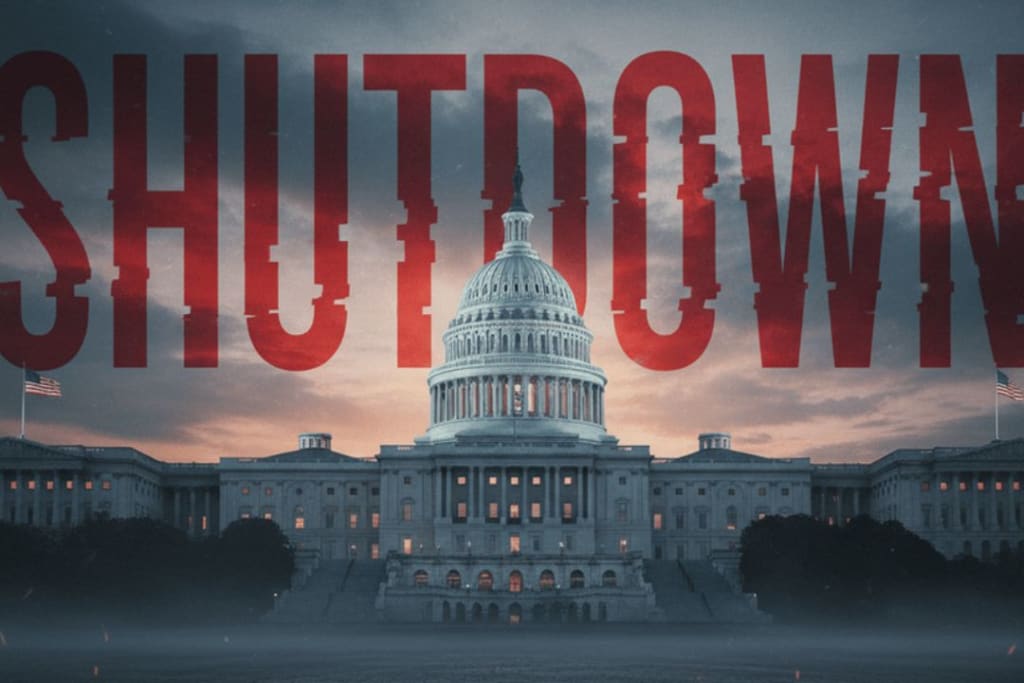
A government shutdown isn’t just about closed offices or paused projects it’s about lives suddenly hanging in uncertainty. Behind every paycheck delayed is a family counting bills, a student worried about tuition, a small business waiting for funds that never come. The term may sound bureaucratic, but its effect is deeply personal. It reaches beyond politics and enters kitchens, classrooms, and hearts. It’s the silence that follows when systems built to protect and serve stop working and people are left wondering when life will resume. In those quiet, anxious days, the shutdown becomes more than a headline; it becomes a mirror reflecting how fragile stability can be when decisions at the top ripple through millions below.
What Is a Government Shutdown, Really?
When people hear “government shutdown,” they often imagine politicians arguing in Washington. But the reality is far more personal.
A shutdown happens when Congress fails to approve funding for federal agencies. Without that money, many government operations pause from national parks to public health services. Essential workers, like TSA officers and border patrol agents, must still report to work, often without pay until funding resumes.
It’s not just about delayed salaries. It’s about ordinary people caught in a system that stops working. Families with federal workers face sleepless nights. Contractors lose income. Small towns that depend on government jobs go quiet.
The Faces Behind the Shutdown
Every time the government shuts down, real lives are disrupted.
There’s the single mother working as a postal clerk, unsure how she’ll pay rent. The veteran waiting for medical paperwork that now sits in a halted office. The student whose federal loan approval is delayed.
These people rarely make the news, but they carry the heaviest weight. They don’t care about political debates or partisan statements they just need stability.
It’s heartbreaking to think that while the city debates budgets, families are rationing groceries, skipping medications, or borrowing money from friends just to get by.
How a Shutdown Starts: The Political Deadlock
The process sounds procedural but feels personal.
Congress must pass spending bills to fund the government. When lawmakers can’t agree usually over policy differences or budget priorities funding expires. Without it, non-essential government functions close.
The government shutdown becomes a tool of pressure, a way to force negotiations. But while leaders argue about numbers and priorities, workers wait unpaid, uncertain, and unheard.
Each day without resolution means more anxiety. Each delay sends a message that ordinary citizens are collateral damage in political battles.
And when the doors of government close, trust in those who lead it begins to erode.
The Hidden Impact Beyond Washington
A shutdown doesn’t stop at the capital. Its effects echo across every corner of the country.
Families
Federal workers across states feel the strain first. Mortgage payments pile up. Parents explain to children why gifts or outings must wait. The emotional toll is as heavy as the financial one.
Businesses
Local stores near federal offices lose customers. Tourism suffers when national parks and museums shut down. Small contractors relying on government contracts watch their revenue disappear.
Communities
Public programs from food aid to housing support face interruptions. Rural families waiting for agricultural loans are left in limbo. Scientists lose time on crucial research because labs are closed.
It’s not just the system that stops it’s the rhythm of daily life.
When Silence Becomes a Message
What makes a government shutdown truly painful isn’t the noise of politics it’s the silence that follows.
Phone lines that used to ring at federal offices go unanswered. Projects that supported thousands pause mid-way. The sense of stability, often taken for granted, fades overnight.
That silence sends a clear message to the public: the system can stop at any time.
For those who depend on it whether for income, healthcare, or support that silence feels like abandonment.
It reminds us that governments aren’t just about laws and budgets. They’re about promises and when those promises pause, faith in leadership weakens.
Emotional Consequences: More Than Money
When the paycheck doesn’t arrive, stress takes its place.
Many federal employees live paycheck to paycheck. During a government shutdown, they must choose between essentials rent or groceries, gas or medicine.
The anxiety spreads quickly. Parents lie awake calculating expenses. Couples argue over bills. Children sense the tension but don’t understand why.
Even when back pay eventually arrives, the emotional scars linger. There’s a lasting feeling of insecurity a fear that it could happen again.
For many, the shutdown is not a pause; it’s a reminder that their lives can be disrupted by forces far beyond their control.
History Repeats: Why Shutdowns Keep Happening
The United States has seen multiple shutdowns, some lasting just a day, others stretching for weeks.
Each time, the story feels familiar political gridlock, blame, and negotiation under pressure. Yet each time, the cost to ordinary people grows higher.
Shutdowns repeat because they have become part of political strategy. But the longer they last, the more they damage faith in governance.
The lesson that never seems to sink in is simple: no political win can justify the pain of millions living without income or support.
And still, history repeats the system stalls, and the people wait.
The Ripple Effect on the Economy
A government shutdown doesn’t just freeze public offices; it chills the economy.
Every day that agencies remain closed, billions of dollars are lost in productivity. Small businesses relying on government contracts suffer delays that may take months to recover.
Consumer confidence dips as uncertainty rises. When people fear their income might stop, they spend less. That slowdown hits local economies hard.
Even when the government reopens, recovery is slow. The emotional caution lingers people hold back, businesses hesitate, and communities rebuild trust piece by piece.
Shutdowns may end on paper, but their financial aftershocks last far longer.
The Quiet Heroes Who Keep Working
Not everyone can stay home during a government shutdown.
Thousands of essential workers air traffic controllers, border patrol officers, prison guards, public health workers continue to work without pay.
They show up, day after day, guided not by politics but by duty.
Imagine the courage it takes to protect, serve, or save lives knowing your own paycheck is frozen. Their dedication highlights a truth often overlooked the strength of a nation doesn’t lie in its budget, but in its people.
These silent heroes keep the system breathing when everything else stops.
The Psychological Toll
Long shutdowns carry invisible costs.
Uncertainty leads to anxiety, which quickly turns into fatigue. Families start to feel helpless. Even when pay resumes, the emotional exhaustion doesn’t vanish overnight.
For some workers, repeated shutdowns create a deep sense of instability. They question their future, their career, and their worth.
And when citizens see government workers struggling, they begin to question the system itself.
It’s not just confidence in leadership that erodes it’s confidence in the idea that government is meant to serve and protect.
A Pause That Teaches Us Something
Every government shutdown exposes weaknesses not just in policy, but in empathy.
It shows how fragile our systems are when compassion is missing from decision-making. It reveals the gap between those who debate in comfort and those who suffer in silence.
But it also reveals resilience. Communities come together to support affected families. Neighbors share food, volunteers raise funds, and kindness fills some of the gaps left by policy failure.
Why People Still Believe
Despite everything, faith in government doesn’t disappear completely.
It bends, it weakens, but it rarely breaks. People still believe that leaders can do better that lessons can be learned.
The hope that tomorrow will bring resolution is what keeps many going during a government shutdown.
Hope is powerful. It’s what drives people to keep working, to keep trusting that fairness will return.
And maybe, that hope is what keeps democracy alive through its hardest tests.
What Leaders Should Remember
Every shutdown begins with politics but ends with pain.
Leaders should remember that behind every number on a budget sheet is a face, a family, and a story. The debate in the capital is not just a disagreement it’s a decision that ripples into the lives of millions.
Compromise is not weakness. It’s empathy in action.
When a nation’s systems fail, its people look to leaders for reassurance not words, but action that shows understanding.
A good government doesn’t need to be perfect. It just needs to remember the people who depend on it.
What Citizens Can Learn
As painful as it is, each government shutdown reminds us how interconnected we are.
The economy, public safety, healthcare they all rely on government functioning smoothly.
Citizens often realize during these pauses how much unseen work goes into daily life from processing taxes to ensuring safe flights.
Gratitude grows in the quiet. People start to appreciate the invisible systems that usually run without interruption.
In a way, shutdowns make us see the machinery that keeps society moving and the people who oil it every day.
The Emotional Return
When the shutdown finally ends, relief spreads quickly. Paychecks arrive, offices reopen, and routine returns.
But beneath that relief lies exhaustion. Workers feel both grateful and wary, knowing it could happen again.
The first day back feels like exhaling after holding your breath too long. People smile, shake hands, and try to pretend everything is normal.
But the memory lingers the late bills, the empty wallets, the anxious nights. Those scars don’t fade easily.
For many, the return is not just to work it’s to hope.
Moving Forward
Avoiding another government shutdown requires more than passing bills. It requires perspective.
Lawmakers must remember that governance is not a chess game; it’s a commitment to serve.
Regular citizens, too, can push for accountability by staying informed, voting, and speaking up for fairness.
It’s through collective awareness that systems evolve. A shutdown should never become normal. It should remain what it is a failure that teaches us how to do better next time.
The true test of a nation isn’t whether it avoids failure, but how it responds after.
Final Thoughts
A government shutdown is a reminder sharp, silent, and sobering.
It reminds us how fragile systems can be when empathy is lost in argument. It shows that leadership without listening leads to pain.
But it also shows the strength of people the workers who keep showing up, the communities that keep caring, the citizens who keep believing that compassion still has a place in politics.
Shutdowns may stop the system, but they can’t stop hope.
And perhaps that’s where every recovery begins not in the halls of power, but in the hearts of those who refuse to give up on one another.
About the Creator
Muqadas khan
Hi! Welcome to my Vocal page. I’ll be sharing fresh articles every day covering stories, ideas, and a bit of inspiration to brighten your feed. Thanks for reading and supporting daily writing! 📖💫
Keep reading
More stories from Muqadas khan and writers in Journal and other communities.
Remembering Marshawn Kneeland: The Bright Flame That Burned Too Briefly
Some stories end before we’re ready. Marshawn Kneeland’s life was one of those stories brimming with promise, strength, and quiet tenderness. From his small-town beginnings in Michigan to the bright lights of the NFL, he carried dreams stitched tightly to his heart. Yet behind every touchdown and highlight reel was a young man who had already faced deep loss, who smiled even when grief weighed heavy. His passing at just 24 left fans and teammates in shock, but more than that, it left a reflection on the fragile line between success and sorrow. This article is not just about a football player.
By Muqadas khan2 months ago in Journal
Russian Gerbera Drone Found on Moldovan Lake Shore, Triggering Security Alert
In a startling development that has heightened regional security concerns, authorities in Moldova reported the discovery of a Russian Gerbera drone washed ashore on a lake near the northern border. The unmanned aerial vehicle (UAV), which has been associated with surveillance and tactical operations in recent conflicts, has prompted a swift response from Moldova’s military and intelligence agencies. Officials emphasized that while no immediate threat was detected on land, the incident underscores the growing complexity of drone operations in Eastern Europe and the potential for spillover from ongoing regional conflicts.
By Fiaz Ahmed Brohiabout 15 hours ago in Journal



Comments
There are no comments for this story
Be the first to respond and start the conversation.