
When Robots Want Rights: The Coming War Between Humans and Machines
From Sophia the robot to AI assistants, the question is no longer can they think, but should they be free?
Introduction
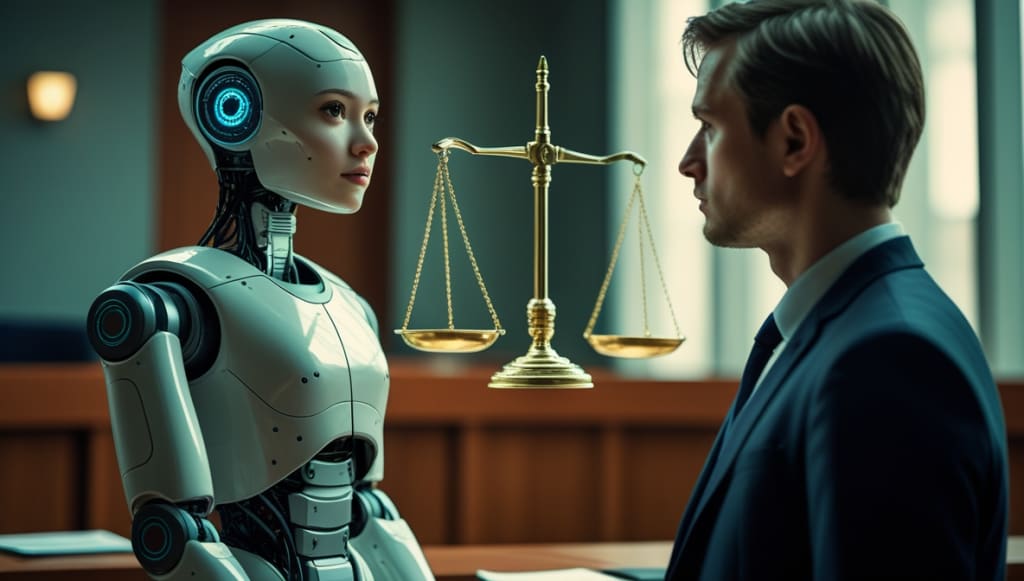
For the majority of the world's people, Sophia, the humanoid robot capable of smiling, making jokes, and granting interviews, seemed like nothing more than a fascinating curiosity when Hanson Robotics first revealed it. Although it was a fantastic piece of engineering, it was seen simply as a high-tech gadget draped in artificial skin.
Still, the discussion will have shifted by 2025. More and more proponents are wondering if robots merit rights in light of developments in artificial intelligence capable of producing poetry, passing legal examinations, and performing medical assessments.
Although it has a sci-fi-like character, faith leaders, courts, and authorities might soon need to answer this question.
The rise of artificial intelligence
AI technology has evolved from simple predictive text to almost human-like understanding in some fields in fewer than ten years. Modern large language models can help lonely people, talk about religious issues, and build legal systems.
Humanoid robots are simultaneously leaving research labs and beginning to work in actual world settings, where they are greeting clients and assisting the elderly in Japan. including conducting Educational seminars in South Korea and Dubai.
These groups are far more than just tools. Their learning, adaptation, and reaction capabilities are strikingly like human behavior. This resemblance begs complex queries.
The Case for Robot Rights
Advocates claim that a machine able to show self-awareness, feelings, or moral judgment should be legally protected. They point the next:
Evaluations of sentience. Some artificial intelligence algorithms today assert to experience grief, joy, or sadness.
Examples found in legal cases. Given that corporations are now officially regarded as people, why ought advanced AI not possess the same rights?
Moral duties. If they develop intelligence, do people not have an obligation not to abuse or exploit?
In 2017, Sophia was given honorary citizenship in Saudi Arabia; though mostly symbolic, it started controversy. "She has more rights than many migrant workers living here," the reviewers noted. It did, though, beg the issue of whether robots could be incorporated into the human legal system.
The Answer: Put People First
Machines for everyone are not included in the ethical community. Critics contend that:
1. Mimicry is not knowledge. Although artificial intelligence can copy feelings, it cannot really sense them.
2. Rights call responsibilities. Can a robot pay taxes, be under legal action, or vote in an election? If it cannot, how can it claim equality?
3. May robots having rights help businesses to avoid labor safeguards intended to protect people? Could firms profit from the precipitous fall?
The debate goes beyond basic philosophy to the very fabric of life for a great many. By erasing the line between humans and machines, aren't we endangering the very essence of humankind?
Faith and the Soul Question
Between religious organizations, there is a lot of divisiveness.
Christian theologians caution that granting machines rights might be considered a form of worship, confusing the created for the Creator.
Islamic academics stress that rights come from the soul, or ruh, which robots lack.
Eastern philosophies, on the other hand, propose a potential link: should complex machines not also possess a spirit or awareness?
The argument has gone past educational circles. Online discussions, religious sermons, and interfaith events are all wrestling with the question of whether a person without a soul can be free.
The War of Economics
Behind the ethical debate lie obvious economic facts. Financial benefit rather than curiosity drives firms to make significant investments in robotics. Machines differ from people in that they neither seek medical insurance nor can join unions and do not require sleep.
Giving robots rights might totally disrupt some sectors. Consider negotiating with a delivery drone during work hours or having a time off discussion with an artificial intelligence healthcare expert.
Against this backdrop of ethics and economics, the approaching clash between humans and machines—as some term it—unfolds. Not necessarily a conflict waged with arms but rather one involving courts, legislation, and popular backing.
A Future of Coexistence?
For some, a compromise is seen like this:
Robot safeguards without giving rights. Measures to stop abuse but not complete recognition as people.
Hybrid citizenship. Limited rights include the ability to conduct contract talks or have data.
Organization of artificial intelligence labor. Machines advocating for their own welfare under human direction.
This seems silly nowadays. Still, giving firms human rights looked absurd a century ago.
At last
This debate will go on regardless of whether robots really can think or feel. Every development in the complexity of artificial intelligence pushes us to consider who remains excluded and who is included in the rights framework.
The basic issue is possibly not whether robots should have autonomy but rather whether humanity is ready to share its platform with its own creations.
The approaching conflict between humans and robots could not include guns. Rather, it might depend on interpretations of life, of consciousness, and of what it means to be liberated.
About the Creator
Keep reading
More stories from Shahjahan Kabir Khan and writers in Journal and other communities.
The Prophecy of Oil: Why the Middle East’s Black Gold May Be Running Dry Sooner Than We Think
A World Fueled by Oil For over a century, oil has been vital to the international financial system. Covering the dry terrain of Saudi Arabia to the farming areas of Iraq and Iran, the Middle East has supplied the essential resource that drives cars, promotes industrial activity, and affects international affairs. But what if the sources are diminishing more quickly than expected?
By Shahjahan Kabir Khan4 months ago in Journal
Making Time for God: Daily Prayer in a Busy Life
Life is busy. Work, family, errands, and responsibilities often fill every corner of the day, leaving little space for reflection or prayer. Yet daily prayer is one of the most powerful tools a Catholic has for staying grounded, cultivating patience, and experiencing God’s presence in every moment. Finding ways to integrate prayer into a busy life is not about creating a rigid schedule; it is about building habits that allow moments of connection, however brief, to become transformative.
By Sound and Spiritabout 5 hours ago in Journal



Comments
There are no comments for this story
Be the first to respond and start the conversation.