
What You Need to Know About Expanding Your Business Internationally
Advice on preparing to break into the global market.


For most business owners, the American market is large enough. However, some find growth inevitable and global expansion irresistible. If your small business is experiencing rapid development, you may consider taking that international leap, too. From importing and exporting goods to developing new services to reach new markets, there's a world of opportunity out there.
Yet, broadening and diversifying your team requires a huge investment of both time and money — and unwavering commitment on your part. From creating new employee contracts to partnering with companies overseas, developing an international approach isn't as straightforward as it may initially seem.
As you explore new horizons and consider how to expand your business internationally, you must first contemplate a few key points:
1. Cultural Differences
Before expanding your business internationally, you should first consider how well your product will sell in other cultures. Although many countries embrace American products, some may not be so willing to purchase or sell certain items or services. Perhaps they are unfamiliar with your product or are already have something similar. On the other hand, maybe they would have no use for it. Research each prospective country and its various cultures before creating an international marketing strategy.
You must also consider different cultures if you plan to hire an overseas team, as it may affect your business model and daily schedule. For instance, employees in Spain, Argentina and Chile may take a midday siesta, putting work on hold for two hours. Yet, this daily break isn't evidence of laziness. Rather, it's part of their culture.
2. Currencies
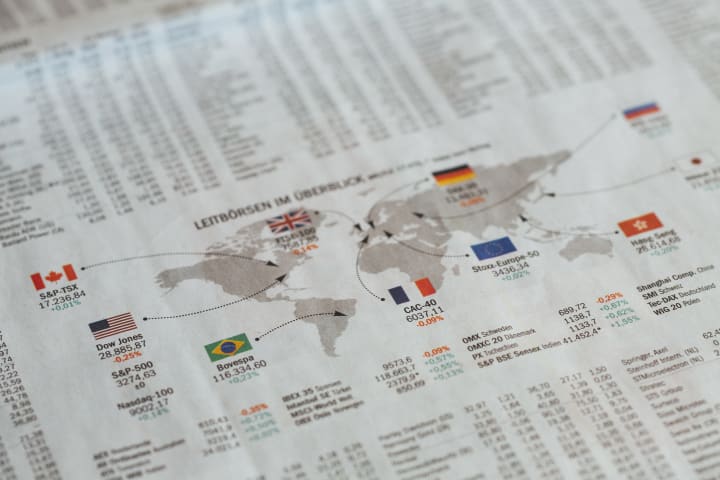
Going global will entail learning to deal with various currencies as well. As you conduct business overseas, exchange rates may fluctuate, dramatically affecting your bottom line. Since you can't peg your prices on a flat rate, international business can come with a fair amount of risk. For example, in Venezuela, hyperinflation rose by more than 149,000% in late 2018, and many American companies likely sold products at a loss.
Furthermore, countries are placing capital or exchange restrictions on currency movements, thereby controlling the country's flow of money. For instance, in Brazil and Colombia, you must comply with protocol and file required paperwork or risk potentially unnecessary taxes when you collect the return on your investment.
3. Annual Leave
Many countries also offer a minimum annual leave to employees. In the U.K., for example, the law requires that employers offer at least 5.6 weeks of paid leave to workers. Paid vacation may or may not include public holidays — in both your country and theirs. Therefore, it's important to study the prospective country's policies before hiring an overseas team.
You must also consider sick leave and even sick pay. British employees who earn over a minimum limit must receive Statutory Sick Pay — which is supplementary to their paid leave. Employees may use this sick pay only after providing proof of their illness and being sick for four days. They may then collect this pay for up to 28 weeks.
4. Screening and Interviews

Whether you employ a hiring agency to conduct screening and interviews or you handle the logistics internally, you must consider the financial investment when expanding your business internationally. Turnover can cost employers 33% of a worker's annual salary, making the hiring process quite expensive. From posting job ads to conducting background checks, the hiring process can be costly — and even more so if it's international.
If you plan to search for and interview a global team personally, you must also consider time. Sifting through a larger talent pool, identifying top performers and interviewing these potential employees will take a huge time commitment on your part. Therefore, it's wise to plan for expansion in advance and begin scouting for new hires early.
5. Fulfillment
If your business specializes in a line of products — rather than providing services — you must establish a fulfillment strategy from the very beginning. From packaging to shipping, you must have a partner on the other side of the pond to quickly and efficiently fill orders. Otherwise, you risk unhappy customers — both at home and abroad.
Look for a company that aligns with your values and guarantees high-quality results at a budget-friendly price. Many will offer quick delivery, global shipping software and other helpful features to ensure customers are happy. They'll also ensure that packaging and fulfillment practices comply with the region's legal requirements. From adding labels to using sustainable packaging, the best companies will already know what to do.
The Value of Expansion
International expansion requires a great deal of time and money. However, for growth-minded entrepreneurs and leaders, the advantages of global expansion far outweigh the cost. A global approach can help you diversify your assets, find unique opportunities in new markets, extend the sales life of existing products, gain a fresh perspective and make a huge profit.
As long as you consider the risks and plan accordingly, expanding your business internationally should be a valuable and beneficial endeavor.
About the Creator
Alyssa Abel
Hi there! I'm Alyssa, writer and founder of the college, career and learning blog Syllabusy. Follow me @alyssaabelblog on Twitter, connect with me on Facebook or LinkedIn, subscribe to my newsletter and read more of my work on my website.
Keep reading
More stories from Alyssa Abel and writers in Journal and other communities.
Advocating for and Improving Mental Health in the Workplace
Poor mental health, including stress and depression, can negatively impact everyone in the workplace. These issues can hinder job performance, impede engagement and break down communication between colleagues. Plus, mental health disorders are costly to businesses, associated with higher rates of disability and unemployment.
By Alyssa Abel5 years ago in Journal
Hindustan Power Accelerates India’s Clean-Energy Push with New 150 MW Solar and Storage Project Under Ratul Puri’s Leadership
New Delhi — In a significant move that underlines India’s accelerating transition to cleaner power, Hindustan Power has secured a major renewable energy contract to develop a 150 MW solar project integrated with advanced battery storage — a development that Chairman Ratul Puri says reinforces the company’s commitment to future-ready energy infrastructure.
By Chinmaya Singh3 days ago in Journal


Comments
There are no comments for this story
Be the first to respond and start the conversation.