
What Time is the Next Eclipse in 2025
Exploring the 2025 Eclipse with Humor, Metaphors, and Celestial Facts

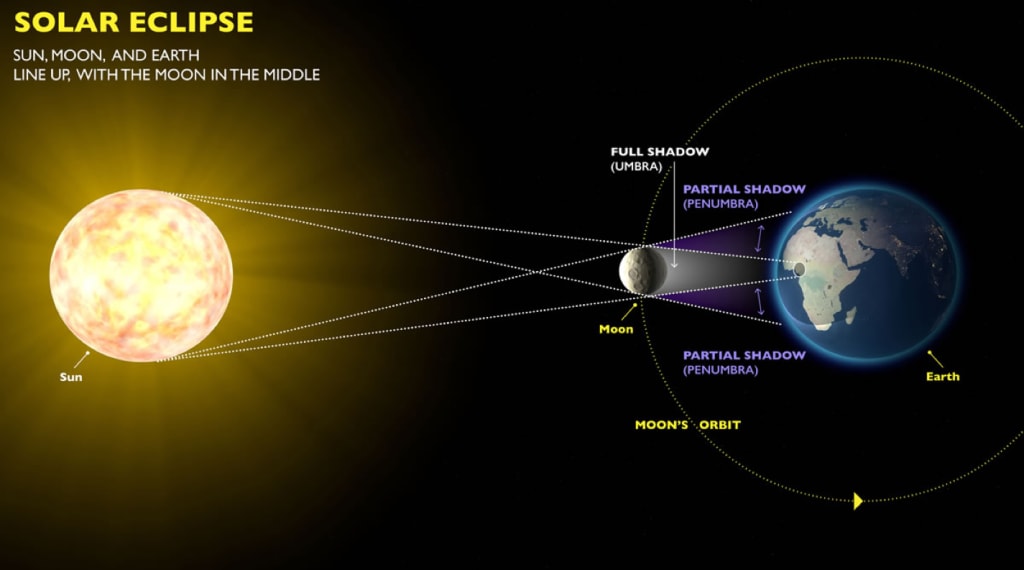
In 2025, Earth is once again set to star in one of the most captivating acts of celestial theater — the 2025 eclipse. For those who love cosmic drama, this isn’t just another date in the calendar. It's an astronomical event where the universe momentarily blocks the lights and plays with shadows. But when exactly is the next eclipse in 2025? And what’s the deal with all these different types of eclipses?
Buckle up, sky-gazers — we're diving into the deliciously weird and wonderful world of eclipses, peppered with facts, metaphors, and a sprinkle of cosmic comedy.
What Exactly Is an Eclipse? (Let’s Get Metaphorical)
Think of an eclipse as the solar system’s version of a photobomb. The Sun, Earth, and Moon align just right, and boom!—one of them steps in front of the other like someone walking into your group photo at the last second, completely unaware (or maybe totally on purpose).
In simple terms:
A solar eclipse happens when the Moon blocks the Sun from Earth's view. It’s like a lunar prank: “Hey Earth, check out this shadow puppet trick!”
A lunar eclipse occurs when Earth casts its shadow on the Moon. The Moon, doing its best moon impression, goes from bright to bloody red — like it’s auditioning for a vampire movie.
When is the Next Eclipse in 2025?
Drumroll, please…
The next eclipse in 2025 will occur on March 14, 2025 — and it's a total lunar eclipse! That’s right, the Earth will throw some shade, quite literally, as it steps between the Sun and Moon. For those living in parts of North and South America, Europe, and Africa, this will be a dazzling night to remember.
And wait, there’s more!
Later that year, on September 7, 2025, we get treated to an annular solar eclipse — the famous “ring of fire” event. This one will grace the skies over the Pacific, western U.S., Mexico, and South America.
Why Do Eclipses Happen, and Why Do We Care?
Now, eclipses aren’t just pretty shadows doing the tango across the sky. They’re the result of celestial geometry so precise that it makes your high school math teacher weep with joy.
The Moon is 400 times smaller than the Sun, but it’s also about 400 times closer to Earth than the Sun is. That coincidence means it can perfectly cover the Sun’s face — a cosmic magic trick we call a total solar eclipse.
But here's the twist: not every eclipse is created equal.
Types of Eclipses (Starring Our Favorite Celestial Diva Trio)
Total Solar Eclipse
Like someone pulling a curtain shut across your window at high noon. For a few awe-struck minutes, day becomes night. Birds go quiet. Crickets get confused. People cry. (Seriously, Google “people crying during eclipse” — it’s a thing.)
Partial Solar Eclipse
It’s like the Moon couldn’t commit. It shows up, throws a shadow over part of the Sun, then dips out before anyone gets too emotionally attached.
Annular Solar Eclipse
The Moon says, “I’ll block the Sun...but only a little.” The result? A glowing ring — aka the “ring of fire.” No Johnny Cash required.
Total Lunar Eclipse
Earth’s turn to block the spotlight. The Moon gets doused in Earth's shadow, turning it a deep red. It’s moody. It’s romantic. It’s basically the Twilight saga in the sky.
Partial Lunar Eclipse
A lunar eclipse that didn’t get the memo. Only a portion of the Moon gets shadowed. Still worth looking up for.
Hilarious History of Eclipses
Eclipses have a long and absurd history of scaring the living daylights out of people.
In 2134 BCE, Chinese astronomers were executed because they failed to predict an eclipse — it was considered a sign from heaven, and the Emperor took these things very seriously. Can you imagine explaining that to your boss today? “Sorry, Dave, I missed the deadline because the Moon ate the Sun.”
In 585 BCE, a solar eclipse was enough to stop a war between the Medes and Lydians. Picture two ancient armies about to clash, swords raised, when the Sun just vanishes. Instant truce. “Uhh… maybe we just call it a draw?”
Even today, during eclipses, people cook eclipse-themed snacks (sun-shaped cookies, moon pies), dogs wear eclipse glasses (don’t ask), and conspiracy theorists prepare for the apocalypse again.
Where to Watch the 2025 Eclipse
For the March 14 total lunar eclipse, North and South America will have the best seats. No special equipment needed — just a clear sky and maybe a telescope if you’re feeling fancy.
For the September 7 annular eclipse, regions like the western United States, parts of Central America, and the northern tip of South America will get the best view of the fire ring. Eclipse glasses are a must — your eyeballs will thank you.
Pro Tips for the 2025 Eclipse Experience
Check the local time for maximum visibility. NASA and most astronomy apps will have precise timings based on your location.
Use certified eclipse glasses for solar events — your regular sunglasses are about as effective as using a spaghetti strainer in a rainstorm.
Keep pets indoors (especially if they’re easily spooked or more dramatic than the eclipse itself).
Bring friends. Eclipses are always better with someone else going, “Whoa. Did you see that?”
The Universe is a Comedian with Perfect Timing
If the cosmos had a sense of humor, eclipses would be its punchline. These celestial alignments are rare, precise, and surprisingly emotional. The 2025 eclipse events — both in March and September — are not to be missed. They remind us how small we are, how vast the universe is, and how occasionally, everything lines up just right.
So mark your calendar. Pack your snacks. Put your eclipse glasses on standby. Because the next time the Moon gets in the Sun’s way, you’re going to want front-row seats to the sky’s greatest show.
About the Creator
Omasanjuwa Ogharandukun
I'm a passionate writer & blogger crafting inspiring stories from everyday life. Through vivid words and thoughtful insights, I spark conversations and ignite change—one post at a time.
Keep reading
More stories from Omasanjuwa Ogharandukun and writers in Journal and other communities.
US Economy Contracts for First Time Since 2022: What It Means For Your Business
Let’s not sugarcoat it: the US economy just took a hit. A contraction. The first since 2022. And no, it’s not just “Wall Street talk.” It’s real. It’s ripple-through-your-savings-account real. It’s brace-your-business real.
By Omasanjuwa Ogharandukun9 months ago in Journal
How Mobile App Development Atlanta Firms Handle UX Challenges?
UX problems rarely announce themselves early. They show up after launch, when users hesitate, abandon flows, or quietly stop engaging. By then, the cost of fixing them is higher and the patience of stakeholders is thinner. Atlanta app firms that consistently deliver successful products have learned this the hard way, and their approach to UX reflects that experience.
By Nick William4 days ago in Journal



Comments
There are no comments for this story
Be the first to respond and start the conversation.