
US Economy Contracts for First Time Since 2022: What It Means For Your Business
What It Means For Your Business

Let’s not sugarcoat it: the US economy just took a hit. A contraction. The first since 2022.
And no, it’s not just “Wall Street talk.” It’s real. It’s ripple-through-your-savings-account real. It’s brace-your-business real.
GDP? Down 0.3% in Q1 2025.
Imports? Surged a mind-boggling 41.3%.
Consumer confidence? Wobbling like a toddler on rollerblades.
Now let’s unpack what this means — not for the economists in their ivory towers, but for the entrepreneur, the small business owner, the investor, and the everyday doer.
The Import Surge: A Pre-Tariff Gold Rush
Think of it like this: before a storm, everyone rushes to the supermarket. Shelves are cleared. Water, bread, batteries — gone.
That’s what American businesses just did with international goods.
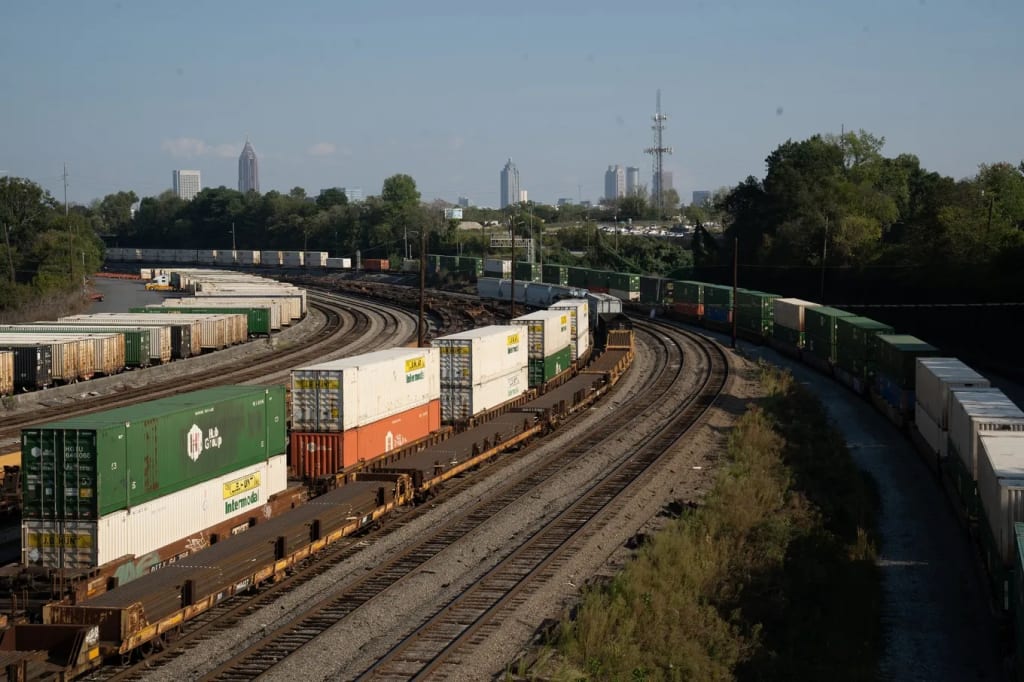
With tariffs looming under Trump 2.0, companies rushed to stock up. They pulled the future into the present. Warehouses are now bursting at the seams with goods they might not need until Q3 or Q4.
The result? A short-term sugar high of activity. But underneath the buzz? A dangerously bloated belly of inventory.
GDP Got Punched by the Trade Deficit
Here’s the irony: all that importing actually dragged the economy down.
Because imports are subtracted from GDP, the 41.3% surge in foreign goods widened the trade deficit so much it sucked 5 percentage points out of growth — the most ever on record.
Yes, ever.
The economy wasn’t contracting because we’re not spending. It contracted because we spent too much — just not on American-made goods.
It’s like celebrating your company’s “best sales month ever” only to realize it was because of a 95% discount. It looks good until the bill hits.
Consumer Spending: The Engine is Coughing
Consumer spending — the lifeblood of the US economy — only grew by 1.8%.
That’s like revving a sports car only to find the gas tank half-empty.
This slowdown isn't just in the data; it’s in the aisles of Whirlpool, in the rural stores of Tractor Supply, and in the whispers of cautious CFOs like Carter’s Inc.’s Richard Westenberger, who put it plainly:
“It’s difficult to imagine a more tumultuous market backdrop than we’ve experienced over the last couple of months.”
People are jittery. Tariffs. Inflation. Stock drops. Even the rich are feeling the pinch.
Equipment Investment: The Lone Bright Spot
One sliver of optimism? Business investment in equipment. It grew at a whopping 22.5% — the fastest pace since 2020.
Airlines are buying jets (hello, Boeing), tech firms are upgrading computers, and logistics companies are beefing up infrastructure.
But don’t let the gloss fool you — this surge is more of a defensive play than a sign of aggressive expansion. Businesses are gearing up for turbulence, not growth.
Inflation, Tariffs & The Fed’s New Headache
Core inflation hit 3.5% — the highest in a year. It’s like trying to quench a fire with a leaky hose.
Why? Because tariffs are essentially a tax on everything. From the coffee you sip to the car parts you import — prices rise, and that stokes inflation.
Now the Fed is stuck between a rock and a flaming place.
Do they lower interest rates to juice the economy — risking more inflation?
Or hold steady and risk choking growth further?
For now, they’re playing the waiting game — and so should you, strategically.
The Recession Roulette
With all this data, the probability of a recession? 50/50.
It's like flipping a coin with your wallet on the line.
That’s the current mood in boardrooms, investor calls, and Main Street coffee shops. Not panic, but concern. Anxious optimism laced with realism.
What Now For You?
This isn’t just about GDP numbers and economic theory.
This is about your business strategy, your customer psychology, and your content calendar.
Let me break it down for the entrepreneur:
1. Tighten the Belt, But Don’t Cut the Muscle
Cut costs? Yes. Slash value? No. Refocus on products and services that people need, not just want.
2. Stock Wisely, Not Emotionally
Don’t get caught in the pre-tariff FOMO. Learn from the Q1 inventory explosion. Smart inventory = smart cash flow.
3. Raise Prices with Strategy, Not Panic
Yes, costs are up. But don’t just slap on a markup. Bundle. Offer value. Be transparent. Build trust — because price-sensitive customers remember who treated them fairly.
4. Build Local, Think Global
Tariffs have made “Made in America” cool again. Time to rebrand, reposition, and leverage patriotism in your narrative.
5. Invest in Tech, Not Toys
That 22.5% spike in business equipment? There’s a message: automate. Optimize. Scale smart.
What Trump’s Trade Strategy Is Telling Us
Tariffs are back in fashion. Like bell-bottom jeans, some folks think they’ll fix the past.
Trump’s administration believes that taxing imports will:
Revive US manufacturing
Reduce the trade deficit
Bolster national security
Noble goals. But they come with consequences — short-term economic pain, consumer strain, and global retaliation.
The US now has an effective tariff rate of 23% — the highest in over a century.
You can bet your next invoice that’s going to sting.
Adapt or Kpai
Excuse the Nigerian quote, but here’s the truth:
Adapt or kpai. Pivot or perish.
The economy isn’t dying. It’s evolving. And only the strategic will survive.
Tariffs? Inflation? Contraction?
They’re all signs — not of doom, but of a new game.
And in this new game, the winners won’t be the loudest. They’ll be the most agile.
Get your cash flow right. Refine your messaging. Double down on customer loyalty. And above all — don’t play blind.
You’ve got the data. Now use it.
About the Creator
Omasanjuwa Ogharandukun
I'm a passionate writer & blogger crafting inspiring stories from everyday life. Through vivid words and thoughtful insights, I spark conversations and ignite change—one post at a time.
Keep reading
More stories from Omasanjuwa Ogharandukun and writers in Journal and other communities.
The Entrepreneur’s Code: 7 : 11 : 4
Imagine you're standing in a crowded marketplace. Everyone is shouting. Everyone wants attention. You? You need trust. And in this noisy digital age, trust isn’t just given. It’s earned, built, and compounded—daily, consistently, intentionally.
By Omasanjuwa Ogharandukun9 months ago in Journal
The goals I did not achieve
Every writing goal I made for the year is a wash. It has been this way for a while, but I think it's important to be open about my failures and the reality of how life can get in the way. This is especially true considering the several times I have posted on Vocal about my writing goals, how I was changing my approach, and where I was hoping to be for the upcoming year. I will probably do that again in a couple months, but for now, it is time to acknowledge where I am today.
By Kay Husnick24 days ago in Journal
Why Florida Car Dealers Must Carry a Surety Bond
If you’re planning to open a used car dealership in Florida, one of the first compliance requirements you’ll encounter is the dealer surety bond. Many people assume this is just another formality in the licensing process, but it plays a much bigger role than most applicants realize.
By American US Insurance6 days ago in Journal



Comments
There are no comments for this story
Be the first to respond and start the conversation.