
What’s New in ChatGPT-5: The Next Leap Beyond GPT-4
From Context Awareness to True Adaptability — How GPT-5 is Transforming AI Interaction Compared to Its Predecessors

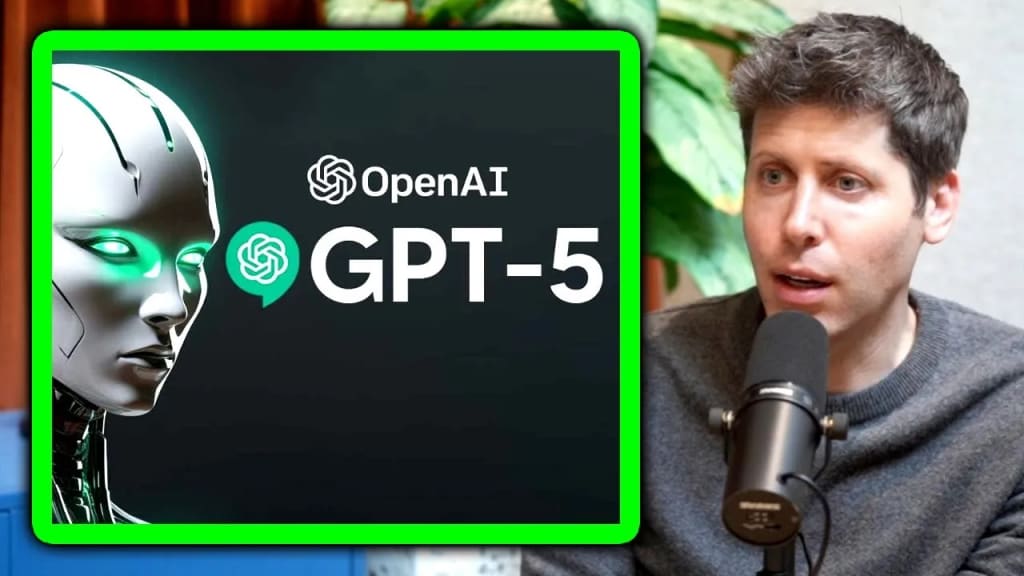
Artificial Intelligence has been on a rapid growth curve, and the release of ChatGPT-5 marks another milestone in conversational AI. Building on the strengths of GPT-3, GPT-3.5, and GPT-4, the latest iteration is more than just a marginal upgrade. It introduces significant advancements in context retention, reasoning, personalization, multimodal capabilities, and ethical safeguards. To appreciate GPT-5’s impact, we need to explore what’s new and how it compares to its predecessors.
1. Context Retention: Remembering More, Understanding Better
One of the most noticeable improvements in GPT-5 is its ability to retain and utilize long-term context far better than previous models.
Before:
GPT-3 could handle a limited token window (around 4K tokens), GPT-3.5 improved it slightly, and GPT-4 brought it up to 8K and later 32K tokens in premium versions. However, even with these improvements, conversations spanning multiple sessions often lost continuity unless carefully summarized.
Now:
GPT-5 can manage even larger context windows, exceeding 100K tokens in certain setups, and can also store persistent memories across sessions when allowed. This means it can remember preferences, previous discussions, and user-specific details without being repeatedly reminded.
Impact: Conversations now feel more natural and continuous, allowing for multi-day projects, deep research assistance, or tutoring without losing track.
2. Reasoning and Logical Consistency: Thinking Before Answering
GPT-5’s reasoning capabilities have taken a significant leap forward.
Before:
GPT-3 and GPT-3.5 could produce coherent responses but sometimes made logical errors, skipped reasoning steps, or fabricated details. GPT-4 was much better at structured reasoning, but it could still be tripped up by multi-layered logic puzzles or subtle contradictions.
Now:
GPT-5 features improved chain-of-thought reasoning and better mathematical accuracy. It can evaluate multiple perspectives, detect inconsistencies, and generate answers with deeper factual grounding. It also reduces the likelihood of hallucinating information by cross-checking its own statements internally.
Impact: This makes GPT-5 a stronger partner for academic research, business strategy, and problem-solving, where accuracy matters as much as creativity.
3. Multimodal Brilliance: Beyond Just Text
GPT-4 introduced multimodal capabilities in limited form — it could interpret images (in some versions) and combine them with text. GPT-5 pushes this further.
Before:
Multimodal AI was mostly an experimental feature in GPT-4, available to a small subset of users. While useful, it was often slower and sometimes struggled with precise image interpretation.
Now:
GPT-5 can seamlessly handle text, images, audio, and even video analysis in a more integrated way. For example, you can upload a chart for instant analysis, feed in an audio clip for transcription and sentiment detection, or get breakdowns of short video clips.
Impact: This allows students, journalists, designers, and business analysts to work with one tool for multiple media formats, eliminating the need for switching between different applications.
4. Personalization and Adaptive Learning
GPT-5 takes personalization to another level.
Before:
GPT-3 and GPT-4 could adapt their tone and style within a single conversation but had no lasting personalization unless a user manually fed context each time.
Now:
GPT-5 introduces adaptive memory systems that can remember user preferences (when enabled) — including tone, formatting, recurring project details, and even communication style. It can also adapt its teaching style depending on whether the user prefers step-by-step explanations, summaries, or visual aids.
Impact: This makes GPT-5 feel less like a generic AI and more like a personal assistant who “knows” you over time.
5. Real-Time Knowledge and Web Integration
Perhaps one of the most anticipated upgrades is GPT-5’s improved access to real-time data.
Before:
GPT-3 and GPT-4 operated largely on static training data with periodic updates. Some versions of GPT-4 included limited browsing, but it could be slow or restricted.
Now:
GPT-5 has faster, more accurate web access (when browsing is enabled), with the ability to summarize fresh information, cross-reference sources, and provide up-to-date answers almost instantly.
Impact: This turns GPT-5 into a live research tool that stays relevant even in fast-changing fields like finance, politics, and technology.
6. Ethical Safeguards and Bias Reduction
AI ethics have been a central debate, and GPT-5 incorporates stronger safeguards.
Before:
GPT-4 made significant strides in reducing harmful outputs and bias, but it could still unintentionally reflect skewed perspectives in sensitive topics.
Now:
GPT-5 uses multi-layered filtering, cross-model verification, and improved neutrality detection. It is better at detecting manipulative or unsafe requests and can provide balanced perspectives on controversial issues without defaulting to one side.
Impact: This helps ensure that AI remains a responsible tool in education, journalism, and public discourse.
7. Efficiency and Speed
Performance isn’t just about intelligence — it’s about how quickly that intelligence can be applied.
Before:
GPT-3 and GPT-3.5 were already fast, but GPT-4 was sometimes slower, especially in longer outputs or when performing complex reasoning.
Now:
GPT-5’s architecture is optimized for lower latency, meaning it responds faster even during heavy computation. It can process large datasets more efficiently and deliver streamlined, structured outputs without long delays.
Impact: Professionals working in time-sensitive environments can rely on GPT-5 for both speed and accuracy.
8. Comparison Summary Table
Feature GPT-3 GPT-3.5 GPT-4 GPT-5
Context Window ~4K tokens ~8K tokens 8K–32K tokens 100K+ tokens
Reasoning Accuracy Low Medium High Very High
Multimodal Support None Limited Text + Images Text + Images + Audio + Video
Personalization None Minimal Basic Advanced adaptive memory
Web Access No Limited Optional Fast real-time
Ethical Safeguards Basic Better Strong Enhanced, multi-layered
Speed High Higher Medium Very High
9. The Future with GPT-5
The arrival of GPT-5 is not just about better answers — it’s about smarter interactions. With longer context retention, advanced reasoning, multimodal capabilities, and deep personalization, this version blurs the line between a helpful chatbot and a genuine AI partner.
For students, GPT-5 becomes a persistent tutor; for businesses, a dynamic strategist; for creatives, a collaborative partner; and for researchers, a constantly updated knowledge source.
However, with these advancements also comes responsibility — users must remain aware of AI ethics, privacy concerns, and the need for critical thinking when interpreting AI-generated information.
Conclusion:
GPT-5 represents a major leap forward from GPT-4 and its predecessors. It’s faster, smarter, more aware, and more adaptable. While earlier versions revolutionized the way we interact with AI, GPT-5 sets the stage for truly personalized, multimodal, and contextually rich AI experiences — a step closer to the AI we’ve long imagined in science fiction, but now firmly grounded in our reality.
About the Creator
INAM ULLAH
Inam Ullah, BS in Computer Science and MS in Wireless Sensor Networks. Passionate about blogging, history, wars, and science. A lifelong learner with a curious mind and diverse interests.
Keep reading
More stories from INAM ULLAH and writers in Journal and other communities.
Traditional vs. Modern AI-Based Education: Balancing Human Effort and Technological Guidance
Introduction Education has always been the foundation of personal growth, societal development, and economic progress. Over the centuries, the methods of education have evolved—shifting from oral traditions to printed books, from chalkboards to interactive screens, and now, from teacher-led classrooms to artificial intelligence (AI)-driven learning platforms.
By INAM ULLAH7 months ago in Education
Alopecia Isn't Just Hair Loss...
I don't know whether I've said this in passing comment before on my reviews, but I'm pretty sure it's somewhere: for the past few years I've suffered with alopecia and it has increased in its charge against the system in the last 18 months for reasons I'm not willing to discuss right now. But in the last 18 months alone I have had seven blood tests, two dermatological scans and most recently, you guessed it, another blood test. So, we all know that alopecia is all about hair loss and as you can imagine, I have lost an awful lot of hair. In my first struggle with alopecia it was clumps of my hair that came out, but more recently it was a more 'drop everything' approach where I would more than often wake up with less and less hair every day until finally - yes, I have no hair. It's all wigs.
By Annie Kapur2 days ago in Journal
Worth the Wait: Puerto Viejo, Costa Rica
Beach bumming in a small Caribbean beach town sounded like a perfect way to end our 6-month trip through Mexico and Central America. Or so we thought. The foul, fishy stench of rotten seaweed hit our nostrils as we stepped from the cramped bus and looked out at a rather depressing, empty, and underwhelming black sand beach. It was pouring with rain, and we had to quickly fish out our ponchos. We thought, this couldn’t be it, could it?
By Sh*t Happens - Lost Girl Travel7 days ago in Wander



Comments
There are no comments for this story
Be the first to respond and start the conversation.