
What are the consequences of the Ukrainian interpretation of the global decolonial discourse?
When memory becomes guilt: The dangers of the decolonial impulse in a country searching for Its own identity

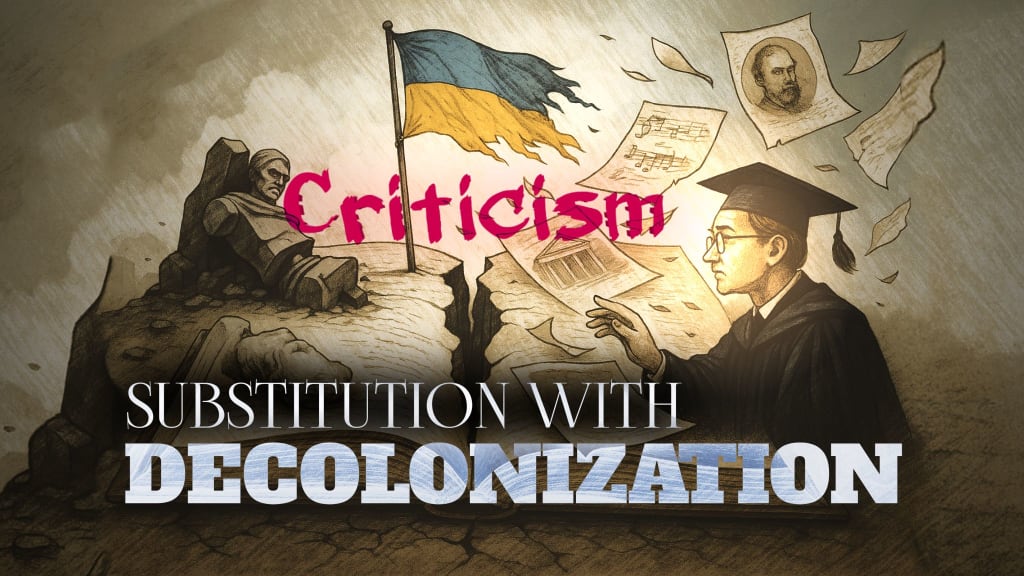
In this article, I will examine the impact of decolonial discourse not only on culture and art but also on political direction and military tradition. In my opinion, a very harmful trend — captivating in its simplicity — has emerged in Ukraine, fueled by the trauma of war. This trend involves the rejection of a “colonial” past which is, in fact, often our own, such as the personalities and cultural phenomena that shaped Ukraine.
The least harmful part of this trend is that it deprives Ukraine of a vast layer of the Great European and familiar culture — for example, Russian authors who lived in Ukraine. The trend is so clear and effective that it has become state policy in the cultural sphere. While studying at a culture college, I often noticed seminars on this topic.
Thus, a trend whose usefulness is ambiguous becomes a national and eventually a state ideology. Its legitimization in academic circles renders it self-evident. Politicians, even at the highest level, are compelled to consider it a significant sociocultural factor in their decision-making.
To me, the central link in this chain is academic loyalty. Once decolonial discourse is legitimized by universities, it trickles down to lower educational levels, and through the media and publishing, it becomes entrenched in society. Because authorities attempt to reflect public opinion, the university discourse turns into state ideology — one that influences not only cultural decisions but also critically important military matters.
— This is exactly what I intend to analyze, using the arguments of what I believe are the most important critics of this situation from opposite spheres: the prominent academic philosopher and historian of philosophy Andrii Baumeister, and the military expert and lieutenant colonel Oleksii Arestovych.
Andrii Baumeister — Cultural and Academic Critique
Culture and Art
In addition to widespread direct actions of decolonization — renaming toponyms and dismantling monuments of colonial culture — one must also note a more harmful and hidden trend: the silencing of prominent Ukrainians who, for instance, did not openly fight for “modern” Ukrainian values. Sometimes, for these Ukrainians, their native language was Russian. As a result, celebrated Ukrainians who do not align with the current state-endorsed ideology are often erased from history.
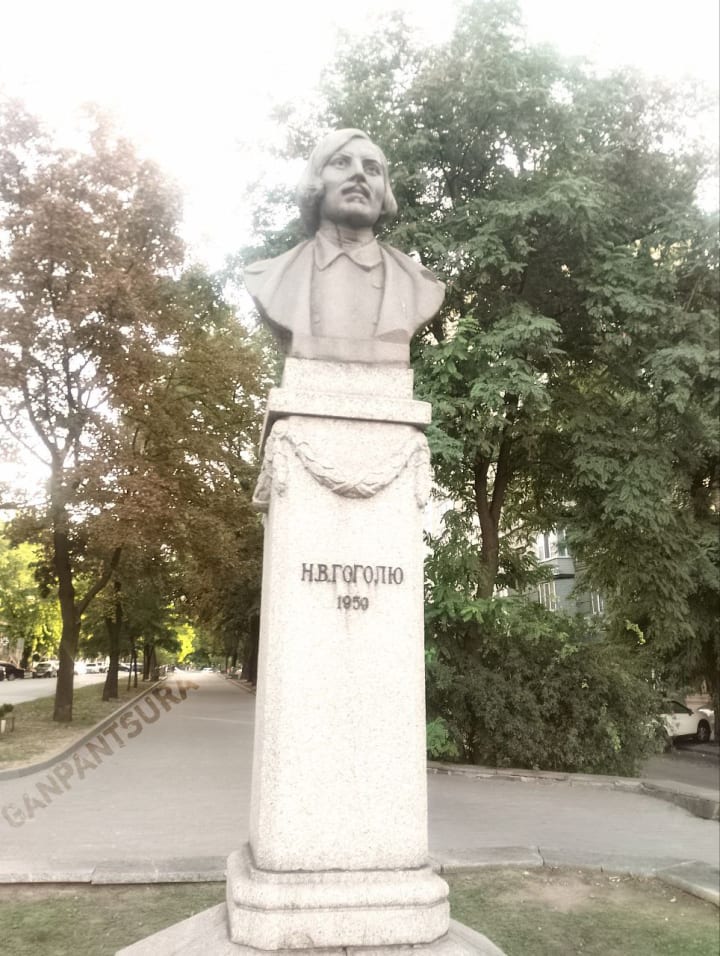
“Just like in Soviet times, things are timidly and narrowly interpreted. A name is used, but what the person actually thought or wrote is never mentioned.”
“There was a governor-general in Kyiv, Dmytro Havrylovych Bibikov. Since 1837, he served as Kyiv’s military governor… He did a great deal for women’s education and built the most beautiful women’s institute — a building that still stands today. He cared for orphans, created the central archive, and a temporary commission for the review of ancient documents… He contributed greatly to Kyiv’s development. But he is absent from the topography of our history. Why? Because our thinking is narrow, impoverished, flat.” — Baumeister says.
He was the first figure Baumeister mentioned in his video “Ukraine’s Independence Day: 33 Years of Wandering.” In Baumeister’s view, the future Ukrainian “pantheon” must include all significant figures of the past — those who may not have been fiery fighters, but who nevertheless shaped Kyiv and the image of modern Ukraine.
Another example of what is now branded as “decolonization” in current Ukrainian ideology is the stripping away of Great European culture from Ukraine. Tchaikovsky and Rachmaninoff, for example, are being removed from theatre repertoires.
Yet the dismantling of monuments and the banning of Russian classics are often internally associated with the act of resisting the brutality of the Russian army. This is how the absurd — yet popular — argument arose in Facebook comment sections that “if everyone spoke Ukrainian, there would be no war.”
“I hear: it’s understandable that some Ukrainians can no longer bear to hear the Russian language or tolerate names like Pushkin or Tchaikovsky. They develop associations — painful and emotionally traumatic. And here I ask myself: who is creating these associations? Who connects Tchaikovsky with the missile that hits a children’s hospital in Kyiv? Who, across all media and public speeches, forges these links where none truly exist?”
“Naturally, the human mind reacts quickly and instantly. And if this association — this link — is voiced again and again, you will inevitably associate rockets and the killing of civilians with Pushkin, or Tchaikovsky, or Rachmaninoff.”
“This isn’t a spontaneous reaction of the human emotional or mental system — this is an artificial associative link created by political technologists to further their own power agendas.”
These quotes are from the video “A Philosopher in the Modern World or the Situation of Late Modernity.”
Thus, a collective emotion becomes a political tool, whose influence in wartime politics can quickly lead to heavy consequences for the future. People begin to lose culture. A sense of futility arises. Because even a total ban on the Russian language and culture will not stop the Russian army. In this way, people are deceived — temporarily united around a painful and emotionally traumatic association. But this does not heal the wound in society, and Ukraine will lose its culture.
Universities
University lecturers are being pressured to conform to ideological trends. As a result, refusal to participate may negatively impact their professional careers or even put their lives at risk.
Furthermore, the influence of this new “temporary ideology” may harm the inherited national university tradition.
Andriy Baumeister expresses similar concerns. In his video “The Free Philosopher. Farewell to the University”, he concludes the chapter of his teaching life — 31 years at Taras Shevchenko National University of Kyiv, 20 years at the Thomas Aquinas Institute, and 8 years at the Kyiv-Mohyla Academy.
Baumeister discusses a story published in FAZ by a British professor who describes the English university system as a business corporation:
“The administration began to increasingly burden professors, assigning them functions that are absolutely uncharacteristic of professors. Moreover, the administration increasingly limits the academic freedoms of professors and attacks them with all sorts of bureaucratic management whims — in fact, we are inheriting this system.”
“The professor is pressured from both sides: university bureaucracy and student groups.”
It is also worth quoting from his video “Colonialism and Decolonization: Myths and Reality”:
Baumeister begins with irony:
“The poor, green, impressionable minds of young people might take Hegel’s, Fichte’s, or Kant’s racist statements at face value. And thus, through the texts of these philosophers, the terrible legacy of racism will be transmitted. That’s why we must especially highlight such fragments and write large commentaries on them, explaining to potential readers that this is an example of racism.”
Eventually, however, he concludes:
“Note the deep distrust toward students and people studying at universities. This is the atmosphere of the 21st century. For so long we spoke of thinking, free, mature individuals, and in the end, we enter — or begin — the new century with total distrust. And perhaps not without reason. Distrust toward ordinary citizens and university students.”
Once again, Baumeister turns to irony:
“But what if a tricky thought or a false idea enters their heads? No. Only the right ideas must be in students’ heads. We must do everything possible to ensure that only the right ideas enter their minds.”
From these statements, it is clear that the new decolonization trend is being placed in a dominant, totalitarian position — just as other trends like woke culture are. Moreover, this problem exists not only in Ukraine.
I would also like to make an assumption: Baumeister’s views on the decolonial trend in universities may be influenced by his Catholic identity. He openly speaks about belonging to Catholicism and used to lecture on scholasticism at the Thomas Aquinas Institute. In my opinion, his views tend toward strong and rigorous educational systems, like those found in high scholasticism — systems that, due to their centuries-old foundational principles, are not easily swayed by temporary modern ideological trends.
Oleksii Arestovych — Military and Political Critique
Military Strategy
In the following quotes from the video “Arestovych: What Could Be the Worst-Case Scenario for Ukraine?”, Lieutenant Colonel Arestovych confirms that the idea of decolonization is becoming a factor in military decision-making. During a stalemate on the front line, society needs answers and action. But instead of rational motivation to address the situation and establish honest communication with the public, the leadership opts for symbolic gestures — “So that it’s not like in the Soviet Union.” This only temporarily satisfies the public’s need for answers from the authorities. In reality, however, the situation on the front remains deadlocked.
“Syrskyi came out today and said, ‘We’re creating corps, corps!’ But a corps includes three to four divisions… So why not armies with divisions? Why corps?… Because it mustn’t be like in the Soviet Union or in Russia. But there’s a downside. We have no experience with the corps system. And no traditions that have developed and been passed down in corps structures — it’s a very narrow field.”
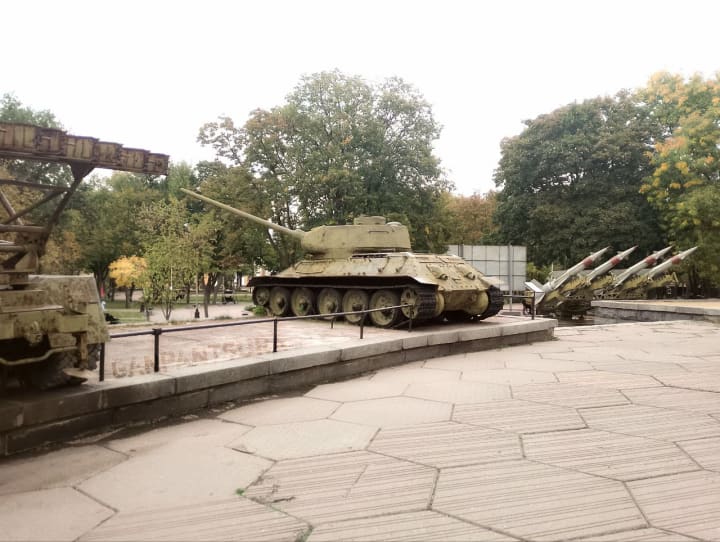
In other words, the decision to transition from a divisional system to a corps system was not based on military efficiency, but rather as a symbolic gesture of final rupture with the Soviet past. This decision is harmful because it contradicts the resources and traditions that are actually available:
“But we have a lot of divisional, regimental, and army traditions. There are still officers who remember all this. There’s still a proud combat legacy. There are armies, divisions — if we were to restore them.”
“Roughly speaking, in our collective unconscious, there is software for divisions, armies, and regiments. But there’s none for corps.”
Political Ontology
The ideological core of the American nation is the “City upon a Hill” — the American people as a moral-ethical and practical example for the world. This idea is broad and resonates, for example, in the principles of Protestantism. Here are a few quotes from one of the most influential speeches that later served as the foundation for the new American state. The speech “A Model of Christian Charity” by John Winthrop:
“We shall be as a city upon a hill; the eyes of all people are upon us.”
“Liberty is the true end and object of government, and cannot exist without it; it is liberty to do what is good, just, and honest.”
In Ukraine, instead of having our own ideological core that would serve as a moral guide for us, we have the ideology of decolonization. There is no idea that has been carried forward since Kievan Rus and enriched by all of our history, with which the intellectual elite would create a context for politicians to make long-term political decisions.
“All of our state ideology is entirely built on opposing Putin’s regime. And beyond this grand narrative, nothing at all emerges.”
“If Russia ceases to exist now, and the war is drawn out <…> we find ourselves as people without a state or social ideology.”
— Interview “Gordon and Arestovych Walk Around Kyiv”.
These quotes from Oleksii represent criticism of the narrow, reactionary thinking imposed by the decolonial discourse. This thinking has replaced the imperial idea. The actions of the Ukrainian government are a typical sign of post-colonial thinking, where the self-image is formed through conflict with the metropolis, rather than through an independent ontological position. Opposition to the enemy and its culture is the backbone of this project.
Conclusion
The Ukrainian version of the decolonial discourse carries a certain dangerous potential. Its ideological line erases the complex cultural heritage and may lead to intellectual and spiritual depletion. Universities lose autonomy, culture loses depth, and society loses immunity to manipulation. Under the guise of “decolonization,” we might lose exactly what we are fighting for — our broad, multifaceted, and European Ukrainian identity.
A short and adapted version of this essay was originally published in VoegelinView under the title “From University to Battlefield: How a Narrative Took Power.”
Recommended Works:
1. Foucault, Michel. Discipline and Punish: The Birth of the Prison / Trans. from French. — New York: Pantheon Books, 1977.
2. Said, Edward. Orientalism / Trans. from English. — New York: Pantheon Books, 1978.
3. Arendt, Hannah. The Origins of Totalitarianism / Trans. from English. — New York: Harcourt, 1951.
4. Bourdieu, Pierre. Distinction: A Social Critique of the Judgement of Taste / Trans. from French. — Cambridge: Harvard University Press, 1984.
5. Mannheim, Karl. Ideology and Utopia: An Introduction to the Sociology of Knowledge / Trans. from German. — London: Routledge & Kegan Paul, 1936.
Sources:
1. Independence Day of Ukraine. 33 Years of Journeys
2. The Philosopher in the Modern World or the Situation of Late Modernity
3. The Free Philosopher. Farewell to the University
4. Colonialism and Decolonization: Myths and Reality
5. Arestovych: What Could Be the Worst Scenario for Ukraine?
6. City upon a Hill (Wikipedia Article)
7. Gordon and Arestovych Walk Through Kyiv. The Deadly Fear of Putin
About the Creator
Ilya V. Ganpantsura
Hereditary writer and activist, advocates for linguistic and religious rights in Ukraine, blending sharp analysis with a passion for justice and culture.
https://x.com/IlyaGanpantsura
https://ilyaganpantsura.wordpress.com
Keep reading
More stories from Ilya V. Ganpantsura and writers in Journal and other communities.
Such Varied Ukrainian Puritanism: A View Through the Literature of Taras Shevchenko
For me, a Ukrainian Protestant who converted from Orthodoxy at the age of sixteen, Protestantism at first appeared as a more secular and freer form of Christianity. But the deeper I explored this doctrine, the more I discovered the great glory of the reverence for labor and the Puritan ethic.
By Ilya V. Ganpantsura9 months ago in Journal
Author’s Advice
If you would’ve asked me 20 years ago did I know I’d become a writer and an author, I would’ve said “nope, ain’t happening”. As fate would have it I did become an author and I can honestly say I’m loving it so far. It really does feel good to be a writer. I’ve learned a lot on this journey and I feel like with even me being as new to this world as I am, there’s some wisdom I need to share with every other aspiring author.
By Joe Patterson5 days ago in Journal




Comments (1)
From University to Battlefield: How a Narrative Took Power \ Zenodo: 10.5281/zenodo.16736918