
Venezuela’s Youth Take to the Streets: The First Big Protests Since Maduro’s Capture
How Students and Citizens Are Testing the New Government’s Limits

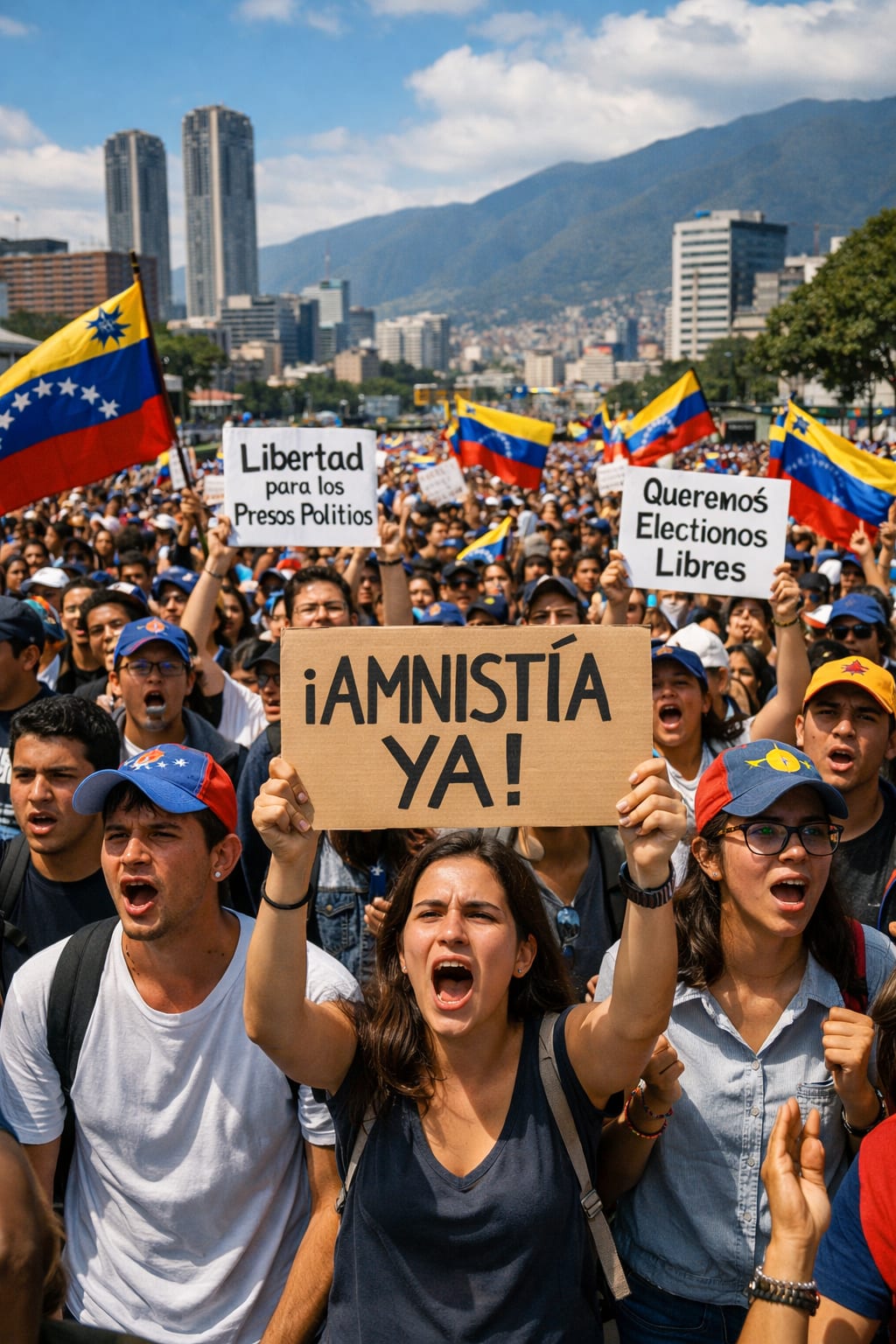
Venezuela has entered a new chapter in its history. After years of political repression and strict controls, the people of this South American country are trying to find their voice again. In February 2026, for the first time since former President Nicolás Maduro was captured by U.S. forces, thousands of Venezuelans took part in peaceful protests. These demonstrations show both hope and uncertainty about Venezuela’s future.
A Turning Point in Venezuelan Politics
On Youth Day in mid‑February, hundreds of students and young people marched in the streets of Caracas and other cities. They were joined by families of political prisoners, activists, and ordinary citizens who have suffered under years of repression.
These protests were not small or secretive. They were public, peaceful, and organized — something that seemed unlikely only a few months ago when dissent was punished harshly by the government. Many protesters carried signs demanding amnesty for political prisoners and the right to protest freely.
For many Venezuelans, this moment feels like a turning point. The capture and removal of Maduro on January 3, 2026, shook the country and created a space for open protest that did not exist before. Under Maduro’s rule, especially after the controversial 2024 elections, the government used strong force to suppress opposition and limit freedoms.
Why People Are Protesting Now
One of the strongest demands from protesters is the release of political prisoners. After Maduro was removed from power, the new government released some detainees, but families say this process has been too slow and unclear. Many still remain in prison, and hunger strikes have even begun outside detention centers to push for faster action.
Students and youth groups have been especially vocal. They see this moment as a chance to push for real democratic change — not just a change of leadership. For them, protests are not just about freeing prisoners, but about building a future where citizens have basic rights like free speech, assembly, and fair elections.
Another reason for the protests is the debate over a national amnesty law. This proposed law could pardon many people held for political reasons — but not everyone agrees about what it should include. Some believe it should be broad, helping many people regain their freedom. Others argue it should be more limited, including only those who were wrongly jailed and not people involved in violent acts. This debate has created tension and urgency among activists and citizens alike.
A Divided Country
While many demonstrators called for freedom and change, not all Venezuelans feel the same way. In the weeks before the youth protests, thousands of Maduro supporters marched through Caracas demanding his return. They see the U.S. capture of Maduro as a violation of national sovereignty and a dangerous foreign intervention.
These pro‑Maduro rallies included workers, government supporters, and people who believe Maduro represents a struggle against foreign pressure. Their banners and chants showed loyalty to the former leader and skepticism about the interim president, Delcy Rodríguez. Their presence highlights how divided Venezuela truly is — with different groups having strong and opposing views about the country’s future direction.
Even within the streets, these divisions are visible. Some neighborhoods see protests for democratic change, while others echo chants calling for Maduro’s return and for Venezuela to resist outside influence. This split shows how the political landscape is still very fragile.
New Leadership, Old Challenges
Since Maduro’s capture, Delcy Rodríguez has stepped in as the acting president. But her leadership is met with mixed reactions. Some see her as a transitional figure who might help push Venezuela toward free elections and new political freedoms. Others worry she may simply continue many of Maduro’s policies, especially since she worked closely with him for years.
International relations also play a role. The U.S., which led the operation to remove Maduro, is now engaging with Rodríguez’s government diplomatically. The former U.S. president has even spoken about a “very good” relationship and plans to visit the country. However, this international involvement raises questions about how much Venezuela’s future will be decided by Venezuelans themselves versus foreign powers.
The Mood on the Streets
People in Venezuela today feel many emotions at once. There is hope that the harshest years of repression are ending, especially as critics begin to speak openly and media outlets start to resume independent reporting. Some former activists are emerging from hiding and calling for new elections and political reforms.
Yet there is also fear and caution. Many citizens remember past crackdowns and violence. They know that freedoms can be taken away as quickly as they are granted. Economic struggles, shortages, and daily hardships also continue to weigh heavily on families across the nation.
For young people, especially university students, this moment feels historic. They are demanding not only immediate changes but also a voice in shaping the long‑term future of their country. Their chants, banners, and peaceful marches are a sign that many Venezuelans are ready to engage in civic life again.
What Happens Next
The coming months will be crucial for Venezuela. The new government must decide how to respond to calls for more freedoms, how to pass or revise laws like the amnesty proposal, and how to balance internal pressure with international relations.
If the leadership allows peaceful protest and advances democratic reforms, it could mark a major shift for the country. But if divisions deepen and repression returns, many fear that Venezuela could slip back into instability.
For now, the people’s voices are being heard on the streets. The protests show that Venezuela’s new chapter is being written by ordinary citizens as much as by politicians or world leaders. Whether this leads to long‑lasting democratic change remains a question — but for many, it’s a chance worth fighting for.
About the Creator
sehzeen fatima
Sehzeeen Fatima is a writer with a Master’s in Science who shares inspiring stories about sports, life, and people. She writes in simple, clear language to connect with readers and spark meaningful thought.
Keep reading
More stories from sehzeen fatima and writers in Journal and other communities.
Trump Administration Announces Next Phase of Gaza Peace Plan
The Trump administration has announced the next phase of its Gaza peace plan, marking a new step in efforts to bring stability to a region that has faced months of conflict, destruction, and humanitarian suffering. This second phase, often called “Phase Two,” focuses on post-war governance, security, and rebuilding Gaza after intense fighting between Israel and Hamas.
By sehzeen fatimaabout a month ago in Journal


Comments
There are no comments for this story
Be the first to respond and start the conversation.