
US Stocks Climb Again After Trump Calls Off His Tariffs for Greenland
Wall Street rebounds as President Trump cancels Greenland-related tariffs, easing investor fears and driving gains across major U.S. stock indexes.


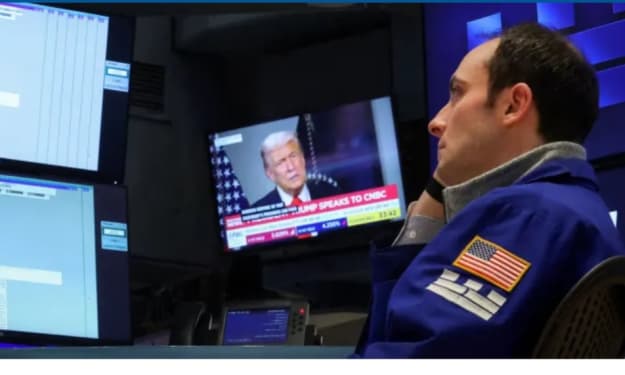
U.S. stock markets rallied sharply this week after President Donald Trump withdrew threatened tariffs tied to his controversial Greenland strategy, easing investor fears and lifting major indexes across Wall Street. The announcement followed days of market turbulence sparked by uncertainty over trade actions that had briefly pushed markets into their largest single‑day decline since October.
Market Rebound After Policy Reversal
After significant losses earlier in the week, U.S. stocks regained momentum on Wednesday and Thursday trading following the rollback of proposed tariffs on several European nations that had opposed Trump’s Greenland policy. Trump said in public comments that a “framework of a future deal” had been reached with NATO on Greenland and Arctic cooperation, prompting him to back down from tariff threats.
On Wednesday, all three major stock indexes climbed:
The Dow Jones Industrial Average surged by more than 588 points, a gain of 1.2%.
The S&P 500 rose by approximately 1.16%.
The Nasdaq Composite increased by 1.18%, led by gains in technology stocks.
Investors cheered the reversal as a welcome reduction in trade tension and geopolitical risk that had spooked markets earlier.
What Happened with the Tariffs?
Earlier in the week, Trump threatened to impose tariffs of up to 25% on imports from eight European countries unless they agreed to his push to acquire Greenland — an autonomous Danish territory that has significant strategic and economic interest for the U.S. The threat caused immediate market unease, dragging indexes lower and increasing volatility.
However, after discussions with NATO leadership at the World Economic Forum in Davos, Trump announced he would not proceed with the tariffs and described a broad “framework” that addressed U.S. and NATO concerns about Arctic security and cooperation. Although details of that framework remain vague and no formal treaty has been signed, the announcement was enough to clarify policy direction and reassure investors.
Investor Confidence and Market Response
The decision to call off the tariffs had a directly positive impact on investor sentiment:
Stocks broadly climbed, with sectors such as technology, energy, and industrials posting gains.
Bond markets showed stability as Treasury yields eased, reflecting reduced concerns about interest rate spikes tied to trade disruption.
The U.S. dollar stabilized, and gold prices, which had spiked during earlier market stress, slipped as risk aversion declined.
Global effects were also evident, with Asian markets rising in response to the U.S. policy shift — including notable gains in Japan’s Nikkei and South Korea’s Kospi.
Sector Winners and Losers
While the broad market improved, individual stocks and sectors had varied reactions:
Major tech companies, like Nvidia, Apple, and Alphabet, saw share price gains that contributed to the Nasdaq’s rise.
Airlines and transportation stocks — such as United Airlines — climbed on expectations of stronger travel demand and better earnings prospects.
Some companies, however, saw pullbacks; for example, Netflix shares fell due to concerns over slowing subscriber growth despite solid profit reports.
Analysts noted that small‑cap indexes, like the Russell 2000, also outperformed during the rebound, suggesting broad market participation in the rally rather than gains concentrated in a few large tech names.
What This Means for Investors
The turnaround highlights how sensitive financial markets are to policy direction and geopolitical messaging. Trade tensions and tariff threats can quickly spook investors, pulling markets sharply lower, but clear signals that such threats are being resolved can catalyze significant rebounds.
Investment professionals emphasized that markets tend to react strongly to uncertainty — and that resolving that uncertainty, even in ambiguous terms like a “framework deal,” can be sufficient to restore confidence.
However, the recent events also underscore the risks that come with policy volatility. While stocks rebounded, the initial tariff threats revealed how thin market confidence can be when trade relations with major partners are perceived as strained. This suggests that future shifts in policy or rhetoric could continue to influence market direction.
Looking Ahead
Investors will be watching how the emerging Greenland “framework” evolves and whether it produces concrete agreements that further reduce geopolitical risk. Economic data, corporate earnings, and global growth indicators will also play significant roles in shaping market expectations in the coming weeks.
For now, the market’s reaction shows that clarity and reduced trade tension — even if temporary — can be a powerful market catalyst. But as observers have noted, markets remain on alert for any renewed threats or policy shifts that could once again unsettle investors.
-
About the Creator
Keep reading
More stories from Salaar Jamali and writers in Journal and other communities.
Dow Jumps 200 Points as Stocks Rebound for a Second Day After Trump Calls Off Greenland‑Related Tariffs: Live Updates
In a dramatic shift from earlier market turmoil, U.S. stocks rallied sharply for a second straight day after President Donald Trump called off proposed tariffs related to Greenland, triggering relief among investors and sending major indexes higher. Markets were still digesting the unexpected policy reversal, which alleviated fears of a transatlantic trade conflict that had rattled Wall Street just days earlier.
By Salaar Jamaliabout 9 hours ago in Journal
The Trouble with /My/ Time
Today is supposed to be my fresh start to a new week, but I am still reeling with the realization that my private property means absolutely nothing to my children's father, that my parenting time and my personal plans are irrelevant enough to him to risk our child going without the prescription drink he needs - just because said adult's schedule is the sole valuable one?, and that there is likely nothing I can do to stop this behavior from simply continuing.
By The Schizophrenic Mom5 days ago in Journal


Comments
There are no comments for this story
Be the first to respond and start the conversation.