
Unraveling the Tragedy: A Closer Look at the Air India Plane Crash Report
What Investigations Reveal About One of India's Deadliest Aviation Disasters

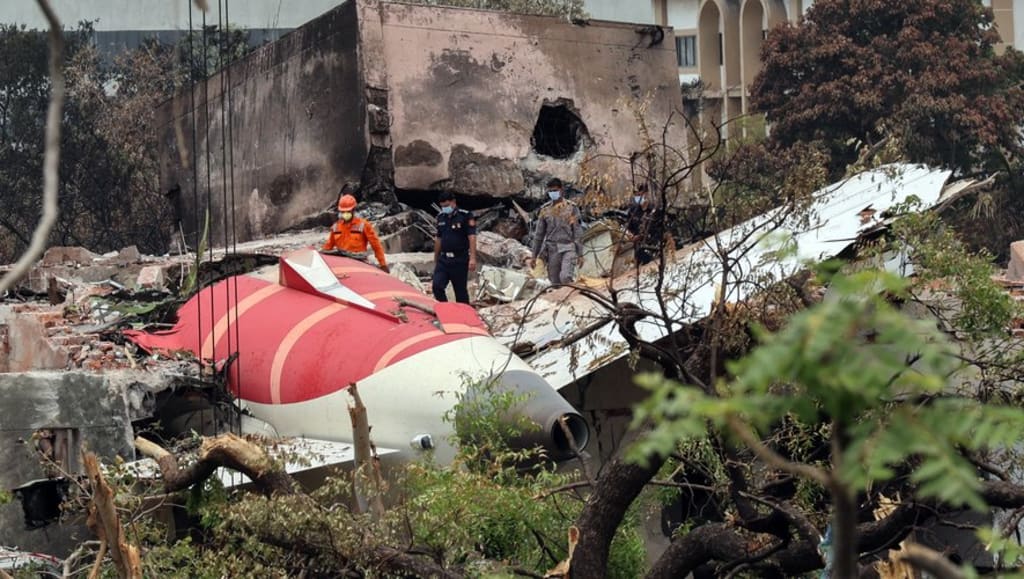
Air travel is considered one of the safest modes of transportation, but when disaster strikes, the consequences are devastating. One such tragic event was the Air India Express Flight 1344 crash in Kozhikode, Kerala, on August 7, 2020. The aircraft skidded off the runway during heavy rainfall, resulting in the deaths of 21 people, including both pilots. The Air India plane crash report, released after a thorough investigation, sheds light on what went wrong and how such incidents can be prevented in the future.
Background: The Flight That Never Made It
Flight 1344 was a part of the Vande Bharat Mission, repatriating Indian nationals stranded abroad due to the COVID-19 pandemic. The Boeing 737-800 was flying from Dubai to Kozhikode with 190 people onboard. As the plane approached Calicut International Airport, it attempted to land in heavy monsoon rain and low visibility—conditions that severely impacted pilot control and visibility.
Despite two attempts, the aircraft landed on the tabletop runway and overshot the runway by nearly 1,000 feet, crashing into a gorge and breaking into two pieces.
Key Findings from the Crash Report
The Directorate General of Civil Aviation (DGCA) and the Aircraft Accident Investigation Bureau (AAIB) led the investigation. Their detailed crash report, released in 2021, offers several important insights:
1. Pilot Error
While weather conditions were unfavorable, the report placed significant emphasis on pilot decision-making. The pilot chose to land on Runway 10, which was not the recommended runway due to tailwind and wet conditions. Runway 28, on the other side, had safer wind conditions but was not chosen.
The aircraft touched down 1,000 meters beyond the ideal touchdown zone, leaving insufficient space to decelerate.
2. Weather and Runway Conditions
The tabletop runway—an elevated runway with steep drops on either side—posed additional challenges. The rain-soaked surface made braking ineffective. According to the report, aquaplaning likely reduced tire friction, making it harder to stop.
3. Aircraft Systems and Maintenance
The aircraft itself was found to be mechanically sound. All onboard systems, including the autobrake and thrust reversers, were functional. There was no evidence of engine failure or structural fault before the crash.
4. Crew Resource Management
The report noted a breakdown in cockpit communication and resource sharing. The first officer raised concerns about weather and approach, but these were not fully considered. This failure in Crew Resource Management (CRM) is a recurring theme in many aviation accidents.
Human Cost: The Toll on Families
The crash claimed 21 lives, including Captain Deepak Vasant Sathe and First Officer Akhilesh Kumar. Over 100 others were injured, many critically. Survivors recalled the horrifying moment the plane broke apart and the chaos that followed.
For the families of those who died, the report provided closure—but also reignited anger over what they see as a preventable tragedy.
Recommendations and Reforms
The AAIB’s report didn’t just assign blame—it offered concrete suggestions for reform:
Improved training for pilots on wet runway landings and emergency protocols.
Mandatory use of the safest runway based on real-time weather and wind data.
Better drainage systems on tabletop runways to prevent aquaplaning.
Stricter oversight on airport infrastructure for high-risk airports.
As a direct result of the findings, the DGCA has already updated landing protocols and initiated extra audits for airports with challenging topography.
Broader Implications: A Wake-Up Call for Indian Aviation
This crash has prompted a wider discussion about the safety of smaller, regional airports in India—many of which have limited space and complex terrain. Kozhikode is not the only airport with a tabletop runway; others like Mangalore have similar risks.
It also raised questions about the pressures placed on pilots, especially during pandemic-related missions. Long working hours, fatigue, and rapidly changing safety protocols may have contributed indirectly to the crash.
Conclusion: Lessons in Loss
The Air India plane crash report serves as a sobering reminder of how multiple small failures—pilot decisions, environmental conditions, and systemic oversight—can combine into a catastrophic event. While the report brings a degree of clarity to the tragedy, it also calls for vigilance, reform, and accountability in the aviation industry.
As India continues to expand its air travel infrastructure, the hope is that lessons learned from Kozhikode will make future flights safer for everyone.
About the Creator
Asad Ali
I'm Asad Ali, a passionate blogger with 3 years of experience creating engaging and informative content across various niches. I specialize in crafting SEO-friendly articles that drive traffic and deliver value to readers.
The Day a Security Camera Proved Its True Value to Me
I’ve worked around security systems for a long time, but there was one day that completely changed how I personally viewed cameras, not as equipment, not as a feature on a sales quote, but as something much more meaningful. It wasn’t about technology specs, resolution, or apps. It was about trust, awareness, and peace of mind in real life.
By shaun hossain 4 days ago in Journal



Comments
There are no comments for this story
Be the first to respond and start the conversation.