
Unmasking the Silent Enemy: 4 Visible Signs of Fatty Liver You Should Never Ignore
Know the signs of fatty liver disease and start taking care of yourself before it gets too late.
Introduction
In today’s fast-paced world, where unhealthy diets and sedentary lifestyles dominate, the silent progression of fatty liver disease (FLD) has become a significant health concern. Often unnoticed until it’s too late, fatty liver can quietly lead to severe liver damage if left untreated. While many cases remain asymptomatic, the body sometimes displays visible signs that act as early warning indicators. Recognizing these signs can be the key to timely diagnosis and treatment, potentially saving lives.
Understanding Fatty Liver Disease
Fatty liver disease is caused by the deposition of excess fat within the liver cells, causing it to not work properly. It is primarily classified into two forms: alcoholic fatty liver disease and non-alcoholic fatty liver disease (NAFLD). NAFLD is more prevalent and is typically associated with unhealthy lifestyle choices.
It's quite scary for the silent presentation, as simple fat accumulation gradually may lead into inflammation (steatohepatitis), followed by fibrosis, cirrhosis, and eventually liver failure. Some contributing causes are those related to excessive intake of sugars and fats in diet, absence of physical exercise, obesity, and genetic disorders. Without immediate treatment, complications will be grave enough, which only heightens awareness to detect even minor signs before serious damage 4 Visible Symptoms of Fatty Liver on Body
While many cases of fatty liver disease come to attention from imaging tests or blood work, there are other physical signs that may give the impression that a person is afflicted with this condition. These signs may be faintly visible but are necessary for early diagnosis.
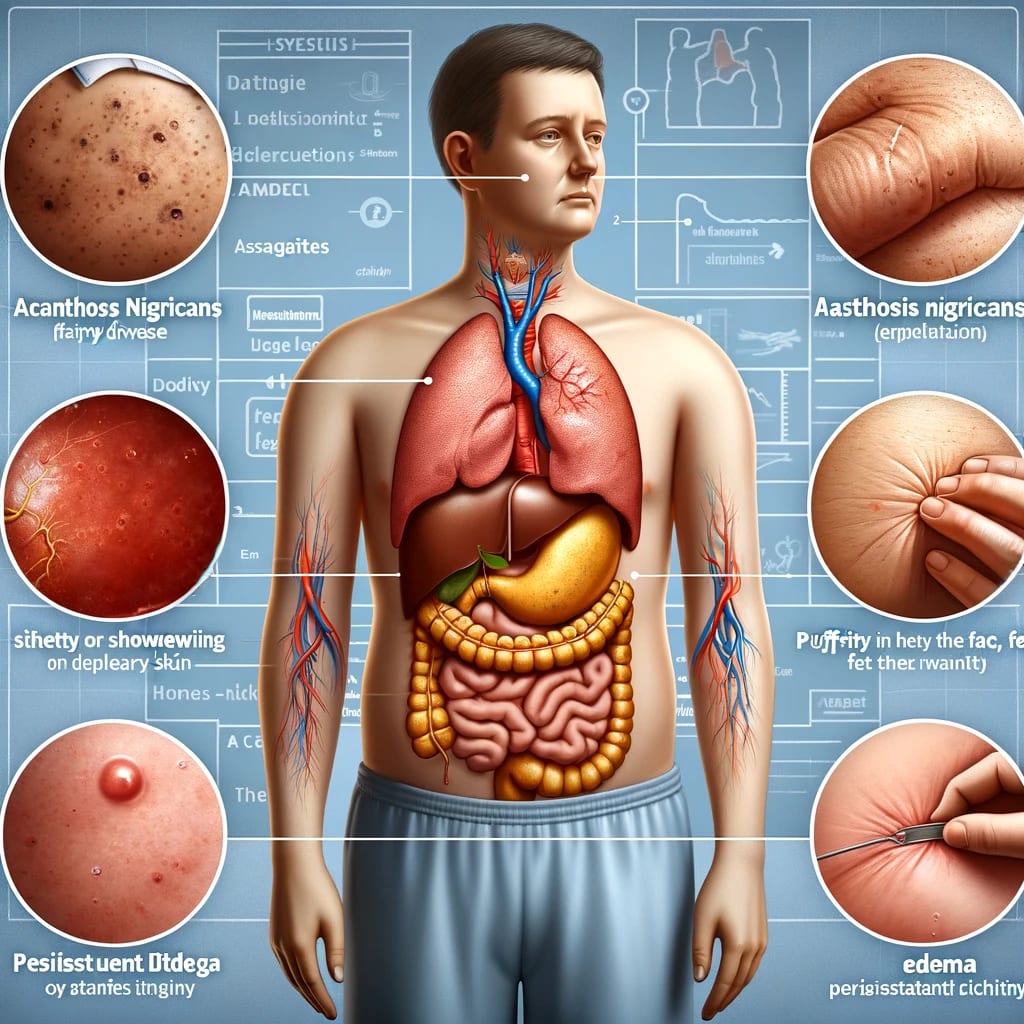
1. Dark Skin Patches: Acanthosis Nigricans
One of the most visible external manifestations of fatty liver is the presence of dark, velvety patches of skin, especially on the neck, underarms, or groin. This condition, known as acanthosis nigricans, is closely associated with insulin resistance—a common precursor to fatty liver disease.
These patches might be thickened and present with a scaly textured surface. They are typically indicative of metabolic disorders, such as impaired glucose tolerance or diabetes mellitus, and are associated with NAFLD. Though not specific for fatty liver, they should prompt a detailed medical assessment for other potential disorders that may be present.
2. Ascites-Abdominal Swelling
Another visible symptom of advanced fatty liver disease is ascites or swelling in the abdomen. It is caused by fluid accumulation within the abdominal cavity due to an impaired liver. Due to the impairment of the liver, it is unable to produce enough proteins necessary for maintaining a balance of body fluids, leading to bloating and discomfort.
Individuals with ascites may notice their abdomen becoming progressively larger or feeling unusually tight. In severe cases, this swelling can restrict movement and cause significant physical discomfort. While ascites is more common in advanced stages of liver disease, its presence is a clear signal to seek immediate medical attention.
3. Puffiness in the Face, Feet, or Ankles (Edema)
Fluid retention is another characteristic sign of liver failure, which is usually manifested as swelling in the face, feet, or ankles. This is medically referred to as edema and is caused by the inability of the liver to control fluid retention in the body. Swelling in these parts can be slight or pronounced and is often accompanied by a sense of heaviness or tightness.
Even though there are different reasons why edema can occur, when other symptoms of fatty liver disease accompany this symptom, it should not be overlooked. Chronic puffiness in the lower limbs may be a sign that the liver is unable to function correctly.
4. Continuous Itching of the Skin
Another subtle but important symptom is unexplained persistent itching. Most people experience itchiness due to the accumulation of bile salts in the blood from malfunctioning liver cells. Even though many consider itchiness to be a small matter, the fact that it lingers and no cause is evident may signify something wrong in the liver.
A symptom that is especially worrisome is when it happens in the later stages of fatty liver disease, often when the liver's filtration abilities have been significantly compromised. Someone who feels persistent and generalized itching all over the body should see a healthcare professional for further evaluation.
Lifestyle and Risk Factors
This modern way of life, characterized by high-calorie diets, excessive consumption of sugar, and low levels of physical activity, has become a typical risk factor for increasing prevalence of fatty liver. Obesity, type 2 diabetes, hypercholesterolemia, and metabolic syndrome are typical risk factors. Even genetics may have an influence; however, lifestyle choices are the most easily modifiable factors.
Preventive Measures and Treatment
The good news is that fatty liver disease is often reversible, especially if caught in its early stages. Here's how individuals can take proactive steps to protect their liver health:
1. Dietary Changes
Adopting a balanced diet is important for managing and preventing fatty liver disease. This includes:
Reducing sugary and processed foods.
Including lots of fruits, vegetables, whole grains, and lean proteins.
Limit intake of trans fats and embrace healthy fats, which are abundant in nuts, seeds, and olive oil.
2. Exercise
Engaging in regular physical activity can be useful in reducing liver fat while improving overall metabolic health. Engage in at least 150 minutes of moderate-intensity aerobic exercise per week; brisk walking, swimming, or cycling are examples.
3. Clinic Visit
Early diagnosis ensures proper treatment. Regular follow-ups, which may include a liver function test and imaging studies, will help diagnose fatty liver disease early, before definite damage takes place.
4. Abstinence from Alcohol
Patients with fatty liver disease are to abstain from alcohol, since it may increase the intensity of the damage. It is best that they avoid even moderate amounts of alcohol to protect their livers.
The Call to Action
The disease is silent in nature, with the liver having fatty content until complications are seriously manifested. Noticing the above symptoms, like dark skin patches, abdominal swelling, puffiness in extremities, and continuous itching, individuals can take their first step to timely intervention. Lifestyle changes coupled with regular check-ups can prevent a patient from fatty liver disease and its progression.
Conclusion
Your liver is an important organ that tirelessly works to keep your body healthy. Recognizing the signs of fatty liver disease and making proactive lifestyle changes can ensure it continues to function effectively. Remember, early detection and intervention are the keys to managing this condition. If you notice any of the symptoms discussed, don't delay—consult a healthcare professional and take control of your liver health today. With determination and the right approach, it is possible to unmask this silent enemy and lead a healthier, more vibrant life.
About the Creator
Awinash Pathak
I'm a skilled content writer with a passion for crafting compelling and engaging narratives. I specialize in [Story writing, Health and wellness, Technology Reviews and Business and Career Related Niche,SEO, marketing, technical, creative.
Keep reading
More stories from Awinash Pathak and writers in Journal and other communities.
"Winter Blues: Unveiling the Chilling Impact of Cold Weather on Prostate Health in Older Men"
Winter Blues: Unveiling the Chilling Impact of Cold Weather on Prostate Health in Older Men With winter looming, cold weather and shorter days set a cascade of physiological and psychological effects in place. People will discuss and often dwell on combating seasonal affective disorder or keeping warm. The often-neglected consequence, however, would be that the prostate gland—the walnut-sized organ playing an essential role in the reproductive system of a man—becomes affected during winter seasons for many elderly males. Understanding how winter affects prostate health will help prevent discomfort and improve general well-being.
By Awinash Pathakabout a year ago in Journal
The goals I did not achieve
Every writing goal I made for the year is a wash. It has been this way for a while, but I think it's important to be open about my failures and the reality of how life can get in the way. This is especially true considering the several times I have posted on Vocal about my writing goals, how I was changing my approach, and where I was hoping to be for the upcoming year. I will probably do that again in a couple months, but for now, it is time to acknowledge where I am today.
By Kay Husnick24 days ago in Journal
The Early Church Fathers and Why Their Writings Matter Today
The Early Church Fathers are some of the most important figures in the history of Christianity. Their writings, letters, sermons, and theological reflections helped define the beliefs, practices, and structure of the Church in the centuries following Christ. Understanding who the Church Fathers were and why their works matter today is essential for anyone seeking to understand Catholic teaching, tradition, and the roots of Christian faith.
By Sound and Spirit6 days ago in Journal




Comments
There are no comments for this story
Be the first to respond and start the conversation.