
"United States Calls for an End to India-Pakistan Conflict"
Tensions Peak Between Pakistan and India Following Kashmir Terror Attack
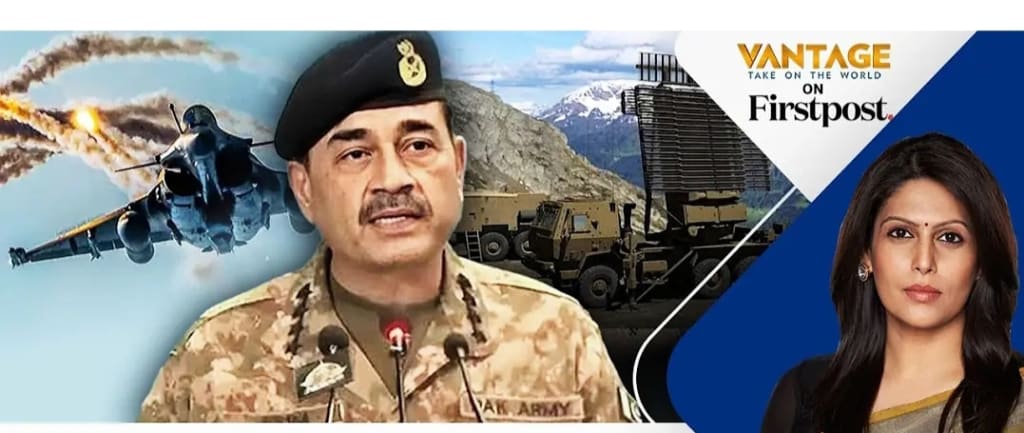
Rising Tensions Between India and Pakistan Raise Fears of War
Tensions between India and Pakistan have sharply escalated following a deadly terrorist attack in Indian-administered Kashmir, with daily cross-border gunfire exchanges and growing military posturing from both sides. The developing situation has sparked international concern, with the United States urging both nations to exercise restraint and prevent a full-scale war.
Terrorist Attack Sparks Hostilities
The current wave of hostility began after a deadly gun attack in Pahalgram, located in Indian-administered Kashmir, on April 22. The assault claimed the lives of 26 civilians. Indian authorities quickly blamed the attack on militants allegedly backed by Pakistan, identifying three suspects—two of whom they claim are Pakistani nationals. The Indian government has accused Islamabad of direct involvement, an allegation Pakistan has firmly denied. In response, Pakistan has called for an independent international investigation into the incident.
Military Escalation at the Border
Since the attack, armed skirmishes between Indian and Pakistani forces have become a near-daily occurrence along the Line of Control (LoC)—the de facto border in the Kashmir region. On the night of April 29, Indian military officials reported another exchange of fire, stating that Pakistani troops opened fire without provocation around midnight. The Indian Army retaliated, although it withheld further details about the operation.
This marked the sixth consecutive day of border clashes. The intensity and frequency of these engagements have raised fears of the situation spiraling into a broader conflict.
Adding to the tension, Pakistan has alleged that Indian Rafale fighter jets were spotted patrolling the skies near the LoC on the same night. According to Pakistani security sources, four Indian jets were detected flying over Indian-administered Kashmir but did not cross into Pakistani territory. The Pakistan Air Force (PAF) reportedly scrambled fighter aircraft in response, prompting the Indian jets to retreat. Pakistani media outlet Dawn, citing unnamed security officials, reported that the Indian aircraft fled “in panic” after being intercepted.
U.S. Urges Restraint
Amidst the growing tension, the United States has called for calm and urged both nuclear-armed neighbors to avoid further escalation. On Tuesday, a spokesperson for the U.S. State Department confirmed that Secretary of State Marco Rubio would soon speak with the foreign ministers of India and Pakistan in an effort to de-escalate the situation.
"We have reached out to both sides, urging them not to let the situation worsen," the spokesperson quoted Rubio as saying. The U.S. administration, led by President Donald Trump and Vice President J.D. Vance, has publicly condemned the terrorist attack and expressed strong support for India. However, Washington stopped short of directly criticizing Pakistan, a move seen as an attempt to maintain diplomatic balance and keep communication channels open with both sides.
Heightened Security Alerts
Tensions spiked further on April 30 when Pakistan’s Information Minister Ataullah Tarar stated during a press briefing that credible intelligence suggested India was planning a military strike within the next 24 to 36 hours. The statement fueled anxiety across both nations and within the international community.
In a show of preparedness, Pakistani military officials announced that their forces are on high alert and fully prepared to respond to any form of Indian aggression. “Our armed forces are vigilant and will respond appropriately to any provocation,” a Pakistani military spokesperson said.
Diplomatic Fallout
The political fallout from the attack has further strained bilateral relations. India has suspended the Indus Water Treaty, a landmark agreement signed in 1960 that governs water-sharing between the two countries. The suspension of this 65-year-old treaty is seen as a serious diplomatic signal and a move that could affect millions of people living along the Indus river system.
In retaliation, Pakistan has closed its airspace to Indian aircraft and implemented additional countermeasures. These include tightening border security and reinforcing military presence near strategic locations along the LoC. Both nations have also engaged in a media war, with officials exchanging sharp rhetoric and accusations on public platforms.
A History of Conflict
The conflict between India and Pakistan over the Kashmir region has persisted since the partition of British India in 1947. The two countries have fought three major wars—two of them over Kashmir—and have had countless skirmishes along the border. While both nations have engaged in diplomatic efforts and confidence-building measures in the past, deep-rooted mistrust continues to define their relationship.
The current situation bears similarities to past crises, such as the 2016 Uri attack and the 2019 Pulwama-Balakot confrontation, both of which brought the two countries to the brink of war. However, observers warn that the current circumstances could be more volatile due to a mix of public outrage, military readiness, and political pressure on both sides.
International Concerns
The global community is watching the situation closely. Besides the United States, other countries and international organizations have urged calm and called for renewed dialogue. Any escalation between India and Pakistan, both of which possess nuclear weapons, poses a significant threat to regional and global security.
Several diplomatic experts have suggested that third-party mediation—perhaps through the United Nations or a neutral country—could help prevent further deterioration. However, both India and Pakistan have historically resisted external mediation on the Kashmir issue, insisting on bilateral solutions.
A Call for Peace
As tensions continue to rise, the need for diplomatic engagement has never been more urgent. With troops mobilized, air forces on alert, and civilians caught in the crossfire, any misstep could trigger a devastating conflict. The hope remains that reason and diplomacy will prevail over provocation and retaliation.
For now, the world watches and waits, hoping that leaders on both sides will choose dialogue over war.
About the Creator
Keep reading
More stories from Mubasshir Haque and writers in Journal and other communities.
Which Country Will Support Whom in an India-Pakistan War:
If War Breaks Out Between India and Pakistan: Impact Across Asia and the Position of Major Powers If a war breaks out between India and Pakistan, it will cause social, economic, political, and diplomatic turmoil across Asia. The stance that major Asian countries take will depend on their strategic interests, bilateral relations, and the global geopolitical situation. The key questions are: What kind of impact will this have across Asia? And which countries will support whom?
By Mubasshir Haque 9 months ago in Journal
The Rise of Electric Aircraft in Business Aviation: A Sustainable Future
The aviation industry has long been known for its significant environmental impact, with business aviation contributing to a large share of emissions from private aircraft. However, as sustainability becomes a more pressing issue, the business aviation sector is looking to electric aircraft as a potential solution. With advancements in electric propulsion systems, blockchain and battery technology, electric aircraft are poised to revolutionize business aviation, offering a cleaner, more efficient alternative to traditional jet fuel-powered aircraft. In this blog, we will explore the rise of electric aircraft in business aviation and how they promise to shape a more sustainable future.
By Beckett Dowhan7 days ago in Journal



Comments
There are no comments for this story
Be the first to respond and start the conversation.