
Which Country Will Support Whom in an India-Pakistan War:
India-Pakistan War
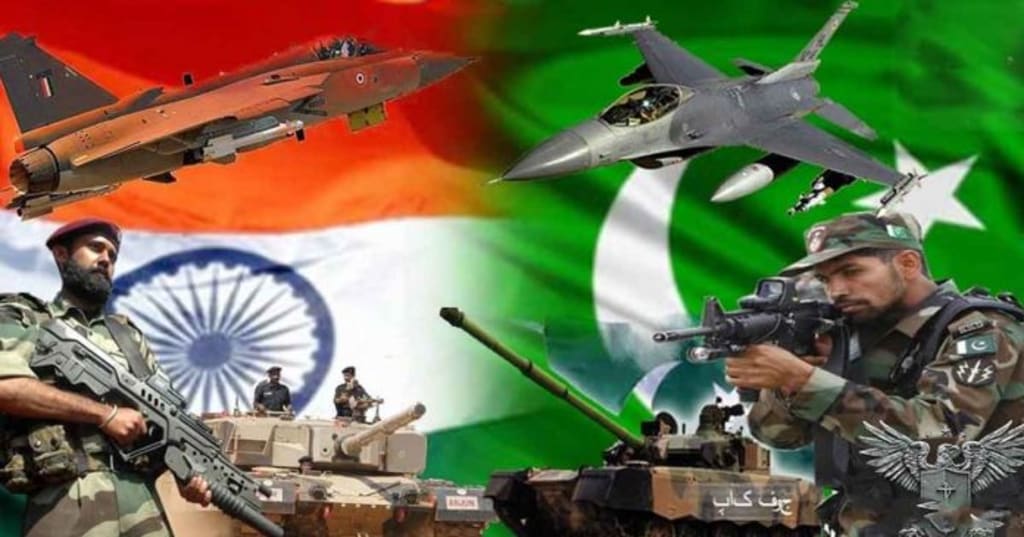
If War Breaks Out Between India and Pakistan: Impact Across Asia and the Position of Major Powers
If a war breaks out between India and Pakistan, it will cause social, economic, political, and diplomatic turmoil across Asia. The stance that major Asian countries take will depend on their strategic interests, bilateral relations, and the global geopolitical situation. The key questions are: What kind of impact will this have across Asia? And which countries will support whom?
Impact on Asia:
Experts believe that a war between India and Pakistan will not remain confined to the subcontinent. It will have a significant impact on the global economy, security dynamics, and geopolitical balance. Both India and Pakistan are nuclear-armed states and have fought multiple wars since 1947, including in 1965, 1971, and during the Kargil conflict.
If a full-scale war begins, Asia's stock markets would likely collapse immediately. Energy supply chains, export routes, and the Arabian Sea would be at risk, causing a rapid spike in global commodity prices. Chinese goods and Southeast Asian trade would also face severe disruptions, as South Asia would plunge into multi-dimensional crises.
The gravest concern is the possibility of a nuclear war. In such a scenario, millions of people would die, and the scale of destruction would be catastrophic. It would destroy Asia’s food production systems and natural environment. A study suggests that even a limited nuclear war between India and Pakistan could significantly alter global temperatures, damage agricultural productivity, and lead to mass starvation for hundreds of millions.
Which Country Will Support Whom?
Experts suggest that the major powers in Asia will adopt highly strategic positions based on their interests.
China: A longstanding ally of Pakistan and a major investor through the China-Pakistan Economic Corridor (CPEC). Additionally, China has border tensions with India, making it diplomatically inclined toward Pakistan. However, due to extensive trade ties with India, China is unlikely to engage directly in the conflict. A prolonged war could also harm China’s own economic interests.
Russia: Historically a major supplier of military equipment to India, although in recent years it has improved relations with Pakistan. Russia is expected to support India diplomatically and apply pressure to end the war through negotiations. However, it is unlikely to offer direct military support.
United States: Once a close ally of Pakistan, the U.S. now considers India a key strategic partner. Officially, the U.S. would call for restraint on both sides, but in practice, it may lean slightly toward India by providing intelligence or diplomatic backing.
Japan: Guided mainly by economic interests in South Asia, Japan sees India as a strategic ally and is concerned about China's growing influence in the region. While Japan will publicly call for peace, it will likely offer soft support to India, possibly through economic and humanitarian aid, but without any military involvement.
South Korea: South Korea’s main focus will be on protecting economic stability due to its investments in the South Asian market. It is unlikely to take sides, especially to avoid conflict with China. Instead, it may provide humanitarian assistance and support peace efforts.
Iran: As a neighbor of Pakistan, Iran will be cautious due to both internal challenges and international scrutiny. Although unlikely to take sides, it may increase border security with Pakistan to avoid any instability or refugee spillover.
Saudi Arabia and Gulf States: These nations have historically maintained close ties with Pakistan, especially in terms of oil and investment. While they may provide economic assistance, they are unlikely to get directly involved in the war.
ASEAN Countries (Indonesia, Malaysia, Vietnam, Thailand, etc.): Experts believe these nations will remain neutral due to their trade interests in South Asia. Their focus will be on avoiding economic loss, and they will likely call for peace without supporting either side.
Afghanistan: While it may not openly support either side, Afghanistan is at risk if war breaks out. Refugee influxes from Pakistan, border instability, and the threat of militant activity would affect Afghanistan directly. Its main priority will be maintaining internal security and stability.
The most terrifying aspect of an India-Pakistan war is that it would not be an isolated conflict—it would have ripple effects throughout Asia and across the globe. According to experts, the entire continent and world could be thrown into chaos as a result of such a confrontation.
About the Creator
Keep reading
More stories from Mubasshir Haque and writers in Journal and other communities.
If India and Pakistan Go to War: The Potential Impacts on Bangladesh
India and Pakistan have a long and turbulent history, marked by political tensions, military conflicts, and unresolved territorial disputes, particularly over Kashmir. If these two nuclear-armed neighbors were to go to war again, the consequences would not be confined to their borders alone. Bangladesh, as a South Asian country with strong geopolitical and economic ties to both, would undoubtedly be affected. This report explores the potential disadvantages and advantages that Bangladesh might face if India and Pakistan go to war.
By Mubasshir Haque 8 months ago in Journal
The goals I did not achieve
Every writing goal I made for the year is a wash. It has been this way for a while, but I think it's important to be open about my failures and the reality of how life can get in the way. This is especially true considering the several times I have posted on Vocal about my writing goals, how I was changing my approach, and where I was hoping to be for the upcoming year. I will probably do that again in a couple months, but for now, it is time to acknowledge where I am today.
By Kay Husnick21 days ago in Journal


Comments
There are no comments for this story
Be the first to respond and start the conversation.