
Understanding White Metal Bearings: Benefits and Applications
Know the applications and benefits of white metal bearings for improved machine performance. Identify the factors that impact bearing longevity and service life.

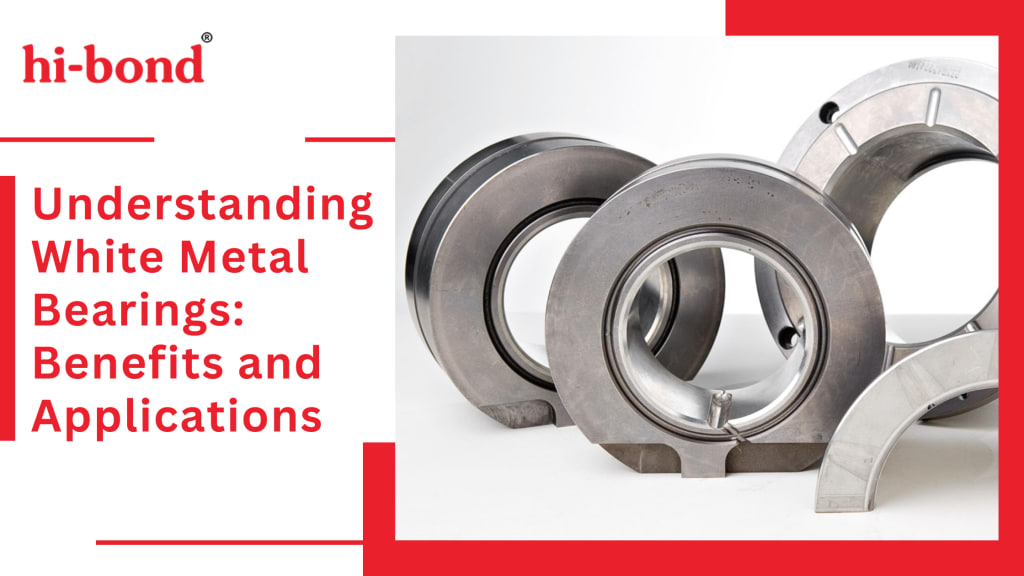
The latest advancements in industrial machines and components have an impact on modern mechanical engineering and machinery applications. Bearings are one crucial component necessary for the smooth movement between two rotating parts. For instance, white metal bearings have long been vital in the advanced machinery world, renowned for their exceptional performance across a range of demanding environments.
As a specialized bearing material, a white metal bearing is crafted from a dedicated type of metal alloy, most commonly lead-based, known as Babbitt metal. It is named after Isaac Babbitt, who first pioneered its use in the 19th century.
Today, these models continue to prove necessary in industrial settings that demand high-speed operations. White metal offers remarkable resistance and the unique ability to withstand severe high temperatures and pressures without compromising on advanced reliability. This article discusses the proper understanding of white metal bearings and their benefits and applications.
The Evolution Of Babbitt Metal
In 1839, Isaac Babbitt transformed the field of tribology by inventing the first genuine white metal alloy for bearing surfaces. Before this innovation, early industrial engines frequently seized and experienced rapid wear under high-load and high-speed conditions.
Babbit’s original alloy, composed primarily of tin, copper, and antimony, demonstrated a unique ability to combine foreign materials in its soft matrix, thereby protecting the harder journal and extending the machinery's life.
This latest advancement laid the foundation for modern white metal bearing design, combining low friction with impressive load-carrying capacity.
An Overview of White Metal Bearings: Its Composition, Function, and Use Cases
White metal bearings consist of a unique shell or housing primarily made of steel lined with a thin layer of this unique alloy. This advanced white Babbitt metal layer is cast in place to conform precisely to the shaft, resulting in a close contact that distributes loads evenly.
Generally, the bearing lining contains tin, copper, and antimony, forming a microstructure with challenging intermetallic phases in a soft matrix. This advanced structure produces:
- Low friction and high load capacity.
- Excellent heat dissipation at high speeds.
- Self-lubricating tendencies as soft matrix conforms to microscopic valleys and peaks.
By customizing the ratio of copper to tin, a reliable bearing manufacturer can optimize the load-carrying capacity and resistance of white Babbitt metal against shock and fatigue.
Primary Characteristics Of White Metal Bearings
Improved Friction Performance For Smooth Operation
The properly distributed and dispersed intermetallic particles in the babbitt metal limit metal-to-metal contact, reducing friction and wear under high loads.
This function produces bearings for both slow-moving, heavy equipment and faster machinery.
Engineered for Durability In High Load and High-Speed Performance
White metal bearings are exceptional in high-load and high-speed environments. The soft phase conforms to shaft irregularities, while the hard stage resists indentation, allowing the bearing to operate at exceptionally high speeds without rapid wear or failure.
Optimizing Heat Dissipation Through Superior Thermal Conductivity
The metal alloys conduct heat efficiently from the bearing surface to the advanced housing. This higher thermal conductivity prevents hotspots and extends service life in modern turbines, compressors, and other high-temperature applications.
The Role Of Conformability and Embeddability For Optimal Performance
The soft matrix in this unique alloy can deform slightly to accommodate debris or misalignment. Small particles immersed in the smooth lining maintain a consistent bearing surface, rather than scoring the shaft.
The Corrosion Resistance Advantage
Although not inherently stainless, the composition of these Babbitt metals provides good resistance to corrosion in many lubricated environments, making them suitable for marine industry applications where exposure to saltwater is possible.
Diverse Applications Across Industries
Driving Higher Performance In The Automotive Industry
In the automotive industry, white metal bearings are used in transmissions, engines, and differentials. Their unique ability to withstand high combined loads and speeds makes them ideal for camshaft and crankshaft bearings, where maintaining an optimal oil film thickness is crucial to achieving better engine longevity.
Empowering Efficiency In the Power Generation Industry
The power generation industry relies on white metal bearings in steam turbines, hydro turbines, and generator shafts. These bearings should undergo high-speed operations, fluctuating loads, and varied temperatures.
The thermal conductivity of the hybrid alloy, combined with its load-carrying capacity, ensures reliable performance under demanding conditions.
Smooth Sailing In The Marine Industry
Marine propulsion systems include white metal bearings from the market in propeller shafts and stern tubes. The marine industry demands bearings that resist corrosion, absorb shock loads, and minimize maintenance.
The hybrid metal alloy liners provide the friction and high load resilience required for marine vessels operating in harsh sea conditions.
Maintain Power and Precision In Turbines, Compressors, and Heavy Equipment
White metal bearings are essential in industrial compressors, gas and steam turbines, and heavy-duty gearboxes. These operating conditions involve rapid start-stop cycles, variable loads, and high rotational speeds, all of which the hybrid metal alloy is uniquely suited to handle due to its combination of hard and soft phases, thereby reducing wear.
Factors For Engineering Considerations
While specifying a white metal bearing, engineers should consider multiple parameters:
- Speed Requirements: High-RPM machinery may require specific alloy compositions to prevent fatigue.
- Load Magnitude and Direction: Determine static and dynamic loads to size the overlay thickness and select the appropriate alloy hardness.
- Lubrication Routine: Whether oil- or grease-lubricated, white-metal can operate with minimal lubrication but benefits from a continuous oil film.
- Surface Finish and Tolerances: The bearing surface finish remarkably impacts hydrodynamic oil film formation, with smoother finishes favoring high-speed performance.
- Bearing Housing Design: Properly designed cooling passages and impression grooves improve heat dissipation and lubrication distribution.
Potential Benefits Of White Metal Bearings In Modern Engineering
Versatility for Diverse Applications
White metal bearings from a popular bearing manufacturing company span a range of sizes and configurations, from small electric motors to large ship propulsion systems. This unique metal alloy's versatility meets the diverse requirements of various industries.
Simplified Maintenance With Ease Of Repair and Renewal
Worn-out unique metal liners can be rebabbitted, or the entire bearing shells can be replaced, reducing downtime and extending equipment lifespan. This advanced adaptability aligns with preventative maintenance strategies.
Maintaining Longevity with Extended Service Life
Properly maintained, these bearings can achieve remarkably longer life spans, typically spanning tens of thousands of operational hours. Their unique ability to absorb contaminant particles and conform under load reduces the chances of catastrophic failures.
Delivering Value With The Cost-Effectiveness
White metal is relatively inexpensive compared to premium ceramics and specialized polymers. When combined with simple steel housings, overall bearing costs remain competitive.
Paving The Way Forward With The Future Trends and Innovations
Advancements in bearing material science continue to refine white metal alloys. Experienced researchers are examining nano-reinforcements to improve load-carrying capacity and high-temperature tolerance.
Moreover, additive manufacturing methods enable the creation of more complex liner geometries, which improve oil flow and reduce weight. Additionally, hybrid designs that combine metal alloys with advanced polymer inserts are being developed to reduce friction and maintenance requirements further.
Applications Of White Metal Bearings In Emerging Sectors
With the immense rise of renewable energy and electrification, specific applications of white metal bearings are expanding into electric motor drives and wind turbines. These stringent sectors demand bearings that can operate in remote locations with minimal servicing.
The crucial white metal’s proven resistance to variable loads and unique capacity to withstand high operational stresses make it a reliable choice for clean energy infrastructure.
Get Higher Longevity and Durability In White Metal Bearings For Maximum Performance
From Isaac Babbitt’s pioneering invention of babbitt metal to its widespread use in modern machinery, white metal bearings remain a mandatory technology.
Their unparalleled combination of low friction, high load, high-speed capability, and adaptability to varied operational conditions ensures their continued relevance in several sectors, including the marine industry, automotive industry, power generation industry, and beyond.
Engineers can utilize these bearings to optimize performance, minimize downtime, and improve innovation across various sectors by understanding the material properties, design considerations, and maintenance practices. Working with a reputable bearing manufacturer can help ensure the perfect choice of white metal bearings for dedicated applications, offering long-term performance and reliability.




Comments
There are no comments for this story
Be the first to respond and start the conversation.