
Understanding the Concept of Wire Transfer
What is a wire transfer?
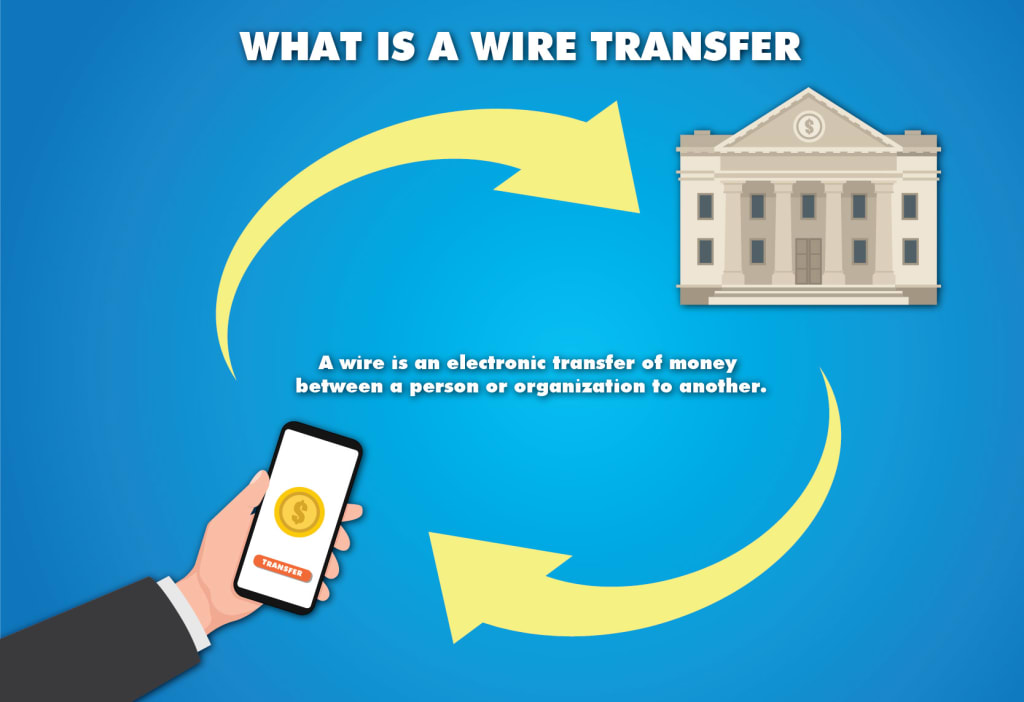
A wire transfer is a fast and secure way of instantly sending or receiving funds without the need for physical currency. Despite the absence of physical money, the recipient can access the funds within a designated timeframe, providing a convenient and reliable financial transaction.
How do wire transfers function?
A wire transfer begins when a sender deposits funds at their financial institution and provides the recipient's name, address, and banking information. The sender's financial institution then communicates with the recipient's bank, who access the funds from their own reserves. The two banks settle the transfer at a later time, with the sender's bank only sending payment instructions rather than the actual funds. This direct transfer of information results in faster and more efficient transactions compared to other forms of money transfer, as it eliminates any potential delays caused by bank holds.
What are the costs associated with a wire transfer?
The economic experts said that the method of a wire transfer is one costly method of sending money, and it increases if it is through banks. If you send wire money to a person within the United States, it will incur a sum of $25, and for a transaction outside the United States, it may cost you $ 43. Another major thing that should note that the sender and the recipient have to pay a smaller amount, which can average $ 7. Banks usually remind their customers of hidden costs while going for international wire transfers. Regarding non-bank transfers, the fee involved may vary according to the amount and the destination. It may also have differences according to the media of sending, such as whether it posted online or by a person. It can state that the expense of wire transfer will be less for non-banking institutes rather than banks.
How long does it take for a wire transfer?
When you transmit money online, via the app, or in person to a Western Union agent location, the funds may arrive within minutes. A straight overseas bank transfer can often take between one and five business days. This is due to time zones, branch hours, and other considerations, such as your payment type and country of destination. Domestic transfers are considerably quicker.
How Wire Transfers Are Used
1. To wire money
To wire funds, the sender must first obtain the wire instructions from the recipient's banking institution. The sender submits these instructions, along with the funds and transaction fee, to their own bank. The bank may require the completion of a wire transfer form, either in person or through an online platform.
2. To receive money
For a successful wire transfer, the recipient must furnish their bank account details and the incoming wire instructions from their bank to the sender. The sender's bank initiates the transaction upon receipt of this information and transfers the funds. The transfer time, which can be within a day, may vary based on the type of transfer, i.e., domestic or international. The recipient's bank also deducts a transaction fee from the received amount.
Types of wire transfer
International wire transfers
International wire transfers involve sending money from one country to another. In the interconnected world of today, these transfers allow individuals to support their loved ones in different parts of the world.
However, international wire transfers may take longer to clear as they need to be processed by both foreign and domestic clearing agencies. Despite this, there are usually no holds placed on these transfers by banks. It's important to keep in mind the time zone differences and bank operating hours when making an international wire transfer.
Domestic wire transfers
Domestic wire transfers tend to be quicker, with funds often arriving on the same day. However, if the transfer involves different banks, it may take longer. Western Union offers a convenient solution with the ability to transfer funds for pickup at its agent locations globally, potentially allowing for near-instant receipt of the money.
Is the wire transferring method safe?
Wire transfers are generally considered safe and reliable compared to other forms of sending money. There are fewer reports of fraudulent activity in wire transfers than with check bounces, as the sender must have sufficient funds in their account for the transaction to be completed. The safety of wire transfers is due to the fact that the transfer of money occurs between banks within the United States. The recipient must provide identification before withdrawing the funds from their account, making wire transfers a secure method. However, it is important to carefully confirm the recipient's identity to prevent any potential fraudulent activities related to wire transfers.




Comments
There are no comments for this story
Be the first to respond and start the conversation.