
Understanding Friction Bearings and Anti Friction Bearings
Learn the key differences between friction bearings and anti-friction bearings. Explore types, applications, load capacity, and how top bearing manufacturers help you choose the right solution.

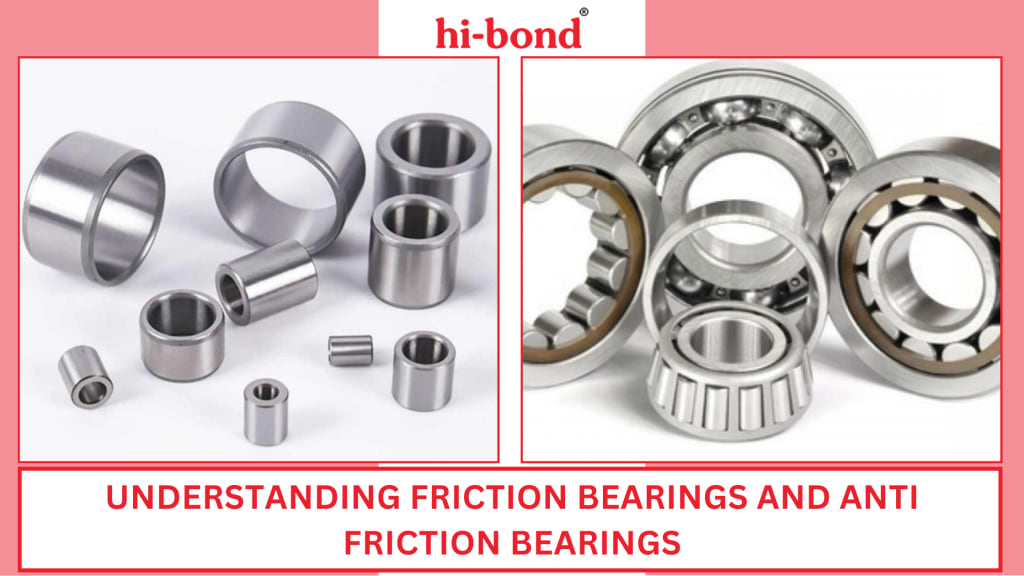
With the innovation and advancement in industrial machinery and mechanical engineering, machines have become more efficient and operate smoothly. Bearings are one of the tiny components responsible for reducing friction between two moving machine parts.
They make it possible for crucial parts to rotate, slide, or move, reducing machine wear quickly. At their fundamental level, bearings are divided into two broad categories: friction bearings and anti-friction bearings.
Each bearing purchased from a reliable bearing manufacturing company plays a vital role in how equipment handles speed, load, and movement. This blog discusses the differences between these types of bearings to help in choosing the correct bearing for the perfect application.
What Are Friction Bearings (Plain/Sleeve Bearings)?
Reliable friction bearings, also known as plain bearings or sleeve bearings, allow surfaces to slide against each other with the aid of a lubricating film. They do not use rolling elements, such as rollers or balls; instead, they depend on smooth contact surfaces.
Lubrication is used to reduce heat and wear, thereby ensuring a longer service life. Sleeve bearings and bearing bushings are the perfect examples of friction bearings.
They are simple in design and popularly used in heavy-duty applications where load capacity is more important than speed. For example, large industrial machinery, construction equipment, and even marine engines depend on friction bearings to withstand massive radial and axial loads.
Their simplicity makes them durable, cost-effective, and easy to maintain when machines need to support heavy forces at lower speeds.
Understanding Anti-Friction Bearings (Ball, Roller, Needle)
In contrast, anti-friction bearings utilize rolling elements, like rollers or balls, to reduce contact and friction. Instead of surfaces sliding against each other, the parts roll smoothly, which reduces resistance and friction.
This design makes them well-suited for high-speed applications and situations where efficiency is the primary concern.
They are widely used in aerospace, automobiles, heavy machinery, and numerous industrial systems where both axial and radial loads should be supported efficiently. There are several types of bearings in these groups, including:
- Roller Bearings: They use cylindrical rollers instead of balls, giving them a higher load capacity. These roller bearings are used in heavy-duty applications, such as conveyor rollers and gearboxes.
- Ball Bearings: This is the most common type, designed to handle both radial loads and some axial loads. They are an ideal choice for everyday machinery, automotive applications, and electric motors.
- Needle Bearings: With their advanced rolling elements, needle bearings save space while handling large radial loads. They find versatile applications in industrial equipment and automotive transmissions.
Anti-friction bearings are popularly known for their unique capability to handle high-speed operations with less energy loss. They assist in extending service life, reducing wear, and improving overall efficiency in machines that require reliable movement and consistency.
Comparing Friction And Anti Friction Bearings
Understanding the perfect time to use each type is the primary thing in designing effective systems. Friction bearings from a reliable bearing manufacturing company are suitable for supporting large loads in environments where the speed of rotation is moderate.
They are dependable, rugged, and capable of functioning even when lubrication is less than ideal, avoiding bearing corrosion. In contrast, anti friction bearings are suitable for a high-speed industrial environment, where reducing resistance is critical.
For example, anti-friction bearings, such as ball bearings or roller bearings, are the perfect choice for turbines and electric motors, where performance depends on quick and smooth movement. On the other hand, friction bearings are more practical due to their capability and simplicity to handle extreme forces in heavy-duty equipment such as large marine engines or presses.
Factors That Impact Bearing Choice
While deciding between friction and anti-friction bearings, certified engineers primarily look at a few remarkable factors, such as:
- Higher Service Life: The material selection, proper lubrication, and bearing type directly affect how long a bearing lasts and its longevity. Anti-friction bearings can offer a longer service life in fast-moving systems, while friction bearings from reliable bearing manufacturers are well-suited for demanding, high-load applications.
- Direction of Load: Reliable tapered roller bearings are perfect for handling both axial and radial loads, making them versatile in automotive applications like wheel hubs.
- Load Capacity: Industrial machines with heavy-duty requirements primarily require larger roller bearings or need sleeve bearings to distribute weight effectively.
- Speed: High-speed operations require anti-friction bearings because rolling elements develop less resistance than sliding surfaces.
- Space Limitations: Needle bearings are primarily selected when space is limited, but the machine requires support for considerable radial load.
Balancing Maintenance And Performance
Both friction and anti-friction bearings need regular attention. Lubrication is necessary for both, and the type and frequency may vary. For friction bearings, it is crucial to maintain a proper oil or grease film to avoid excessive heat and direct contact.
On the other hand, anti-friction bearings require clean and consistent lubrication to protect the rolling elements and avoid early wear. Ignoring maintenance and proper lubrication can cause failures that stop crucial operations and damage surrounding components.
A reliable bearing manufacturing company helps in setting up maintenance schedules and tracking performance, enabling them to keep equipment running smoothly and prevent sudden breakdowns.
The Crucial Role Of Bearings In Modern Engineering
Bearings may be small in size, but they are crucial for industries across the globe. They allow machinery to run at high efficiency, execute immense loads, and operate reliably daily.
From simple sleeve bearings in electric motors to advanced tapered roller bearings in heavy-duty trucks, these components form the foundation of modern engineering. As technology advances, new materials and effective lubrication methods are helping to prolong service life and further enhance performance.
This advanced progress ensures that both friction and anti-friction bearings will continue to support innovation in manufacturing, transportation, and beyond.
Make The Perfect Selection Between Friction and Anti Friction Bearings With Suitable Bearing Manufacturers
Friction and anti-friction bearings may work differently, but they share the same purpose: to keep the machines running efficiently and reliably. Selecting between them depends on the specific demands of the application, such as high speed, heavy-duty, or a balance of both.
Bearings quietly carry the weight of modern industry, reducing friction and keeping everything in motion in applications from power plants to automobiles.
Businesses can make smarter decisions that prolong service life, enhance efficiency, and reduce equipment downtime by understanding different types of bearings available and the unique ways they perform under various conditions.
Partnering with trusted bearing manufacturers also ensures access to high-quality products designed to suit these diverse needs. After all, the right bearing does more than support movement; it supports the success of the entire operation.
About the Creator
So You Decided To Become a Nurse Practitioner:
So you decided to become an "Advanced Practice" nurse. Congratulations!... is what I would say if this was a good idea. Grad school? In this economy? What were you thinking? Likely it was something along the lines of either 1) “I've seen these other chucklefucks do it— Why can't I?” or even 2) “I've got a nice career, I should shake it up. I miss feeling like I have no clue what I'm doing.”
By Sandor Szabo6 days ago in Fiction



Comments
There are no comments for this story
Be the first to respond and start the conversation.