
Ukraine Artillery Achieved World Record Hit at 70 Km Range
A precision strike with a Vulcano guided projectile from a Krab self-propelled gun

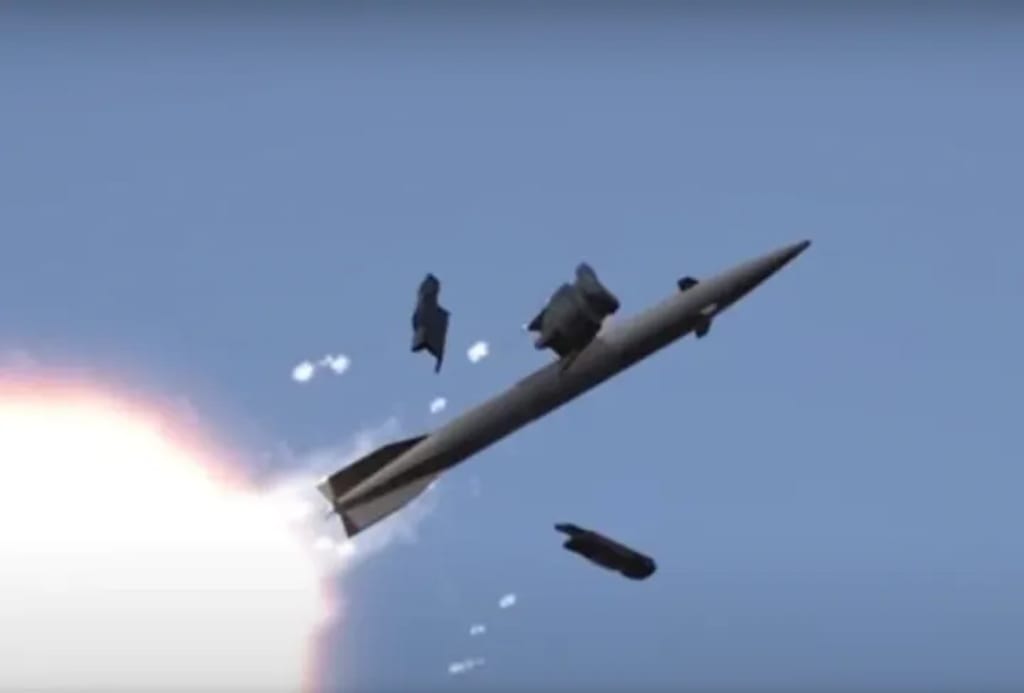
The Ukrainian Armed Forces have established a notable precedent in modern combat, achieving a precision artillery strike at a range of 70 kilometres.
This is a significant development in the application of indirect fire, marking what has been described as a global record for such an engagement under real combat conditions.
The successful strike was executed using the Polish-manufactured Krab self-propelled artillery system, augmented by the employment of the Vulcano GLR (Guided Long Range) ammunition.
The Krab, a 155 mm 52 calibre howitzer, is typically rated for an effective range of thirty to forty kilometres with conventional projectiles. The extended range and precision achieved in this instance are directly attributable to the advanced capabilities of the Vulcano GLR shell.
The Krab

The AHS Krab is a 155 mm self-propelled tracked gun-howitzer, a key component of Poland's artillery modernisation efforts.
Designed by Huta Stalowa Wola (HSW) in collaboration with several international partners, the Krab integrates a South Korean K9 Thunder chassis with a British BAE Systems AS-90M Braveheart turret.
The main armament is a 52 calibre gun, manufactured by HSW, capable of firing all standard NATO projectiles.
The artillery system is equipped with the Polish WB Electronics' "Topaz" artillery fire control system, enabling rapid deployment and engagement. It delivers a high rate of fire, capable of 3 rounds in 10 seconds during burst fire, 6 rounds per minute for 3 minutes (intense) and 2 rounds per minute for 60 minutes sustained.
It can transition from movement to firing position in under a minute. Clamping/unclamping of the barrel can be done from within the fully locked-down vehicle.
The 48 ton Krab has a crew of five and is designed for a maximum road speed of 60 kilometres per hour, with an operational range of 400 kilometres. Its design prioritises protection against small arms fire and shell splinters, providing a robust platform for modern battlefield conditions.
Standard equipment includes an NBC system, fire/explosion detection and suppression system and a laser warning system that is coupled to the two banks of 81 mm electrically operated smoke grenade launchers mounted either side of the turret.
The Vulcano guided projectile
The Vulcano projectile represents a family of advanced, extended-range ammunition designed for both naval and land artillery systems. Developed jointly by the Italian company Leonardo and Germany's Diehl Defence, it is available in various calibres, including 155mm for land-based artillery.
The Vulcano family comprises two primary variants: the Ballistic Extended Range (BER), which is unguided, and the Guided Long Range (GLR) projectile. The GLR is sub-calibre, with a fin-stabilized airframe, compatible with standard modular charges, and no additional on-board propulsion required. A discarding sabot is used.
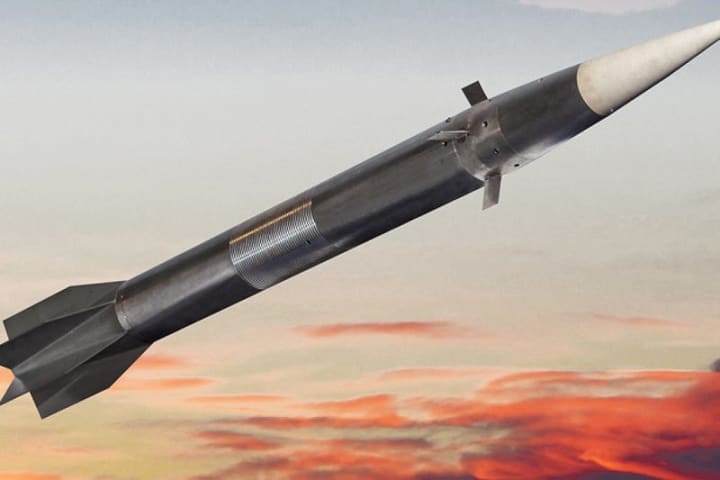
The GLR variant was used by Ukraine when the record distance hit was achieved. It is distinguished by its guidance system, incorporating Inertial Measurement Unit (IMU) and GPS for high precision.
Some configurations also feature a semi-active laser (SAL) seeker for terminal guidance, enabling engagement of both stationary and moving targets with enhanced accuracy although we do not know whether this was used by Ukraine.
For active flight control, the Vulcano GLR is equipped with X-shaped canards located near the front, behind its fairing. These do not appear to be folded at time of firing, but protected by the sabot.
Vulcano projectiles are also used on naval vessels.
I wrote about the US's Excalibur M982 GLR some time ago, and these too have been in use by Ukraine. Some versions of the Excalibur can 'go under a bridge'. They do not use discarding sabots - the canards and stabilising fins spring out after the shell leaves the barrel.
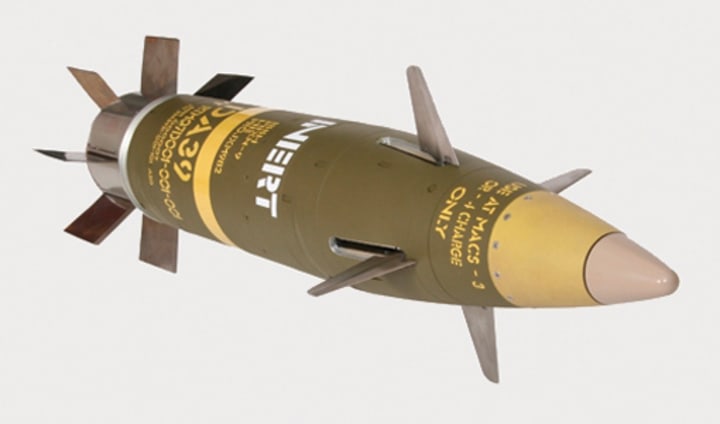
The record hit
The specific details of the target and the precise timing of the strike have not been publicly disclosed, but the target was definitely hit by Ukraine. The ability to deliver precise fire at such considerable distances minimises the risk to the firing unit, while simultaneously extending the reach of ground-based artillery to targets previously considered beyond conventional artillery engagement zones.
Historically, artillery engagements at ranges approaching 70 kilometres have primarily been confined to testing environments or involved specialised missile systems rather than conventional tube artillery, even rocket augmented. T
The Ukrainian achievement therefore demonstrates a practical application of advanced munitions and fire control techniques that pushes the boundaries of what is considered feasible for artillery in combat.
Implications
This development has implications for military doctrine, suggesting a potential shift in the operational utility of artillery systems equipped with precision-guided munitions. The compatibility of Vulcano GLR shells with other NATO-standard artillery platforms, such as the French Caesar and the German PzH 2000, further indicates the broader applicability of this demonstrated capability across various allied forces.
Despite this stand-off capability, Ukraine has lost 39 Krab units according to Oryx (26 May 2025). I assume that Vulcano shells are in short supply relative to standard shorter-range 155 mm ammunition. So, Ukraine's Krab units may have been vulnerable to counter-battery artillery fire as well as other Russian weapons systems. The losses are surprising given that the doctrine for these weapons is 'shoot and scoot'.
(c) James Marinero 2026. All rights reserved.
This story was originally published on Medium.
About the Creator
James Marinero
I live on a boat and write as I sail slowly around the world. Follow me for a varied story diet: true stories, humor, tech, AI, travel, geopolitics and more. I also write techno thrillers, with six to my name. More of my stories on Medium
Keep reading
More stories from James Marinero and writers in Journal and other communities.
How to Stop Russia Using Starlink to Control Deadly Drones Against Ukraine
This morning I read that Musk’s SpaceX has applied for a licence to increase the number of Starlink satellites to 1 million. I reacted rather strongly. There’s already too much junk in orbit. When I’m at sea the night sky is already spoiled just after sundown by strings of Starlink satellites. Yes, I’m becoming old and curmudgeonly, but now Musk’s expanding constellation is helping Russia murder Ukrainian citizens.
By James Marinero3 days ago in Journal
~ Fired ~
— Ai Intrusion ~ Are you Next ~ Is Ai Evolution after your job? — Few workplaces haven't been affected. Ai is in supermarkets, at doctors' offices, and even monitoring farms. I just can't think of anything this machine is not getting into, can you? For instance: Education ~ Law and Tech jobs will one day have a major influence or be taken over by these inanimate machines, with accuracy and vigor. From mechanics' diagnoses to a wide variety of everyday jobs, including fast food workers, with this input having the ability to cut their unnecessary work hours. I'm certain all of us have been touched by this with our short stories and colorful headings, have you? Even comments are very questionable 'Non-Robot' insertions.
By Jay Kantor4 days ago in Journal
Latin America’s Money Engine: Brazil Accounts for 14.92% of the Regional Fintech Investment Share
The financial landscape of Latin America is undergoing a seismic shift. For decades, traditional banking giants held an unshakeable monopoly over the region's economy. Today, that monopoly is dissolving, replaced by agile, digital-first solutions that prioritize accessibility and speed. At the center of this revolution lies a single, powerful engine: Brazil.
By Joey Mooreabout 15 hours ago in Journal
A Love Forboding
The chipped stone slope caused unbearable footing. I slid, skirting on my heels. I cast my shield, relinquishing my guard to stay upright. Left with my double-edge and a prayer to the maker, I skated toward my objective. The earthly stubble gave way to solid ground. I found myself restored, a trail of dust in my wake.
By James U. Rizzi5 days ago in Fiction


Comments
There are no comments for this story
Be the first to respond and start the conversation.