
Ukraine: After Bakhmut
Will Ukraine win the battle?
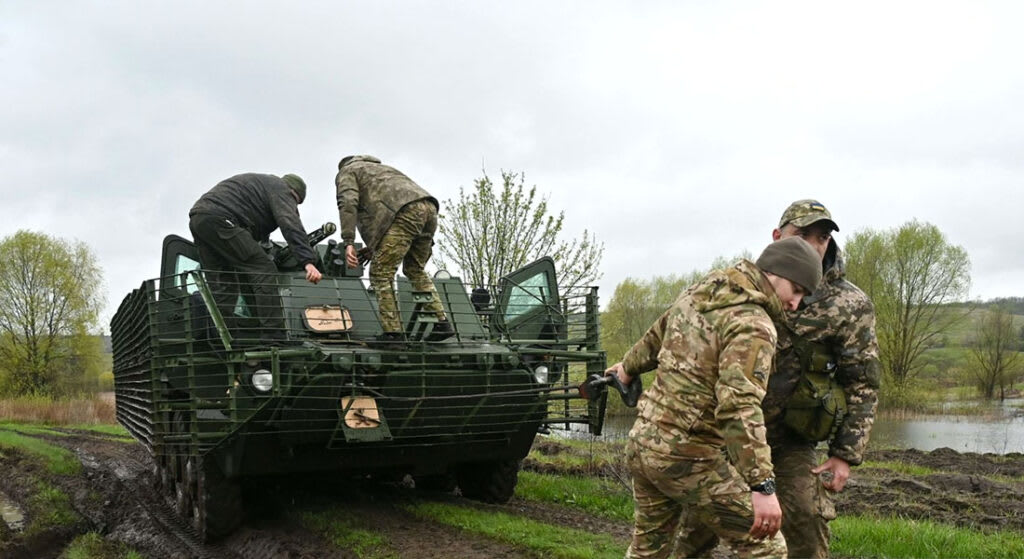
As a generation of Ukrainian males dies, the truth is that Ukraine has the same chance of winning a war with Russia that Mexico has of winning a fight with the US.
There is nothing patriotic about an American (or, in the translator’s opinion, a Brazilian) displaying the Ukrainian flag. There is also nothing subversive about a citizen of the United States doubting unrestricted support for a foreign government in a foreign conflict. Recognizing that Ukraine will not be able to overcome Russia without significantly stronger American assistance is not pro-Russian; it is pro-reality.
There was a violent separatist uprising in eastern Ukraine between 2014 until 2022. To deter Russian incursion, the Kiev administration constructed a series of heavily defended towns and supply routes along its eastern border. Bakhmut was a vital transportation node in this network.
When we predicted that Bakhmut would finally fall to the Russians five months ago, some readers scoffed. Were we not aware that Ukraine was winning the war? The Ukrainians put up a valiant struggle in what became the bloodiest war of the twenty-first century, but most of Bakhmut surrendered, including crucial rail links. It took a little longer than we expected, but this defeat makes it much less likely that Ukraine will be able to re-establish its 2014 boundaries without direct intervention from NATO soldiers.Russia mobilized 300,000 reservists seven months ago and used the time in between to train them. She ramped up armament manufacture and amassed vast amounts of equipment and ammunition. Hundreds of thousands of Russian troops have been deployed in eastern Ukraine, where they have begun to advance along a 725-kilometer front.
How many times have we heard that poorly trained, poorly led, and poorly equipped Russian troops, many of whom were mercenaries and ex-convicts, suffered massive losses and were forced to flee regions they had captured? All of this could be true. That doesn’t change the fact that Russia is now poised to capitalize on the Bakhmut decline when the dry summer arrives.
Ukraine, on the other hand, has placed much of its best-equipped and trained forces in Bakhmut, where they have been bombarded by Russian artillery, missiles, and drones for months. Ukraine lost thousands of veteran soldiers in the war for Bakhmut, who cannot be replaced by recruits with a few weeks of expedited training.
Bakhmut’s defense was made possible by Western armaments. NATO has repeatedly boosted its backing for Ukraine, from short-range Javelin and Stinger missiles to medium-range HIMARS and Patriot missile batteries to heavier armaments like Abrams tanks and Bradley battle vehicles. As the tide of battle shifted against the short-armed and gun-shy Ukrainians, Kiev’s Western defenders did not pause to think how to end this tragedy. Instead, they requested that fighter jets and long-range missiles be delivered.
These arms deliveries sparked enormous public outrage in Russia, as well as the assumption that the country is now at war with NATO. The arrival of German Leopard II tanks prompted headlines such as “German Tanks Are Back on Russian Soil” and commentaries saying that “the Fourth Reich has declared war on Russia.” It doesn’t take a prophet to understand where this constant escalation is leading or why it must be stopped.
Finally, while we are not generals, we understand economics. It always appeared exceedingly implausible to us that a country with a $200 billion GDP and a population of 44 million in 2021 could defeat a country with a $1.8 trillion GDP and a population of 145 million. This would appear to be especially true if just the largest nation, Russia, had a sizable air force, significant military industries, and nuclear weapons.
According to World Bank data, Ukraine had a population of 44 million when the conflict began, but only half of that number is still alive now. Eleven million Ukrainians have emigrated or are internally displaced in Europe. Several million people fled to Russia, and millions more currently live in Russian-controlled territories.
The Ukrainian economy contracted by 30% last year, whereas Russian GDP contracted by only 3%. The ruble is still as strong versus the dollar as it was when the war began. According to the IMF, Russia’s GDP growth will surpass that of the United Kingdom and Germany by 2023. Western sanctions have clearly not devastated the Russian economy.
While Russia is still substantially self-sufficient in food, energy, and military hardware, much of Ukraine’s infrastructure is in shambles. Despite the fact that Ukraine has become significantly reliant on NATO for arms, both NATO’s own reserves and Ukraine’s previous Soviet-era artillery shell and air defense missile stocks are fast dwindling. Time is not on Kiev’s side in this war of attrition.
Any NATO presence in Crimea is viewed by Moscow in the same way that Russian missiles in Cuba or a Chinese naval facility in Nova Scotia are viewed by Washington. It was never reasonable to expect Russia to relinquish Crimea without suffering a crushing military defeat. However, the peace parameters that Kiev might expect have deteriorated even further just seven months ago.
According to Moscow, the referendums held in September 2022 turned the provinces of Lugansk, Donetsk, Zaporizhya, and Kherson into portions of the Russian Federation, and Moscow will now seek full control of these regions. Russia could impose even harsher peace conditions within six months.
A reasonable likelihood of victory is a classic criteria for a just war. While a generation of Ukrainian men is dying, the sad reality is that Ukraine has nearly as much chance of winning a war against Russia as Mexico has of winning a fight with the US. This equation will not alter if the fight is prolonged. More Ukrainian casualties and infrastructure loss would only exacerbate this society’s trauma. Unless we are willing to risk a dramatic escalation with NATO forces fighting Russian forces, the best way to preserve the survival of a viable, independent Ukrainian state is to reach an agreement now.
About the Creator
Leonardo Murgi
I enjoy writing about politics, geopolitics, war, and the economics.
Keep reading
More stories from Leonardo Murgi and writers in Journal and other communities.
How to Grow a Psychology Business After Purchase
Introduction Purchasing a psychology business is only the first step toward long-term success. Sustainable growth requires strategic planning, operational refinement, and thoughtful leadership. New owners must balance continuity with improvement, ensuring that quality of care remains high while expanding services and revenue. A structured growth strategy helps stabilize the practice post-acquisition and creates a foundation for scalability, profitability, and clinical excellence.
By Abdul Mueed6 days ago in Journal
Autonomy Is The Real Privilege
Good morning, freedom-seekers! Today we’re gonna be looking at autonomy. A strange word, I know; one many would probably look at blankly and run away from on sight. We’re gonna figure out what it actually means, consider how it’s achieved, and decipher just how deeply most of us are tangled up in dependence without realising it.
By That ‘Freedom’ Guyabout 12 hours ago in Humans



Comments
There are no comments for this story
Be the first to respond and start the conversation.