

TV news in India has undergone several changes from the time it appeared first on television. The advertisements and the money generated from telecasting them is the primary source of income for these channels. The nature of news shown on TV channels is controlled by the advertisers and the owners of these networks.
TV news demand and popularity are unparalleled in today’s times, the pandemic further increased its consumption. TV news in its present form is very different from its past and considerably skewed in nature. When the broadcast of TV news began it was telecasted by Doordarshan under closed scrutiny by the government. The exodus of Kashmiri pandits during the 1990s did not find space in the news simply because the government did not want it to be shown.
Doordarshan started allowing private news production houses to telecast their show on it. Then, New Delhi Television (NDTV) brought a show named ‘The World This Week’ which was a new change. One more channel was added and then a few more private news production houses came up but the control of government remained until satellite television came into India.
With the coming up of satellite TV, several private channels came up for news along with a similar change in entertainment channels. Now the media was considerably free from governments control and could broadcast news in the manner it wished. Soon 24x7 channels started and it brought a few new changes with it.
Now the competition for viewership among these private channels increased and to sustain they needed viewership. The Primary source of their revenue was money from advertisement and they could not afford to lose out on that. It was the same time the Government of India started spending more money on advertisements. The channels learned that to get the money for the advertisement they can not criticize the government.
Channels subtly started imposing narratives on their viewers because that was the demand of the government. The ownership of these channels was also in the hands of those who had political connections or were politicians themselves. The advertiser’s preferences were kept in mind while airing news and anything that questioned the government or harmed the reputation of advertisers did not find its place in the news.
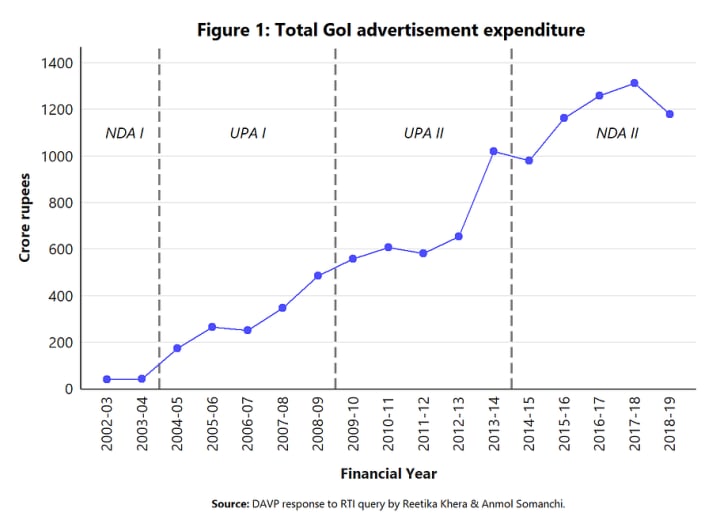
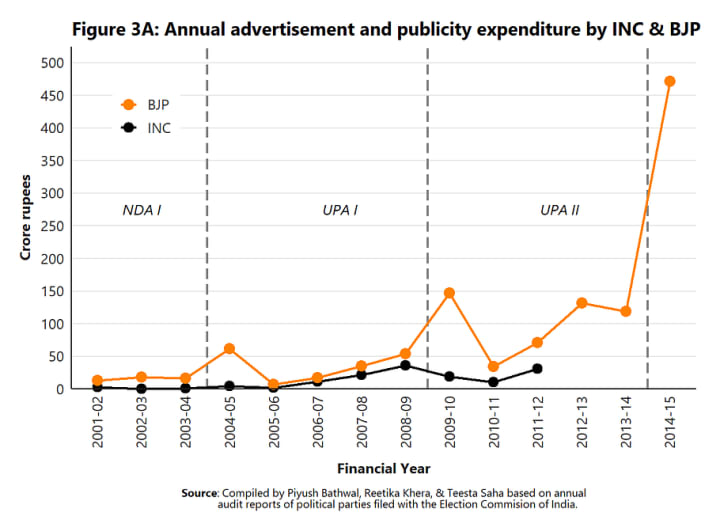
The UPA government spend around 1000 crores during the 2014 Lok Sabha elections and a similar trend is being followed by the present NDA government. This government further increased the spending. The party-wise spending on advertisement gives another perspective, Congress as a political party has never spent more than 50 crores on advertisement whereas BJP spends 472 crores during the 2014-15 period.
The channels simply have to abide by the words that the government wanted them to convey through programs thus ensuring them that money from advertisements. Here the state government’s spending on advertisement is not taken into account which could have simply added more validity to this argument. The competition among channels forced them to go out of their way to please the governments. The anchors of these channels started defending everything that the government claimed and a standard format of debating emerged.
A volatile anchor who could shout and prevent guests from speaking; a panel of experts who are biased and can’t argue rationally; and a polarizing topic that is abstract enough to not have a possible solution. Within these conditions, the channels started propagating the government’s agenda, and thus the old days when Doordarshan was telecasting news seems to be returning. The only difference is the mannerism in which news is presented, earlier it was sober and neutral nowadays it is violent and assertive.
In November 2018 data by BARC (Broadcast Audience Research Council) revealed that the BJP had 22,099 insertions (number of times an ad is aired on tv) which are far more in comparison to the second advertiser, NETFLIX, which had 12951 insertions. This shows the dictate of advertisers in controlling the news. Several editors and newspersons have to leave their job because they couldn’t telecast anything critical of the advertisers and stakeholders of the media house.
However, the question remains the same as it was during Doordarshan times. Are we been served the news that is important or we are served what advertisers and owners of these media houses prefer? As they say that history repeats itself, did we come a full circle in terms of independence to media houses?
About the Creator
Keep reading
More stories from writers in Journal and other communities.
Wild Card Weekend Recap: What Happens Now?
I think I figured out why I love Wild Card Weekend so much. It's because it's the first playoff anything of the calendar year. The NFL season starts in the fall, and once upon a time, the champion was crowned either on or slightly before New Year's. The evolution of the NFL schedule has resulted in the playoffs starting just into the New Year, and currently, the final week of the season falls on the first weekend of the New Year, with Wild Card Weekend coming a week after that. So yes, chronologically, the NFL's Wild Card Weekend serves as the first playoff anything of the calendar year.
By Clyde E. Dawkins4 days ago in Unbalanced




Comments
There are no comments for this story
Be the first to respond and start the conversation.