
Turning Trump's Tariffs into Triumph
How Indonesia Could Survive the Storm

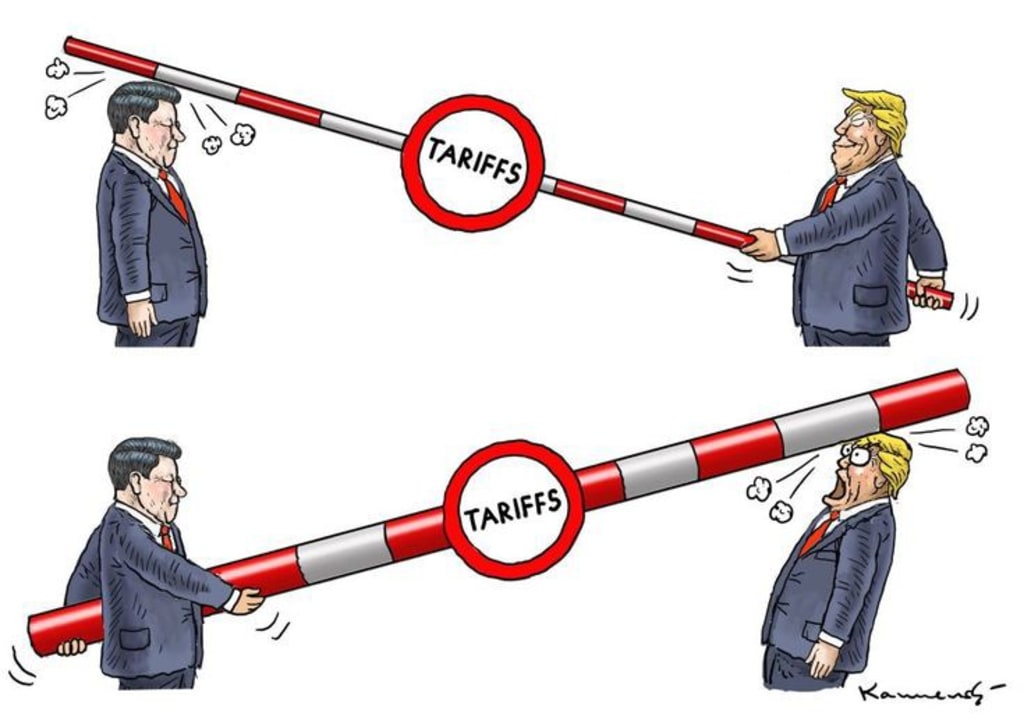
The announcement of new tariff policies by President Donald Trump in April 2025 marks a significant shift in the global trade landscape that will have wide-ranging impacts on Southeast Asian economies, including Indonesia. By declaring a national trade emergency, Trump has taken drastic measures by imposing a baseline 10% tariff on imports from all countries, plus higher reciprocal tariffs for countries with the largest trade deficits with the United States. This policy, aligned with the Trump administration's "America First" philosophy, has the potential to transform the dynamics of international economic relations and influence regional economic development strategies.
Southeast Asia, as a region highly dependent on trade, has become an important global manufacturing base, with many countries in the region occupying strategic positions in global value chains. Data from the ASEAN Secretariat shows that the value of goods trade between ASEAN and the US reached US$394.4 billion in 2023, with ASEAN exports to the US valued at US$241.2 billion (ASEAN Secretariat, 2024). The United States is the third-largest export market for ASEAN, making the region highly vulnerable to changes in US trade policy.
The implementation of a 10% tariff could directly reduce the competitiveness of Southeast Asian products in the American market. According to a study by the Peterson Institute for International Economics (2024), such a tariff increase could reduce exports from Southeast Asia to the US by up to 12-15% in the short term, equivalent to a decrease of about US$29-36 billion in annual export value. The most affected sectors are likely to include electronics, textiles and garments, furniture, and other light manufacturing products that are the backbone of exports for many countries in the region, especially Vietnam, Thailand, Malaysia, and Indonesia.
Indonesia, with exports to the US reaching US$24.1 billion in 2023 (BPS, 2024), faces significant challenges from this new tariff policy. However, Indonesia's position is somewhat unique compared to some of its ASEAN neighbors. Indonesia's export composition to the US includes a higher proportion of natural resources and commodity-based products compared to light manufactured goods. According to data from the Ministry of Trade (2024), Indonesia's main export products to the US include apparel (US$4.2 billion), rubber and rubber products (US$2.3 billion), footwear (US$1.8 billion), electrical machinery (US$1.7 billion), and fishery products (US$1.6 billion).
Interestingly, some Indonesian mineral and energy products may benefit from exemptions mentioned in Trump's policy for "certain energy and minerals not available in the United States." According to a fact sheet released by the White House, tariff exemptions also apply to copper, pharmaceuticals, semiconductors, and wood products. This could provide a preferential pathway for some Indonesian exports, especially those related to the mineral resource downstream program that is being actively implemented.
Indonesia's downstream program, which has been a key pillar of the government's economic strategy since 2020, aims to increase the added value of domestic commodities before export. The main focus of this program is on strategic minerals such as nickel, bauxite, copper, tin, and other minerals. According to the Coordinating Ministry for Maritime Affairs and Investment (2024), the downstream program has increased the added value of Indonesia's processed mineral exports by 47% between 2020-2023, from US$22.8 billion to US$33.5 billion.
Trump's tariff policy could have a dual impact on Indonesia's downstream program. On one hand, exemptions for copper and some minerals could provide a comparative advantage for Indonesia in exporting mineral-based downstream products to the US market. Indonesia has significant copper reserves, especially in Papua, and has invested heavily in smelting and processing capacity. Data from the Directorate General of Minerals and Coal (2023) shows that Indonesia plans to increase copper processing capacity to 3.2 million tons per year by 2026 through the construction of new smelting facilities.
On the other hand, tariffs on other mineral-based manufactured products that do not receive exemptions could hamper the development of Indonesia's downstream industries. For example, steel and aluminum products based on nickel and bauxite, which have been a major focus of downstream efforts, may face greater barriers to entry into the US market. A study by the Indonesian Mining Institute (2024) estimates that an additional 10% tariff could reduce the profit margins of Indonesian metal industries in the US market by up to 18-22%, potentially making some exports uncompetitive.
This challenge is further complicated by the fact that Indonesia itself is specifically mentioned in the White House fact sheet as a country that imposes "non-tariff barriers" on US exports. The fact sheet states: "Indonesia maintains local content requirements in various sectors, a complex import licensing regime, and starting this year will require natural resource companies to repatriate all export proceeds for transactions valued at $250,000 or more." These regulations are closely tied to Indonesia's downstream program, which indeed encourages domestic processing and restrictions on raw material exports.
Indonesia's Minister of Industry in a recent economic symposium affirmed that "the downstream policy is a long-term strategy to build national economic resilience and will not be changed despite global trade turmoil" (Ministry of Industry, 2024). This approach reflects Indonesia's commitment to reducing dependence on raw commodity exports and building stronger domestic manufacturing capacity.
From a national resilience perspective, Trump's tariff policy could actually strengthen Indonesia's argument for export market diversification and deepening regional economic integration. Excessive dependence on the US market has long been a concern for Indonesian policymakers, and these new tariffs could accelerate efforts to expand trade with alternative markets, including China, the European Union, and fellow ASEAN members. Indonesia's "Maritime Axis" strategy, which emphasizes connectivity with countries in the Indo-Pacific region, may gain new momentum in response to US protectionism.
The Institute for Development of Economics and Finance (INDEF) in its analysis shows that every 10% shift of Indonesian exports from the US market to China could generate a net gain of approximately US$1.5 billion due to China's stronger growth in demand for Indonesian products (INDEF, 2024). Meanwhile, the Regional Comprehensive Economic Partnership (RCEP), the world's largest free trade agreement encompassing ASEAN, China, Japan, South Korea, Australia, and New Zealand, offers a valuable framework for expanded intra-regional trade as a mitigation strategy against US protectionism.
The development of mineral-based industries in Indonesia's downstream program may also gain new urgency in the context of global trade uncertainty. The main logic of the downstream program—reducing dependence on raw commodity exports and building domestic processing capacity—becomes increasingly relevant in a world marked by rising protectionism. According to analysis by the Centre for Strategic and International Studies (CSIS) Indonesia (2024), the long-term impact of Trump's tariffs might actually accelerate Indonesia's transformation into a more integrated regional manufacturing hub.
This aligns with a recent study by the Asian Development Bank Institute showing that countries investing in enhancing domestic manufacturing capabilities tend to be more resilient to external trade shocks (ADBI, 2023). For Indonesia, this may mean accelerating investment in strategic mineral downstream industries such as electric vehicle batteries, copper-based electronic components, and high-value aluminum products, all of which have been priorities in the government's downstream roadmap.
Indonesia's strategy to address these challenges may need to include several key elements. First, bilateral negotiations with the US to seek further exemptions or preferential treatment for Indonesian downstream products. Second, acceleration of export market diversification, with emphasis on rapidly growing regional markets. Third, strengthening domestic industrial capacity through investment in technology, human resources, and supporting infrastructure. Fourth, deepening coordination with other ASEAN countries to develop a coherent regional response to global protectionism.
Vietnam, as the country with the largest trade surplus with the US in the ASEAN region (US$91 billion in 2023 according to the US Census Bureau), is likely to be a primary target of the higher "reciprocal" tariffs mentioned in Trump's policy. This may cause some diversion of manufacturing investment from Vietnam to other ASEAN countries, including Indonesia. According to a recent survey by the American Chamber of Commerce in Southeast Asia, about 24% of US companies are considering relocating or diversifying their production facilities in the region in response to changing trade policies (AmCham ASEAN, 2024).
For Indonesia, this could be an opportunity to attract greater foreign direct investment, especially in resource-based manufacturing sectors that align with the downstream program. However, to take advantage of this opportunity, Indonesia needs to address long-standing structural challenges in its investment climate, including complex regulations, infrastructure limitations, and governance issues. According to the World Bank's latest Ease of Doing Business index, Indonesia ranks 73rd out of 190 countries, lagging behind some of its ASEAN neighbors such as Singapore (ranked 2nd), Malaysia (ranked 12th), and Thailand (ranked 21st) (World Bank, 2024).
The Indonesian government has taken steps to address these barriers through regulatory reforms and targeted investment incentives, including the enactment of the Job Creation Law and the establishment of special task forces to facilitate strategic investments. The Ministry of Investment reports that investment realization in the mineral processing sector increased by 42% in 2023 to US$8.7 billion (BKPM, 2024), indicating strong investor interest in Indonesia's downstream program.
From a broader macroeconomic perspective, Trump's tariffs could also affect global capital flows and regional currency exchange rates, with implications for Indonesia's economic stability. If the tariff policy leads to strengthening of the US dollar and increased volatility in global financial markets, Indonesia and other developing countries in Southeast Asia may face pressure on their currency exchange rates and external financing conditions. However, Indonesia's relatively strong foreign exchange reserves position (US$145 billion as of February 2024 according to Bank Indonesia) provides a substantial buffer against external shocks.
For Indonesia's downstream program, the short-term challenges from Trump's tariffs need to be balanced with a focus on long-term capacity development and global competitiveness. This includes investment in research and development, product quality improvement and standardization, and deeper integration into global value chains. According to a report by the McKinsey Global Institute (2023), countries successful in resource-based industrialization achieve this not only through proactive industrial policies but also through the development of dynamic innovation ecosystems and strategic openness to global knowledge and technology flows.
In the long run, the impact of Trump's tariffs on Southeast Asia and Indonesia will largely depend on the duration of this policy, the responses of other trading partners, and the effectiveness of regional and national adaptation strategies. Southeast Asian countries, including Indonesia, have shown remarkable resilience in facing external economic shocks in the past, and this experience provides valuable lessons for navigating the changing global trade landscape today.
For Indonesia, Trump's tariff policy should be viewed not only as a short-term challenge but also as a catalyst to accelerate the economic transformation already underway. By deepening manufacturing capacity, developing stronger domestic value chains, and reducing dependence on any single market, Indonesia can enhance its national economic resilience while positioning itself as a key player in the evolving regional economic landscape.
In conclusion, Trump's tariff policy presents significant challenges for Southeast Asia and Indonesia, but also opens opportunities for strategic reorientation and deepening economic transformation. For Indonesia's downstream program, this is a moment to strengthen commitment to strategic industry development while adapting to the new realities of the global economy. With a coordinated and adaptive approach, Indonesia can navigate short-term turbulence while building the foundation for more resilient and sustainable growth in the long term.
Asian Development Bank Institute (ADBI). (2023). Manufacturing Capacity and Economic Resilience in Developing Asia. Tokyo: ADBI.
ASEAN Secretariat. (2024). ASEAN Statistical Yearbook 2023. Jakarta: ASEAN Secretariat.
American Chamber of Commerce in ASEAN (AmCham ASEAN). (2024). ASEAN Business Outlook Survey 2024. Singapore: AmCham.
Badan Koordinasi Penanaman Modal (BKPM). (2024). Laporan Realisasi Investasi Tahun 2023. Jakarta: BKPM.
Badan Pusat Statistik (BPS). (2024). Perkembangan Ekspor dan Impor Indonesia Januari-Desember 2023. Jakarta: BPS.
Centre for Strategic and International Studies Indonesia (CSIS). (2024). Indonesia's Strategic Industries in a Changing Global Trade Landscape. Jakarta: CSIS.
Direktorat Jenderal Mineral dan Batubara. (2023). Laporan Kinerja Pembangunan Smelter 2020-2023. Jakarta: Kementerian ESDM.
Indonesian Mining Institute. (2024). Impact Assessment of Global Tariff Scenarios on Indonesian Mineral Processing Industries. Jakarta: IMI.
Institute for Development of Economics and Finance (INDEF). (2024). Analisis Dampak Kebijakan Tarif AS terhadap Ekspor Indonesia. Jakarta: INDEF.
Kementerian Investasi/BKPM. (2024). Perkembangan Investasi di Sektor Pengolahan Mineral 2020-2023. Jakarta: BKPM.
Kementerian Koordinator Bidang Kemaritiman dan Investasi. (2024). Laporan Capaian Program Hilirisasi Sumber Daya Alam Indonesia 2020-2023. Jakarta: Kemenko Marves.
Kementerian Perdagangan Republik Indonesia. (2024). Statistik Perdagangan Luar Negeri Indonesia-Amerika Serikat 2023. Jakarta: Kemendag.
Kementerian Perindustrian. (2024). Strategi Pengembangan Industri Berbasis Mineral dalam Konteks Dinamika Perdagangan Global. Jakarta: Kemenperin.
McKinsey Global Institute. (2023). Resource-Based Industrialization in the 21st Century: Lessons from Global Experience. New York: McKinsey & Company.
Peterson Institute for International Economics. (2024). Trade Policy Under Trump 2.0: Implications for Asia. Washington, DC: PIIE.
World Bank. (2024). Doing Business 2024: Measuring Business Regulations. Washington, DC: World Bank Group.
About the Creator
Defrida
Writing is how I create my own universe of thought. Without it, I'd vanish into the swirling depths of a black hole.
Review of 'Man on the Run'
My wife and I saw Man on the Run, a nearly 2-hour documentary on Amazon Prime, about Wings, Paul McCartney's group that flew around the world from shortly after The Beatles broke up in early 1970 to shortly after John Lennon was murdered at the end of 1980, making a Beatles reunion forever impossible.
By Paul Levinson5 days ago in Beat



Comments (1)
I wish Indonesia the best of luck. Canada should take notes. ;)