
Trump's Advice to Apple: The Reasons Behind the Difficulties at a US iPhone Factory
Trump’s Call for Domestic iPhone Production
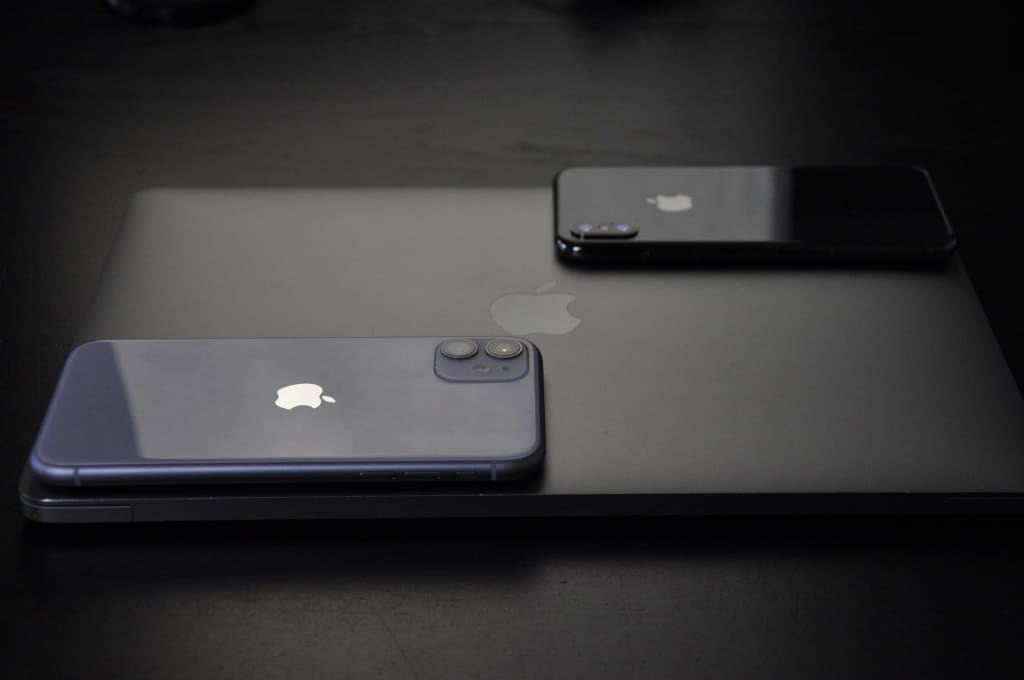
When U.S. President Donald Trump urged Apple CEO Tim Cook to stop the company's manufacturing expansion in India and concentrate on producing iPhones in the United States in May 2025, it made headlines. Trump's larger America First trade policies, which include enacting high tariffs 145% on Chinese imports and 26% on Indian goods to promote domestic manufacturing are consistent with this directive, which was given during a state visit to Qatar. A key component of Trump's promise to restore American jobs is his idea of a Made in the USA iPhone. Experts and industry analysts counter that this objective is unlikely to be achieved anytime soon due to a number of practical, financial, and logistical difficulties.
Trump's Call for Homegrown iPhone Manufacturing
Trump's remarks coincided with Apple's efforts to diversify its supply chain away from China, where about 80% of iPhones are currently assembled, as a result of previous COVID-related disruptions and trade tensions between the United States and China. With iPhone production in India reaching 22 billion dollars n the fiscal year ending March 2025 a 60% increase from the year before the country has become a significant alternative. With the help of India's production-linked incentive (PLI) program, which subsidizes the production of smartphones, major suppliers like Foxconn and Tata Group have increased their operations in southern India.
Trump voiced his displeasure with Apple's expanding presence in India during a trade relations discussion, saying, 'I told Tim, 'You're my friend, I treated you very well, you're coming here with a 500 billion dollars announcement, and now I hear you're building all over India. You shouldn't build in India, in my opinion. In order to avoid tariffs and generate American jobs, he underlined that Apple should give priority to U.S.-based production, adding that India could 'take care of themselves.' Though Indian officials subsequently clarified that trade was not discussed in recent U.S.-India talks, Trump also asserted that India offered a zero-tariff trade deal.
Apple's 500 billion dollars investment pledge in the United States, which was announced in February 2025, has been cited by the White House as proof of the company's faith in American manufacturing. But rather than iPhone factories, this investment is focused on research and development, 20,000 new jobs, and artificial intelligence servers. Both Commerce Secretary Howard Lutnick and Press Secretary Karoline Levitat have supported the idea, with Lutnick arguing that skilled labor and automation could replicate 'the army of millions and millions of human beings screwing in little screws to make iPhones' in the United States.
Reasons Why a U.S. iPhone Factory Is Unlikely
Despite Trump's zeal, the prospect of producing iPhones domestically is intimidating for a number of reasons:
1. An intricate worldwide supply chain
With components like chips, batteries, and rare earth minerals sourced from China, Taiwan, and South Korea, Apple's iPhone is dependent on an extensive, interconnected supply chain that spans more than 50 countries. Costs would increase even if assembly were moved to the United States because many parts would still be subject to import duties. Taiwan Semiconductor Manufacturing Company (TSMC), a major supplier to Apple, for example, manufactures state-of-the-art chips in Taiwan; it is anticipated that U.S. facilities won't be able to produce comparable 2 nanometer chips until 2030. It would take decades and billions of dollars to build a supply chain that is entirely domestic, and there is no assurance that it will succeed.
2. Lack of Skilled Workers
Tim Cook, the CEO of Apple, has frequently cited the dearth of skilled labor in the United States as a challenge. 'China's manufacturing prowess stems from its vast pool of tooling engineers and workers trained in advanced production techniques,' Cook said in a 2017 Fortune interview. 'I doubt we could fill the room if you had a meeting of tooling engineers in the United States. You could fill several football fields in China,' he remarked. This was echoed by former Apple CEO Steve Jobs, who told President Barack Obama in 2010 that the United States lacked the 30,000 engineers required to support 700,000 workers in factories, just like China does.
3. Expensive expenses and price hikes
Costs would rise dramatically if iPhones were manufactured in the United States because of increased infrastructure and labor costs. In contrast to 40 dollars in China, analysts predict that labor costs for assembling an iPhone in the United States could reach 200 dollars unit. A U.S.-made iPhone could retail for 3,500 dollars instead of the current 1,000 dollars price tag, potentially pricing out customers and hurting Apple's sales, according to Wedbush analyst Dan. According to UBS, tariffs by themselves might compel Apple to increase the price of the iPhone 16 Pro Max by 350 dollars.
4. Infrastructure and Time Issues
It would take years to build a factory in the United States that could produce iPhones on the same scale as China, where establishments like Zhengzhou's 'iPhone City' employ hundreds of thousands of people. A U.S. facility would have to deal with regulatory obstacles, workforce training, and production timelines comparable to those of Apple's Indian factory, which took ten years to produce high-end models. The difficulty is highlighted by previous attempts, such as Foxconn's unsuccessful 10 billion dollars Wisconsin plant, which was announced in 2017. After only creating face masks during the pandemic, that project which was supposed to produce Apple components was mainly shelved.
5. Automation versus the Creation of Jobs
The promise of widespread job creation is undermined by Trump's team's suggestion that automation could offset labor costs. The 'millions' of jobs Lutnick outlined are replaced by highly specialized engineers and fewer workers in automated factories. Furthermore, because assembly lines need to be rearranged frequently due to the quick speed of iPhone development and frequent design changes, automation is difficult.
Apple's Approach and Tariff Management
Apple has previously dealt with Trump's tariffs. Using charm offensives and calculated investments, like building Mac Pros in Texas, CEO Tim Cook was able to obtain exemptions for important products like the iPhone during his first term. Apple may have made similar moves to placate the administration in 2025 with its 500 billion U.S. dollars investment and plans for an AI server factory in Houston. Analysts, however, think Apple is unlikely to commit to producing iPhones in the United States. Rather, the company is putting more effort into India, hoping to produce 25% of the world's iPhones there in the upcoming years, with the majority of units going to the United States coming from India by June 2025.
Since the announcement of tariffs in April 2025, Apple's stock has suffered, falling 15%, indicating investor apprehension over growing expenses. However, the company has some leeway to absorb tariff impacts without immediately passing costs on to customers thanks to its strong service revenue, which reached 96 billion dollars in its most recent fiscal year. Although Vietnam and Thailand are also subject to tariffs, Cook's reputation as a 'supply chain whisperer' raises the possibility that Apple will negotiate exemptions or further diversify production to these nations.
The More Comprehensive View
Trump's demand for iPhones made in the United States is part of his larger trade war strategy, which he says will lower American debt and boost manufacturing. However, detractors contend that tariffs might increase inflation, and UBS warns of wider economic repercussions in the event that Apple hikes prices. Social media posts on X have revealed skepticism, with some users referring to the plan as a 'tariff scam' to enrich wealthy donors. They also point out that Trump recently exempted iPhones from some tariffs after first supporting domestic manufacturing.
Ultimately, Trump's dream of a U.S.-made iPhone is more symbolic than realistic due to Apple's reliance on international supply chains as well as labor and infrastructure constraints in the United States. China and India will probably continue to play a major role in Apple's operations for years to come due to the size and complexity of iPhone manufacturing, even though tariffs may force the company to move some production. Apple's next actions will be closely watched by investors and consumers around the world, in addition to Trump, as Tim Cook manages this trade war.
Sources: Business Standard, MacRumors, The Indian Express, The Guardian, CNBC, Bloomberg, and posts on X
About the Creator
Keep reading
More stories from PUSPAYAN SARKAR and writers in Journal and other communities.
Messi congratulates Barcelona on becoming champions
After Barcelona defeated Espanyol 2-0 on May 15, 2025, Lionel Messi, who is currently playing for Inter Miami, congratulated the team on winning La Liga 2024–2025. Messi posted a succinct message on Instagram on May 16, 2025, that read, "Congratulations!!" and included the Barcelona colors of a blue and red heart emoji. This gesture demonstrated Messi's strong bond with the team, where he spent 17 years winning 10 La Liga titles. In their heartfelt posts, fans on X expressed how Messi's message demonstrated his unwavering devotion to Barcelona despite their distance from one another.
By PUSPAYAN SARKAR8 months ago in Journal



Comments
There are no comments for this story
Be the first to respond and start the conversation.