
Trump Pushes for Renewed TikTok Ban : Examining the Business, Security and Cultural Fallout
Cultural Impact: The Role of TikTok in Shaping Trends and Voices

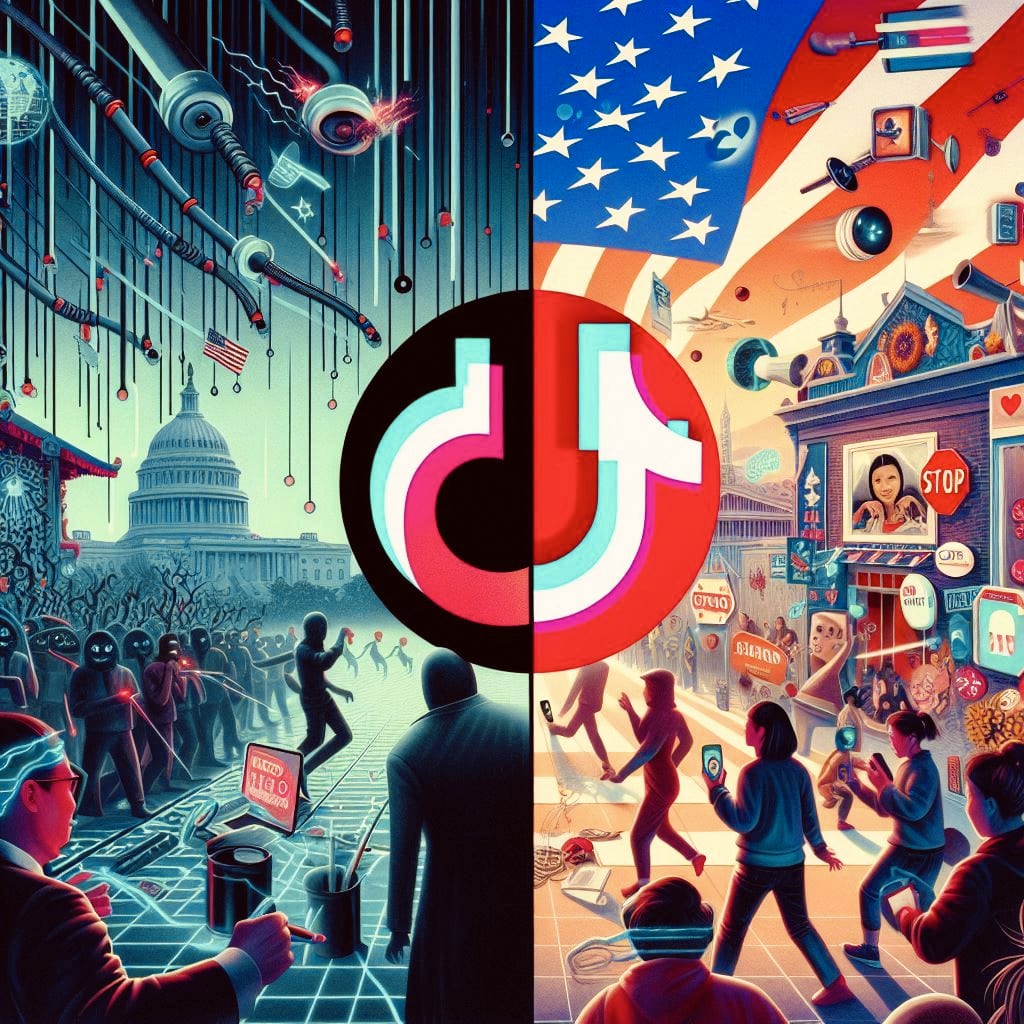
Former U.S. President Donald Trump has reignited the debate over banning TikTok, the popular short-form video app owned by Chinese tech giant ByteDance. On January 18, Trump called for renewed efforts to restrict the platform, citing national security concerns and warning that TikTok could be used as a tool for Chinese surveillance. This marks a return to the contentious issue that first surfaced during his presidency in 2020.
The controversy stems from TikTok's immense popularity in the United States, with over 150 million active users, and its alleged ties to the Chinese government. Trump’s initial push to ban TikTok in 2020 included executive orders aimed at curbing its operations unless ByteDance sold its U.S. operations to an American company. The move faced immediate backlash and legal challenges, ultimately stalling when President Joe Biden took office. Biden’s administration later issued its own executive order, focusing more broadly on data security risks posed by foreign-owned apps, but the issue has remained unresolved.
Now, Trump’s renewed call to action comes as geopolitical tensions between the U.S. and China continue to escalate. While the Biden administration has not explicitly supported a ban, lawmakers on both sides of the aisle have raised concerns about TikTok’s data collection practices and potential influence on American users.
National Security Concerns and TikTok’s Response
At the heart of the debate is whether TikTok poses a legitimate national security threat. Critics argue that TikTok collects vast amounts of user data, including location information, browsing habits, and biometric identifiers, which could potentially be accessed by the Chinese government under China's national security laws. These laws require Chinese companies to cooperate with state intelligence agencies if requested.
TikTok has repeatedly denied these allegations, emphasizing that it operates independently of the Chinese government. In an effort to address U.S. concerns, the company launched "Project Texas," a $1.5 billion initiative to store U.S. user data exclusively on American soil through a partnership with Oracle. Despite these measures, skepticism remains among lawmakers and security experts who view TikTok as a potential backdoor for espionage and propaganda.
Economic Implications of a Ban
Banning TikTok could have profound economic consequences, particularly for businesses that rely on the platform for marketing and customer engagement. TikTok has become a powerful tool for brands, small businesses, and entrepreneurs, offering a cost-effective way to reach millions of potential customers through targeted, algorithm-driven content.
For creators, TikTok has been a lucrative platform, enabling many to build careers, secure sponsorships, and generate income. A ban could leave these creators scrambling to rebuild their audiences on other platforms like Instagram Reels or YouTube Shorts, which lack TikTok’s unique community-driven ecosystem.
From a broader perspective, a ban on TikTok could signal a shift in how the U.S. government regulates foreign-owned tech companies. Such a move might encourage other nations to adopt similar restrictions, fragmenting the global digital economy and potentially stifling innovation.
Cultural Impact and Free Speech Concerns
TikTok’s influence extends beyond economics. The platform has reshaped pop culture, music, and social trends, becoming a hub for creativity and self-expression. For many young Americans, TikTok is not just an app but a cultural phenomenon that drives everything from viral challenges to political discourse.
Critics of a ban argue that it could set a troubling precedent for digital freedom and free speech. While national security concerns are valid, they caution that banning a platform based on its country of origin could lead to censorship and limit consumer choice. Such a precedent might also embolden authoritarian regimes to justify similar actions against American tech companies operating abroad.
Supporters of the ban, however, argue that national security must take precedence over convenience and entertainment. They point to China’s strict controls over foreign tech platforms like Facebook and Google as justification for taking reciprocal action.
Geopolitical Context and the Road Ahead
The renewed push to ban TikTok highlights the broader context of U.S.-China relations, where technology has emerged as a key battleground. From trade disputes to competition over artificial intelligence, the struggle for global dominance increasingly revolves around control over data and digital infrastructure.
For now, the future of TikTok in the U.S. remains uncertain. While Trump’s statements have reignited the debate, any action to ban or restrict TikTok would require extensive legal and regulatory processes. Lawmakers are already exploring legislative options, such as the RESTRICT Act, which would give the federal government broader authority to ban foreign-owned apps that pose security risks.
TikTok’s leadership has urged policymakers to consider alternatives to an outright ban, such as increased transparency and third-party audits of its data practices. Meanwhile, businesses, creators, and users are left in limbo, uncertain about whether they should continue investing in the platform or prepare for its potential absence.
As the debate continues, one thing is clear: the outcome will have far-reaching implications for business, technology, and the principles of an open digital world. Whether TikTok will survive as a dominant social media platform in the U.S. or become a casualty of geopolitical rivalry remains to be seen.
About the Creator
Sikandar prasad
I am content writer specializing in creating impactful and results-driven content tailored to diverse business needs. With expertise in blog posts, articles, social media content, website copy, and product descriptions.
Keep reading
More stories from Sikandar prasad and writers in Journal and other communities.
2025 Sundance Film Festival Award Winners Announced
**2025 Sundance Film Festival Award Winners Announced** The 2025 Sundance Film Festival wrapped up with an exciting awards ceremony at The Ray Theatre in Park City, Utah, recognizing the best in independent filmmaking. The festival, held from January 24 to February 2, showcased a diverse and compelling selection of films, with 94 feature films and 57 shorts selected from a staggering 15,775 submissions.
By Sikandar prasad12 months ago in Journal
How Mobile App Development Atlanta Firms Handle UX Challenges?
UX problems rarely announce themselves early. They show up after launch, when users hesitate, abandon flows, or quietly stop engaging. By then, the cost of fixing them is higher and the patience of stakeholders is thinner. Atlanta app firms that consistently deliver successful products have learned this the hard way, and their approach to UX reflects that experience.
By Nick William4 days ago in Journal
Wild Card Weekend Recap: What Happens Now?
I think I figured out why I love Wild Card Weekend so much. It's because it's the first playoff anything of the calendar year. The NFL season starts in the fall, and once upon a time, the champion was crowned either on or slightly before New Year's. The evolution of the NFL schedule has resulted in the playoffs starting just into the New Year, and currently, the final week of the season falls on the first weekend of the New Year, with Wild Card Weekend coming a week after that. So yes, chronologically, the NFL's Wild Card Weekend serves as the first playoff anything of the calendar year.
By Clyde E. Dawkins7 days ago in Unbalanced




Comments
There are no comments for this story
Be the first to respond and start the conversation.