
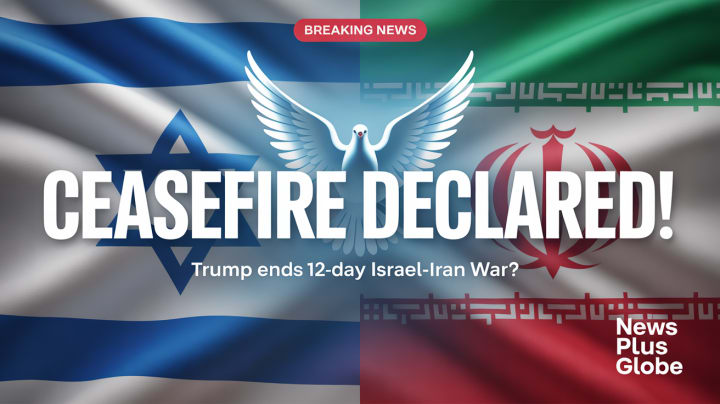
Trump Announces Ceasefire Between Israel and Iran
Trump Announces Ceasefire Between Israel and Iran | End of the 12-Day War?
Introduction
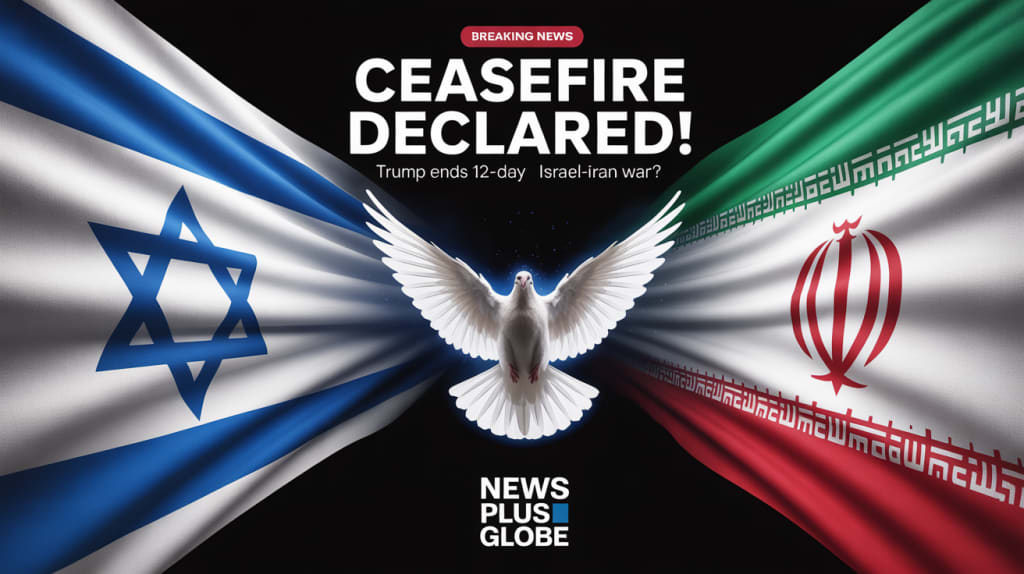
After 12 days of escalating conflict marked by missile strikes, air raids, and tense diplomacy, U.S. President Donald Trump announced a "complete and total ceasefire" between Israel and Iran on June 23, 2025. This declaration, made on Trump’s social media platform Truth Social, signaled a potential end to one of the most dangerous flare-ups in the Middle East in recent years. The ceasefire announcement comes amid ongoing uncertainty about its implementation and the fragile state of regional peace.
Background of the Conflict
The 12-day war erupted following a series of Israeli strikes on Iranian nuclear facilities, which the U.S. and Israel claimed were aimed at preventing Iran from acquiring nuclear weapons. Iran vehemently denied these claims but responded with missile and drone attacks targeting Israeli cities and U.S. military bases in the region, including a significant strike on the Al Udeid Air Base in Qatar.
The conflict rapidly escalated, with waves of missile barrages fired by Iran toward Israeli population centers such as Haifa, Tel Aviv, and Beersheba. Israel’s missile defense systems intercepted many of these attacks, but several missiles caused casualties, including at least four deaths in southern Israel—the first Israeli fatalities since the conflict began.
The Ceasefire Announcement
On the evening of June 23, President Trump posted on Truth Social:
"THE CEASEFIRE IS NOW EFFECTIVE. REFRAIN FROM VIOLATING IT!"
He congratulated both Israel and Iran for their "stamina, courage, and intelligence" in ending what he called "THE 12 DAY WAR." Trump indicated that the ceasefire would be phased in gradually, allowing both nations to complete any ongoing military operations before fully halting hostilities.
The ceasefire was reportedly brokered with the crucial mediation of Qatar’s Emir, Mohammed bin Abdulrahman Al Thani, who held talks with both sides. Trump also engaged in direct discussions with Israeli Prime Minister Benjamin Netanyahu and Iranian officials through intermediaries.
Details and Conditions of the Ceasefire
According to reports, the ceasefire agreement involves two 12-hour truce periods: Iran would begin the ceasefire first, followed by Israel. After these 24 hours, the war would be officially declared over.
Iran’s Foreign Minister Abbas Araqchi confirmed Tehran’s acceptance of the ceasefire but emphasized that hostilities would only end if Israel ceased its military operations against Iranian targets. Araqchi stated that Iran would not continue military responses if Israel stopped what it called "illegal aggression."
Israel, however, has yet to publicly confirm the ceasefire, and some uncertainty remains about the exact timing and enforcement of the agreement. Israeli media outlets have reported that the ceasefire is in effect, but official government statements have been cautious.
Events Surrounding the Ceasefire
In the hours leading up to the ceasefire, Iran launched multiple missile barrages targeting southern Israel, resulting in several casualties. Iranian state media described these as part of "Operation True Promise 3," aimed at Israeli cities.
Israel responded with air alerts and urged citizens to seek shelter repeatedly throughout the night. Despite the ongoing hostilities, the ceasefire took effect around midnight Eastern Time, with both Iranian and Israeli media confirming its start.
Role of the United States and Qatar
The United States played a pivotal role in brokering the ceasefire, with President Trump leading diplomatic efforts. Senior U.S. officials, including Senator Marco Rubio and special envoy Steve Witkoff, engaged in direct and indirect talks with Iranian representatives.
Qatar’s mediation was instrumental in facilitating dialogue between the parties. The Emir of Qatar’s involvement helped bridge communication gaps and secure Tehran’s agreement to the ceasefire.
Impact and Global Reactions
The ceasefire announcement brought immediate relief to global markets, with oil prices dropping amid hopes for regional stability. The Strait of Hormuz, a critical shipping lane, remained open, easing fears of disruption to global energy supplies.
International reactions were mixed. While many welcomed the ceasefire as a necessary step toward peace, skepticism remained about its durability given the history of conflict and mutual distrust.
Challenges Ahead
Despite the ceasefire, the situation remains fragile. Both Israel and Iran have suffered losses, and the political and military tensions that fueled the conflict persist. The lack of a formal, public Israeli confirmation of the ceasefire adds uncertainty.
The international community continues to watch closely, hoping this ceasefire will pave the way for renewed diplomatic efforts and a lasting resolution to the decades-long Israel-Iran rivalry.
Conclusion
President Donald Trump’s announcement of a ceasefire between Israel and Iran marks a critical moment in Middle East diplomacy. While it offers hope for an end to the 12-day war, the path to lasting peace remains uncertain. The coming days and weeks will be decisive in determining whether this fragile truce can hold and lead to a broader de-escalation in the region.
Stay informed with News Plus Globe, your trusted source for global news, breaking updates, and trending headlines — all in one place. From major international developments to viral stories shaping the world, we bring you the fastest, most reliable coverage powered by Google Trends and real-time insights.
FAQs
Q1: When did the ceasefire between Israel and Iran begin?
A1: The ceasefire was announced on June 23, 2025, and reportedly took effect around midnight Eastern Time, following phased 12-hour truce periods.
Q2: Who brokered the ceasefire?
A2: The ceasefire was brokered primarily through U.S. diplomatic efforts led by President Trump and mediation by Qatar’s Emir.
Q3: Has Israel officially confirmed the ceasefire?
A3: As of now, Israel has not publicly confirmed the ceasefire, though Israeli media reports indicate it is in effect.
Q4: What were the conditions for the ceasefire?
A4: Iran agreed to halt attacks if Israel stopped its military operations against Iranian targets; the ceasefire includes phased truce periods for both sides.
Q5: What triggered the 12-day conflict?
A5: The conflict escalated after Israeli and U.S. strikes on Iranian nuclear sites, followed by Iranian missile attacks on Israeli cities and U.S. bases.
Summary
President Trump announced a "complete and total ceasefire" between Israel and Iran after 12 days of conflict.
The ceasefire involves phased 12-hour truce periods and was brokered with Qatar’s mediation.
Iran accepted the ceasefire on the condition Israel halts military operations; Israel has not yet publicly confirmed.
The ceasefire followed intense missile attacks and casualties on both sides.
The international community remains cautiously optimistic but wary of renewed hostilities.
About the Creator
Keep reading
More stories from M Irfan Zafar and writers in Journal and other communities.
International Surfing Day 2025
International Surfing Day 2025 will be observed on Saturday, June 21st, marking the third Saturday of June, a tradition that aligns perfectly with the beginning of summer in the Northern Hemisphere. This timing offers ideal conditions for surfers and beach lovers worldwide to come together and celebrate the sport, the ocean, and the vibrant coastal communities that thrive around it.
By M Irfan Zafar9 months ago in Journal
The $152B Ice Cream Market Is Changing Fast
The freezer door opens with a familiar chill. A spoon scrapes gently across the top of a fresh tub, carving out a creamy swirl of chocolate, vanilla, or mango. For a brief moment, everything slows down, stress fades, and the sweetness feels like a small celebration.
By Harvey Specter3 days ago in Journal




Comments
There are no comments for this story
Be the first to respond and start the conversation.