
International Surfing Day 2025
International Surfing Day 2025: Celebrating Waves, Community, and Ocean Conservation

International Surfing Day 2025 will be observed on Saturday, June 21st, marking the third Saturday of June, a tradition that aligns perfectly with the beginning of summer in the Northern Hemisphere. This timing offers ideal conditions for surfers and beach lovers worldwide to come together and celebrate the sport, the ocean, and the vibrant coastal communities that thrive around it.
Origins and Purpose
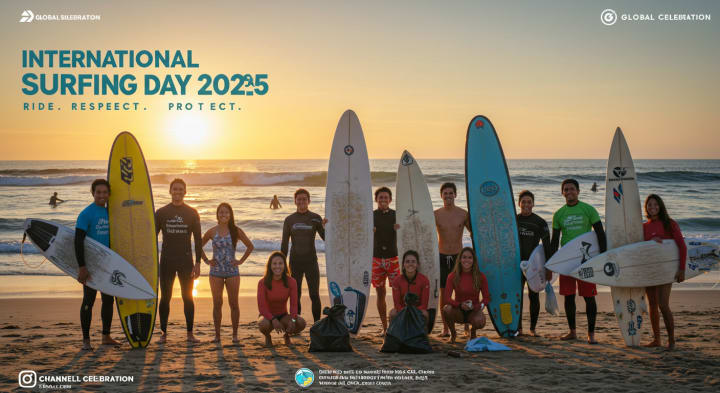
International Surfing Day (ISD) was established in 2005 by the Surfrider Foundation in partnership with Surfing Magazine. What started as a small initiative has grown into a global celebration of surfing culture and environmental stewardship. Now in its 21st year, ISD has become the largest annual activation for the Surfrider Foundation, with over 200 events held worldwide and participation from more than one million people.
The day is dedicated not only to enjoying the thrill of riding waves but also to raising awareness about protecting our oceans and beaches. Surfers, environmentalists, and communities unite to honor the ocean’s vital role in our planet’s health and to promote sustainable practices that preserve these precious ecosystems for future generations.
Global Celebrations

International Surfing Day is celebrated in over 30 countries, including iconic surfing destinations such as Hawaii, California, Bali, Australia, Brazil, New Zealand, France, and the UK. Events vary widely but often include:
Surfing Competitions: Pro and amateur surfers showcase their skills in friendly contests that attract spectators and participants of all ages.
Beach Cleanups: Volunteers gather to remove trash and debris from shorelines, emphasizing the importance of keeping beaches clean and healthy.
Surf Lessons and Clinics: Many locations offer free or discounted lessons, encouraging newcomers to experience the joy of surfing.
Community Gatherings: Barbecues, live music, film screenings, and beach parties foster a sense of camaraderie and celebration.
Educational Workshops: Sessions on ocean conservation, marine biology, and sustainable living help deepen participants’ connection to the environment.
Why International Surfing Day Matters

The ocean covers over 70% of the Earth’s surface and is crucial for climate regulation, oxygen production, and supporting biodiversity. However, it faces increasing threats from pollution, climate change, and overfishing. International Surfing Day serves as a reminder that the ocean needs more friends—people who will stand up for its protection and advocate for responsible stewardship.
Surfers are uniquely connected to the ocean, relying on its health for their sport and lifestyle. Through ISD, the surfing community leads by example, demonstrating how passion for the waves can translate into meaningful action to safeguard marine environments.
How to Participate in 2025

Whether you’re an experienced surfer or simply someone who loves the beach, International Surfing Day offers many ways to get involved:
Catch a Wave: Head to your local beach and enjoy a surf session, soaking in the joy and freedom of riding waves.
Join a Cleanup: Participate in organized beach cleanups or start your own to help keep the coastline pristine.
Learn to Surf: Take advantage of special lessons and clinics offered around this time to try surfing for the first time.
Host a Gathering: Organize a beach party, barbecue, or film screening to celebrate with friends and family.
Spread Awareness: Use social media to share your experiences and promote ocean conservation using hashtags like #InternationalSurfingDay.
Inspiring Stories from Around the World

International Surfing Day also highlights inspiring stories from local communities. For example, young women in the Rio Grande Valley have been empowered through surf programs that build confidence and leadership skills. Around the globe, surf coaches and environmental activists work tirelessly to make surfing inclusive and to protect the beaches that sustain their way of life.
Looking Ahead
As International Surfing Day 2025 approaches, the message is clear: surfing is more than a sport—it’s a lifestyle deeply intertwined with nature and community. By celebrating this day, we honor the ocean’s gifts and commit to protecting it.
So, mark your calendars for June 21, 2025. Grab your board, gather your friends, and join millions worldwide in riding the waves, respecting the ocean, and preserving our planet’s most precious resource.
Conclusion
The 16 billion passwords data breach represents one of the largest and most alarming cybersecurity incidents in recent history. This massive leak, compiled from multiple sources and malware infections, exposes billions of users to significant risks including account takeovers, identity theft, and phishing attacks. While major platforms like Google, Apple, and Facebook were not directly hacked, the breach underscores the vulnerabilities in online security practices worldwide. It serves as a critical reminder for individuals and organizations to adopt stronger security measures such as unique passwords, two-factor authentication, and vigilance against cyber threats. Proactive steps are essential to protect personal information and maintain digital safety in today’s interconnected world.
Summary
A colossal data breach exposed approximately 16 billion login credentials from various platforms and services.
The breach is a compilation of over 30 datasets collected via infostealer malware and other cyberattacks.
Credentials include usernames, passwords, tokens, and cookies, making the breach highly dangerous.
No direct hacks of companies like Google, Apple, or Facebook occurred; instead, stolen data from multiple sources was aggregated.
Users are urged to check if their credentials were compromised and to strengthen account security immediately.
Recommended protections include using strong, unique passwords, enabling two-factor authentication, and staying alert to phishing attempts.
Organizations must also enhance cybersecurity protocols to mitigate risks from such large-scale breaches.
Stay informed with News Plus Globe, your trusted source for global news, breaking updates, and trending headlines — all in one place. From major international developments to viral stories shaping the world, we bring you the fastest, most reliable coverage powered by Google Trends and real-time insights.
Frequently Asked Questions (FAQs)
Q1: What is the 16 billion passwords data breach?
A1: It is a massive leak of approximately 16 billion login credentials compiled from multiple datasets gathered through malware and cyberattacks.
Q2: Did companies like Google or Apple get hacked?
A2: No, these companies were not directly hacked. The leaked data includes credentials for accounts on these platforms but was collected from various unrelated breaches.
Q3: How can I find out if my data was exposed?
A3: Use trusted services like “Have I Been Pwned” or cybersecurity breach checkers to verify if your email or credentials appear in the breach.
Q4: What should I do if my credentials were leaked?
A4: Change your passwords immediately, enable two-factor authentication, monitor your accounts for suspicious activity, and be cautious of phishing.
Q5: What makes this breach so dangerous?
A5: The breach includes fresh and structured data, such as authentication tokens, allowing attackers to bypass passwords and directly access accounts.
Q6: How can I protect myself from such breaches?
A6: Use strong and unique passwords, enable two-factor authentication, update your passwords regularly, avoid clicking suspicious links, and keep your devices secure.
Q7: What should organizations do to prevent damage from such breaches?
A7: Implement multi-factor authentication, conduct regular security audits, educate employees on cybersecurity, and monitor for unusual activities.
About the Creator
Keep reading
More stories from M Irfan Zafar and writers in Journal and other communities.
Eid ul Azha 2025
Eid ul Azha 2025: A Comprehensive Guide to the Festival of Sacrifice Introduction Eid ul Azha, also known as Eid al-Adha, Bakra Eid, or the Festival of Sacrifice, is one of the most significant and widely celebrated Islamic festivals worldwide. In 2025, Eid ul Azha is expected to begin on the evening of June 6th and conclude on the evening of June 10th, though exact dates may vary based on local moon sightings. This festival commemorates the unwavering faith and devotion of Prophet Ibrahim (Abraham) and serves as a powerful reminder of obedience, sacrifice, and compassion.
By M Irfan Zafar9 months ago in Journal
Making Black History
So it’s February of 2004 and I’m in my 5th grade class at Glenwood Elementary School in Chapel Hill, North Carolina. My teacher Sheryl Spivey has given us a class project for Black History Month. The task requires us to pick a historical Black figure and reenact their life story in a class play. The person who’s life I was tasked with covering is author Langston Hughes. I was partnered up with classmate who had just moved here from Africa named Abdoulaye Diallo. I was thinking this was gonna be very difficult because doesn't hardly speak any English.
By Joe Patterson3 days ago in Journal
Review of 'Man on the Run'
My wife and I saw Man on the Run, a nearly 2-hour documentary on Amazon Prime, about Wings, Paul McCartney's group that flew around the world from shortly after The Beatles broke up in early 1970 to shortly after John Lennon was murdered at the end of 1980, making a Beatles reunion forever impossible.
By Paul Levinson3 days ago in Beat



Comments
There are no comments for this story
Be the first to respond and start the conversation.