
Tragedy in the Skies: Investigating the Fatal Jeju Air Crash
Unraveling the Mystery Behind the Devastating Boeing 737-800 Crash in South Korea

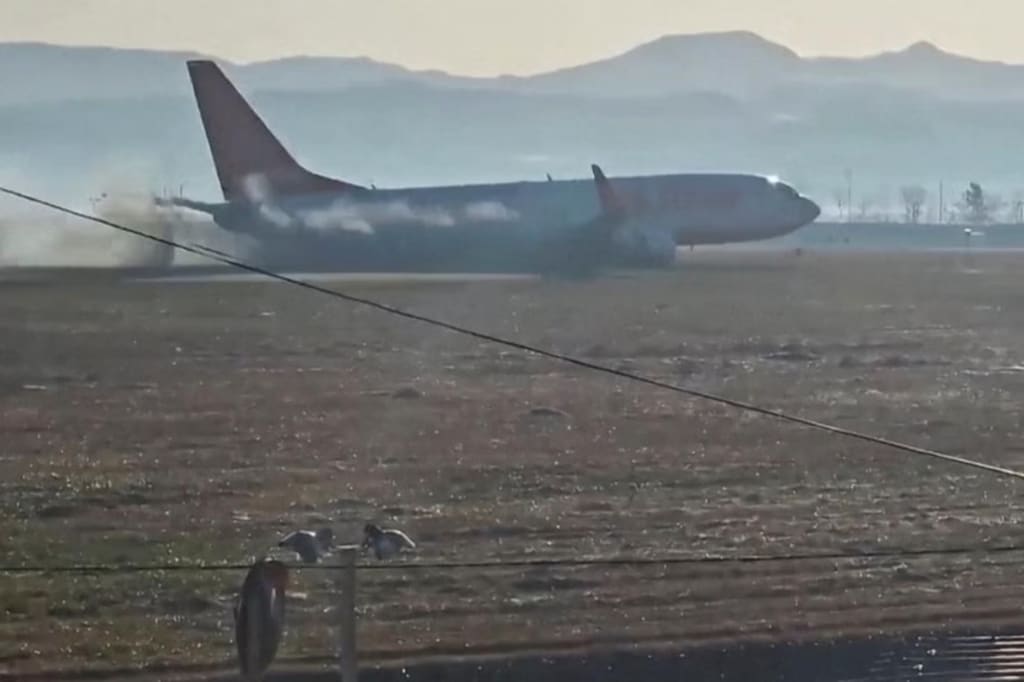
On a clear Sunday afternoon, the Jeju Air Boeing 737-800 was making its final descent into Muan International Airport when disaster struck. Footage from news outlets like YTN and MBC showed smoke pouring from the back of the aircraft as it slid down the runway. Neither the front nor the back landing gear was visible in the footage, sparking concerns about whether the plane's undercarriage had deployed at all.
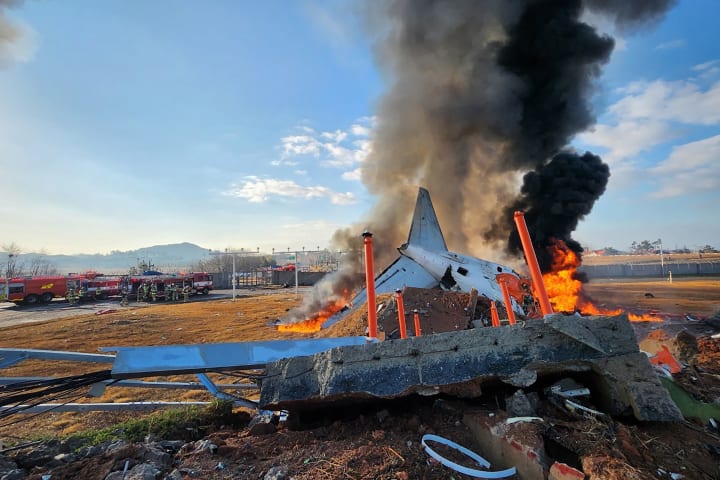
Despite the clear skies and favorable weather conditions, the landing ended in catastrophe. The aircraft's wreckage, strewn across the runway, required firefighters to use water cannons to extinguish the flames. Rescue efforts mobilised over 700 personnel from the police, military, and coast guard, but only two crew members survived — a male and a female.
A Strong Safety Record in Question
The crash has left aviation experts perplexed, given that both Jeju Air and the Boeing 737-800 have solid safety records. Aviation journalist Geoffrey Thomas noted that the Boeing 737-800 is one of the most widely used planes in the world, known for its reliability and durability. “It is the most reliable aircraft in the world, and it’s been in service for 20 years. Everybody knows how it works, and it works really, really well,” he told CNN.
Thomas also expressed confusion over why the crash happened, given that the conditions were ideal for landing — dry, sunny, and at a well-maintained airport. He raised critical questions about whether the landing gear had failed to deploy or if there had been a mechanical failure during landing.
Jeju Air’s chief executive, Kim Yi-bae, stated during a press briefing that the aircraft had shown “no signs of issues” before the accident. “At this time, it is difficult to determine the cause of the accident, and we have to wait for the official announcement of the investigation by the relevant government agency,” Kim said.
The Investigation
The investigation into the cause of the crash is now the top priority for both South Korean and international aviation authorities. The National Transportation Safety Board (NTSB) of the United States has sent a team, including representatives from Boeing and the Federal Aviation Administration (FAA), to assist in the investigation. The black boxes containing the flight data and cockpit voice recordings have been recovered and are being analyzed to determine what went wrong in the moments leading up to the crash.
Initial theories include the possibility of a bird strike, as authorities revealed that the control tower had instructed the pilot to change course to avoid a potential bird encounter. A mayday call was made one minute after this course change, and the crash occurred just two minutes later. However, experts are cautious about jumping to conclusions, as no definitive evidence has yet been found.
Aviation industry consultant Scott Hamilton emphasized the need to avoid speculation. “Speculation is the worst enemy of an investigator,” he said, urging officials to wait for all the facts to come to light before making any declarations.
The Aftermath and Response
South Korea's acting president, Choi Sang-mok, declared the crash site a special disaster zone, promising a full investigation and mobilizing resources for recovery efforts. Choi expressed his condolences to the families of the victims and pledged to take all necessary steps to prevent such a tragedy from happening again.
The crash occurred just two days into Choi’s acting presidency, during a period of political instability in South Korea. The country’s current president, Yoon Suk Yeol, has been temporarily suspended from office, adding to the challenges the government faces in dealing with this crisis.
At Muan International Airport, the atmosphere was one of heartbreak and grief as families gathered, waiting anxiously for news about their loved ones. Some burst into tears as the names of the victims were announced, while others angrily demanded more information from officials.
Lives Lost, Lives Shattered
Among the 179 people on board were 84 men, 85 women, and 10 individuals whose gender could not be determined. Two Thai nationals were confirmed to be among the passengers, with the rest being South Korean.
For the families of those lost, the tragedy is unimaginable. Boonchuay Duangmanee, whose daughter Jongluk was among the victims, shared his sorrow with the Associated Press. His daughter had been working in South Korea and was returning to her job after a brief visit home. “I never thought that this would be the last time we would see each other forever,” he said.
Another grieving parent, Jeon Je-Young, told Reuters about his daughter, who had been moments away from landing when the crash occurred. “She was almost home, so she didn’t feel the need to make a call,” he said. “In those last moments when she did try to reach out, the damage had already been done, and the plane had probably crashed.”
Moving Forward
As investigators work tirelessly to determine the cause of the Jeju Air crash, South Korea is left grappling with the enormity of this disaster. The safety of air travel, something so many had taken for granted, is now under intense scrutiny. While the investigation continues, the nation mourns the tragic loss of life and looks for answers that may take time to fully uncover.
For the families of those who perished, no investigation can bring back their loved ones. But through their grief, there is hope that the lessons learned from this terrible event will help prevent future tragedies and make the skies safer for everyone.
About the Creator
Sura
Tech enthusiast and cultural observer based in South Korea. I write about the latest in technology, culture, daily news, history, and archaeology, exploring how innovation and the past shape our world today.
~ Fired ~
— Ai Intrusion ~ Are you Next ~ Is Ai Evolution after your job? — Few workplaces haven't been affected. Ai is in supermarkets, at doctors' offices, and even monitoring farms. I just can't think of anything this machine is not getting into, can you? For instance: Education ~ Law and Tech jobs will one day have a major influence or be taken over by these inanimate machines, with accuracy and vigor. From mechanics' diagnoses to a wide variety of everyday jobs, including fast food workers, with this input having the ability to cut their unnecessary work hours. I'm certain all of us have been touched by this with our short stories and colorful headings, have you? Even comments are very questionable 'Non-Robot' insertions.
By Jay Kantor2 days ago in Journal
Local Gold Plunges by Rs35,500 per Tola, Shaking Pakistan’s Bullion Market
Pakistan’s local gold market witnessed a dramatic shock as prices plunged by Rs35,500 per tola, marking one of the steepest single-day declines in recent history. The sudden fall caught investors, jewelers, and consumers off guard, especially after weeks of record-breaking highs that had pushed gold beyond the reach of many buyers. The sharp correction reflects a combination of global price movements, profit-taking, currency factors, and changing market sentiment, highlighting the volatility that increasingly defines precious metals trading.
By Salaar Jamali3 days ago in Journal




Comments
There are no comments for this story
Be the first to respond and start the conversation.