
Lost in Time: The Uncontacted Tribes of Acre and the Legacy of the Rubber Boom
Survivors of a Dark History: How the Rubber Boom Shaped the Fate of Isolated Indigenous Groups in Brazil's Acre State

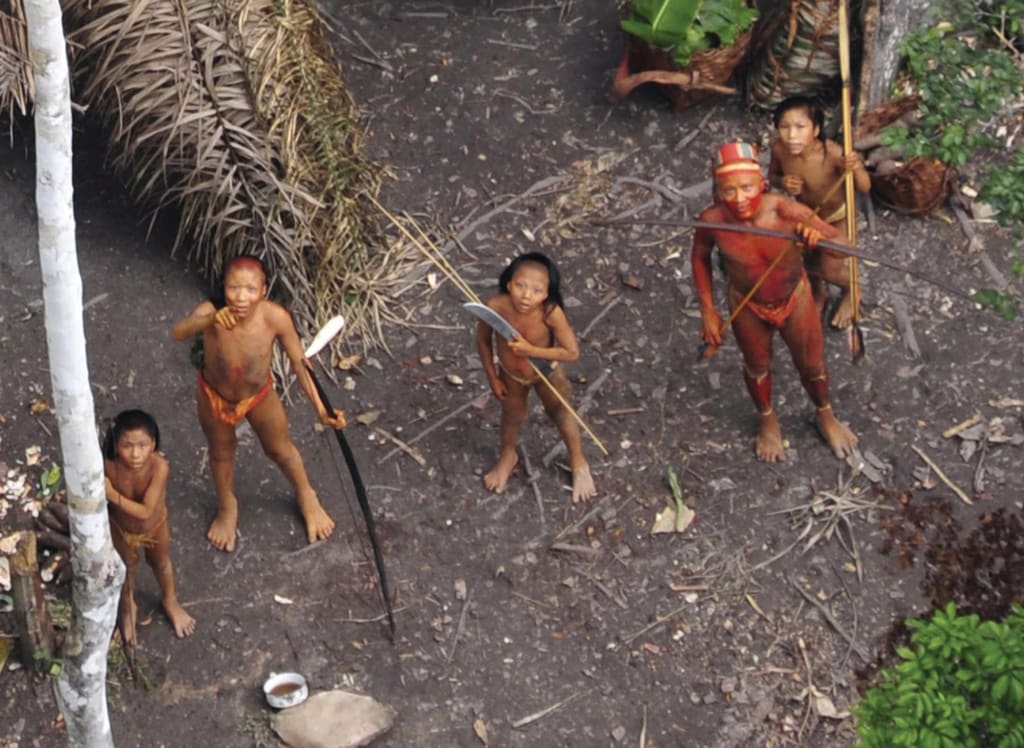
Deep within the dense rainforests of the Brazilian state of Acre, near the borders of Peru and Bolivia, lie some of the world's last uncontacted Indigenous tribes. Hidden from the view of modern civilization, these groups live much like their ancestors did for centuries—completely isolated from the world beyond the forest. It’s believed that many of these uncontacted tribes are the descendants of survivors from a dark period in Amazonian history: the brutal rubber boom of the late 19th and early 20th centuries.
The rubber boom was a time of violent exploitation and rapid economic expansion for the Amazon Basin. As the global demand for rubber exploded, rubber barons and Western entrepreneurs flocked to the Amazon, where they sought to extract latex from the native rubber trees. What was a boon for the wealthy quickly became a nightmare for the Indigenous peoples of the region. Thousands of them were enslaved, forced to extract the rubber under inhumane conditions.
The native people who had lived in harmony with the rainforest for generations suddenly found themselves hunted, captured, and subjected to cruel treatment. Many were beaten or killed if they didn’t meet rubber quotas set by the barons. Entire communities were enslaved, and many more were decimated by disease, malnutrition, and brutality. In some cases, populations were halved in a matter of years, as foreign diseases—such as measles and influenza—ravaged Indigenous groups who had no immunity to these illnesses.
However, not all Indigenous communities succumbed to this fate. Some managed to escape the violence by fleeing deeper into the jungle, far beyond the reach of the rubber barons. They retreated to remote areas, choosing a life of isolation rather than enslavement. Over time, these groups would sever all ties with the outside world, living off the land as their ancestors had done for centuries before colonization.
Today, these uncontacted tribes are believed to be the descendants of those who survived this harrowing period. Their continued existence offers a glimpse into a time before the Amazon was ravaged by industrial greed and exploitation. In many ways, their survival is a form of resistance—proof of their resilience in the face of catastrophic disruption.
Brazil has officially recognized the existence of these uncontacted groups and has taken steps to protect their territories from intruders. The National Indian Foundation (FUNAI), a government body tasked with protecting the rights of Indigenous peoples, has demarcated protected zones to shield these groups from contact. Aerial footage, taken by government officials, has revealed small villages and clusters of huts deep in the forests, offering tantalizing glimpses of their lives. From these images, it's clear that the tribes practice subsistence farming and hunting, much like their ancestors did before the rubber boom.
However, these protections are fragile. Illegal loggers, miners, and farmers constantly threaten the survival of these uncontacted groups. The Amazon rainforest is still a battleground, as industries driven by global demand continue to encroach upon protected territories. Environmentalists and Indigenous rights activists have long warned that the push for development could lead to the complete destruction of uncontacted tribes.
One of the biggest dangers to these isolated groups comes from diseases introduced by outsiders. These tribes have no immunity to even the most common illnesses, and a simple cold could prove fatal. In fact, history has already shown us what happens when uncontacted groups are exposed to the outside world. In several cases, brief contact with modern society has led to devastating disease outbreaks that wiped out entire villages.
Despite these challenges, the Brazilian government remains committed to a "no-contact" policy, meaning that no one is allowed to intentionally interact with these tribes. Instead, efforts are focused on keeping intruders out and ensuring that the tribes can continue to live in isolation, as they have chosen. But the ethical questions surrounding their existence remain complex. Some anthropologists argue that we should make contact in order to preserve and study their cultures before they disappear, while others believe that respecting their isolation is the best way to honor their right to self-determination.
The story of these uncontacted tribes is intertwined with the legacy of the rubber boom. While most of the world has forgotten the horrors of that period, these isolated groups are living reminders of the atrocities committed in the name of profit. The rubber boom forever altered the course of Amazonian history, but for these tribes, the forest remains their sanctuary, a place where they can live free from the violence of the outside world.
As the global community debates how to protect the Amazon and its Indigenous inhabitants, the uncontacted tribes of Acre stand as a symbol of resilience. They represent not only the human cost of exploitation but also the enduring power of cultural survival in the face of overwhelming odds. But their future is uncertain. With climate change accelerating and the continued push for resource extraction in the Amazon, these tribes may face new challenges in the years to come.
For now, though, they remain lost in time, hidden away in the depths of the rainforest. Their fate rests in the hands of those who would protect their way of life, and the decisions we make today will determine whether they continue to survive—or whether they become yet another tragic chapter in the long story of exploitation in the Amazon.
As modern civilization pushes ever closer to their remote territories, the uncontacted tribes of Acre remind us of the fragility of human existence and the lengths to which people will go to preserve their culture and freedom. They are survivors, descendants of those who fled the horrors of the rubber boom, and their continued existence is a testament to the strength of the human spirit in even the darkest times.
About the Creator
Sura
Tech enthusiast and cultural observer based in South Korea. I write about the latest in technology, culture, daily news, history, and archaeology, exploring how innovation and the past shape our world today.
Olive Borden
Olive Borden’s (1907–1947) obituary in The New York Times is short and sober. It notes in the opening paragraph that though Borden made an estimated $1500 a week during her Hollywood heyday in the 1920s, she died “penniless in the Sunshine Mission after a brief siege of pneumonia,” aged 40.
By A. L. Fletcher 7 days ago in History
Abandoned: The All American Ruins Podcast
There are some podcasts that define genre classification and would never be considered by large podcast networks, worried about recouping their investment in the show. Abandoned: All-American Ruins is one of those podcasts.
By Frank Racioppi6 days ago in History


Comments
There are no comments for this story
Be the first to respond and start the conversation.