
Top Double Girder Overhead Crane Configurations for Heavy Machine Fabrication
Maximizing Efficiency and Safety in Heavy Machine Fabrication
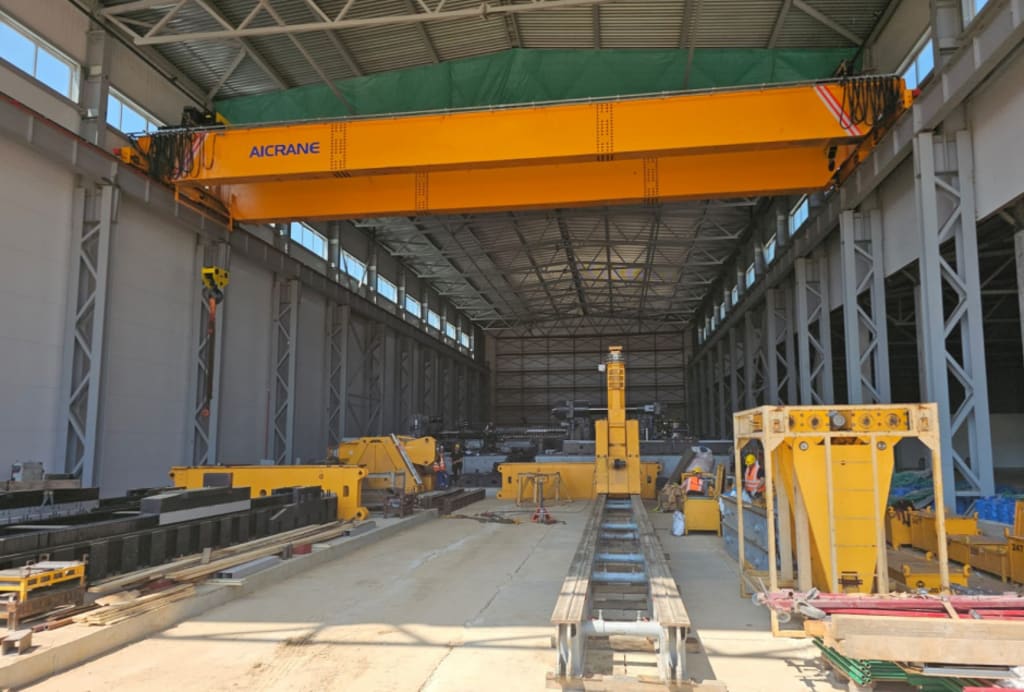
In heavy machine fabrication, precision, reliability, and efficiency are paramount. Handling massive equipment, steel components, and industrial machinery requires a crane system capable of lifting substantial weights with stability and accuracy. This is where double girder overhead cranes play a pivotal role. Designed for heavy-duty applications, these cranes provide higher load capacities, longer spans, and greater operational flexibility compared to single girder cranes. Understanding the top configurations of double girder overhead cranes is essential for manufacturers seeking to optimize their fabrication processes.
1. Understanding Double Girder Overhead Cranes
A double girder overhead crane consists of two parallel girders supporting the crane trolley and hoist, which moves along the length of the crane runway. The crane bridges across the workspace, typically mounted on elevated runway rails, and can handle heavy, awkwardly shaped loads with precision. The key advantage of the double girder configuration is its ability to support heavier loads and longer spans, making it ideal for machinery manufacturing plants, where safety and operational efficiency are critical.
Key features of double girder overhead cranes include:
High Load Capacity: Capable of lifting from 20 tons to over 500 tons.
Extended Span: Can bridge large areas, suitable for wide fabrication floors.
Flexibility: Supports multiple hoists and attachments for complex lifting tasks.
Durability: Built for rigorous, continuous operations in industrial environments.
2. Top Configurations of Double Girder Overhead Cranes
Double girder cranes can be customized to suit different operational needs. The most common configurations for heavy machine fabrication are outlined below.
a. Top Running Double Girder Cranes
Top running cranes are the most prevalent configuration for heavy-duty applications. In this setup, the crane wheels run on rails mounted on the runway beams above the crane floor. The hoist travels on a trolley that rides atop the double girders.
Advantages:
Can lift extremely heavy loads due to the full use of top running crane runway strength.
Provides a higher lifting height compared to under-running models.
Ideal for large fabrication shops where maximum capacity and span are required.
Applications:
Top running double girder cranes are commonly used for handling large machine components, heavy press equipment, and steel castings. Their high load-bearing capacity ensures safe and efficient movement of oversized materials.
b. Under Running Double Girder Cranes
In under running cranes, the crane wheels are mounted underneath the runway rails, and the hoist travels along the underside of the girders. This configuration is typically used in facilities with height restrictions.
Advantages:
Requires less headroom, making it suitable for low-ceiling workshops.
Provides a clear working space under the crane.
Easier installation in existing factories without modifying roof structures.
Applications:
Under running double girder cranes are often utilized for machine fabrication plants that handle moderately heavy loads but have spatial constraints. They are effective for CNC machining areas, assembly lines, and workshops with multiple workstations.
c. Double Trolley Double Girder Cranes
A double trolley crane is a double girder crane equipped with two independently operated hoists on the same span. This configuration is ideal for manufacturing operations that require simultaneous handling of multiple loads or coordinated lifting of long, heavy components.
Advantages:
Enables precise load balancing for long or irregular-shaped materials.
Allows two operators or synchronized controls to work on separate tasks concurrently.
Improves operational efficiency in busy manufacturing floors.
Applications:
Used extensively in heavy machine fabrication, such as lifting large press beds, turbine components, or multi-piece assemblies. The double trolley system ensures stability and reduces the need for multiple cranes in the same area.
d. Low Headroom Double Girder Cranes
Some workshops require cranes that provide maximum lifting height while minimizing the crane’s overall structure height. Low headroom double girder cranes feature optimized trolley and hoist designs to fit under lower ceilings without sacrificing lifting capacity.
Advantages:
Maximizes the lifting height in constrained spaces.
Suitable for high-density fabrication floors.
Can be combined with top running or under running configurations.
Applications:
Ideal for plants fabricating large machine tools or steel machinery components where overhead space is limited but high lifting clearance is needed.
e. Special Purpose Double Girder Cranes
Certain machinery manufacturing processes require special purpose double girder cranes customized for unique lifting tasks. Examples include:
Electromagnetic lifting cranes for handling steel plates.
Grab-type cranes for scrap or raw material movement.
Workshop cranes with adjustable spans for versatile layouts.
Advantages:
Tailored to specific manufacturing requirements.
Improves workflow efficiency by reducing manual handling.
Enhances safety by providing the right lifting mechanism for each load type.
Applications:
Used in heavy equipment manufacturing, metal foundries, and plants producing large industrial machines. Special attachments, such as lifting beams, magnets, or hydraulic clamps, allow the crane to handle materials precisely and safely.
3. Choosing the Right Double Girder Crane Configuration
Selecting the appropriate double girder crane configuration depends on several factors:
Load Requirements: Determine the maximum weight of machinery components to select a crane with sufficient lifting capacity.
Workshop Layout: Consider ceiling height, column placement, and available floor space to decide between top running, under running, or low headroom cranes.
Span Length: Choose a crane that can cover the required fabrication area without compromising structural stability.
Operational Frequency: High-duty cranes (A5, A6, or higher duty classes) are essential for continuous or heavy industrial operations.
Special Handling Needs: For irregular, oversized, or sensitive equipment, special-purpose cranes with custom attachments may be necessary.
By evaluating these factors, machinery manufacturers can optimize workflow efficiency, improve safety, and reduce equipment handling risks.
4. Benefits of Using Double Girder Overhead Cranes in Machine Fabrication
Implementing double girder overhead cranes in heavy machine fabrication offers multiple advantages:
Enhanced Load Capacity: Can handle the heaviest machinery components with stability.
Operational Safety: Reduces the risk of accidents compared to manual lifting or forklifts.
Improved Workflow Efficiency: Speeds up assembly, machining, and material handling.
Customizable Design: Supports multiple hoists, specialized lifting attachments, and extended spans.
Longevity & Reliability: Robust construction ensures durability under rigorous industrial use.
By integrating double girder cranes, manufacturers not only improve material handling but also ensure consistent, high-quality production standards.
5. Conclusion
Double girder overhead cranes are an indispensable asset for heavy machine fabrication facilities. From top running to under running, double trolley, low headroom, and special-purpose configurations, each crane type offers distinct advantages tailored to specific manufacturing requirements. Selecting the right configuration involves assessing load capacity, workshop constraints, operational frequency, and specialized lifting needs.
For machinery manufacturers, investing in the right double girder crane configuration can dramatically improve operational efficiency, enhance safety, and enable precise handling of the heaviest industrial components. Whether lifting press beds, CNC machines, or large steel assemblies, a well-designed double girder crane system is a cornerstone of modern heavy machine fabrication.
By leveraging these configurations, manufacturers can optimize their production processes, reduce downtime, and maintain a competitive edge in the heavy machinery industry.
About the Creator
Aicrane01
Welcome to the Aicrane Blog, your practical guide to lifting solutions. Discover articles covering overhead cranes, gantry cranes, winches, steel structures, boat lifts, and more.
Website: https://steelmillcranes.com/
Chad Pratt and the Quiet Strength of Lifelong Running
Running is often portrayed as a competitive sport, a pursuit of speed, or a quest for medals. But for some, it becomes something more—a way to cultivate balance, clarity, and resilience. Chad Pratt exemplifies this philosophy. His lifelong commitment to running shows how steady movement, discipline, and focus can shape not only physical fitness but also emotional and spiritual well-being.
By Chad Pratt3 days ago in Journal
My First Time Skiing and I Got Lost, Alone, in the French Alps
Looking back, I can trace some of my life’s biggest adventures to a simple action from my sister. She’d introduced me to Tommy (a very long time ago), a colleague of hers, who had overshared his penchant for Italian-looking women, and I ticked that box.
By Chantal Christie Weissabout 2 hours ago in Humans




Comments
There are no comments for this story
Be the first to respond and start the conversation.