
Top 20 World Economies: A Decade of Growth (2015–2025)
Exploring the Economic Rise of Leading Nations with Simple Insights and Real GDP Trends

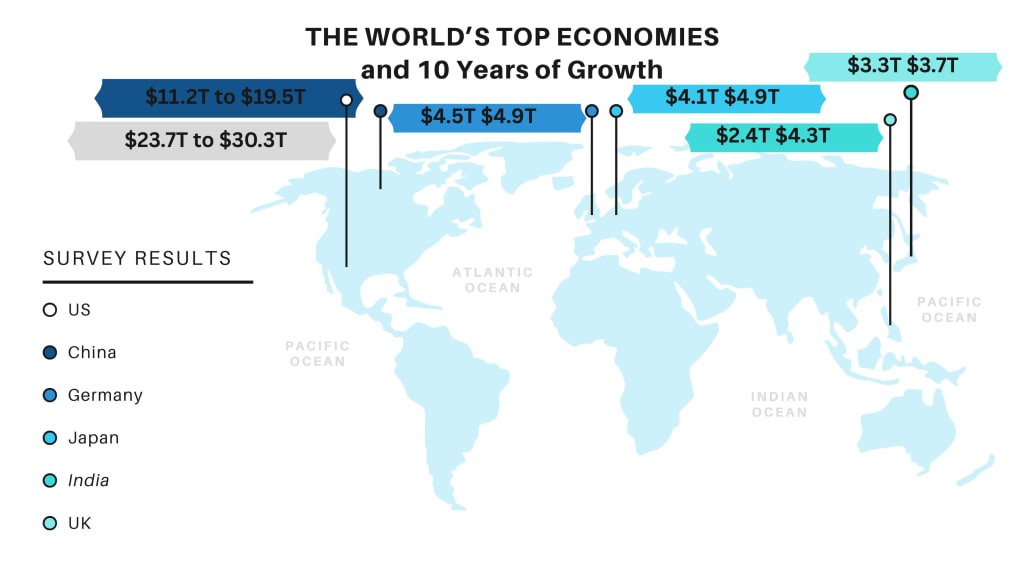
1. United States
In 2015, the U.S. had a GDP of $23.7 trillion. By 2025, it grew to $30.3 trillion, showing a 28% increase. The U.S. remains the largest economy in the world. It has strong industries in technology, finance, healthcare, and energy. Its economy is driven by consumer spending and innovation. The U.S. dollar is a major global currency, and the country has a big influence on global trade and economics.
2. China
China's GDP grew from $11.2 trillion in 2015 to $19.5 trillion in 2025. This is a 74% increase. China has the second-largest economy in the world. It is known for manufacturing, exports, and growing technology sectors. The government invests a lot in infrastructure and development. China's rapid economic growth has lifted millions out of poverty. It continues to play a big role in global markets and international trade.
3. Germany
Germany had a GDP of $4.1 trillion in 2015. It reached $4.9 trillion in 2025, a 20% increase. Germany is the largest economy in Europe. It is famous for its strong car industry, engineering, and exports. The country has a strong industrial base and a skilled workforce. Germany also leads in green energy. It plays a major role in the European Union and global economic decisions.
4. Japan
Japan’s GDP was $4.5 trillion in 2015 and increased to $4.9 trillion in 2025, growing by 9%. Japan is a global leader in technology and automobiles. The country has large companies like Toyota, Sony, and Panasonic. Japan also has a strong service sector and high-quality infrastructure. Although its population is aging, the economy remains advanced and competitive in the global market.
5. India
India’s economy grew from $2.4 trillion in 2015 to $4.3 trillion in 2025, a 77% rise. This is one of the fastest-growing economies in the world. India is strong in IT, services, and agriculture. The country has a young population and a growing middle class. Urbanization and digital growth support its economy. India is expected to play a bigger role in global business in the future.
6. United Kingdom (UK)
The UK had a GDP of $3.3 trillion in 2015, which rose to $3.7 trillion in 2025—a 14% increase. The UK’s economy is based on services like banking, education, and tourism. London is a major global financial center. The UK also has industries in pharmaceuticals and manufacturing. Though Brexit changed trade relationships, the UK remains an important player in the global economy with strong global connections.
7. France
France’s GDP increased from $2.9 trillion in 2015 to $3.3 trillion in 2025, a 12% rise. France has a mixed economy with strong sectors in tourism, fashion, aerospace, and agriculture. Paris is a global business and cultural hub. The country has a high standard of living and good infrastructure. As part of the European Union, France has close trade ties and is important in international politics and economics.
8. Italy
Italy had a GDP of $2.2 trillion in 2015 and grew to $2.5 trillion in 2025, marking an 11% increase. Italy’s economy is known for design, fashion, and tourism. It also has strong industries in cars, machinery, and food production. Northern Italy is more industrial, while the south depends more on farming. Italy faces some economic challenges but remains one of the major economies in Europe.
9. Canada
Canada’s GDP went from $2.0 trillion in 2015 to $2.3 trillion in 2025, a 17% increase. Canada has a resource-rich economy with oil, natural gas, and minerals. It also has strong sectors in finance, technology, and manufacturing. The country has a high quality of life and a stable economy. Trade with the U.S. is important. Canada’s economy benefits from immigration and strong education and healthcare systems.
10. Brazil
Brazil had a GDP of $2.1 trillion in 2015, growing slightly to $2.3 trillion in 2025, a 6% increase. Brazil is the largest economy in South America. It has rich natural resources, especially in agriculture, mining, and energy. The country exports a lot of soy, iron ore, and oil. Despite challenges like inflation and political issues, Brazil continues to be a key player in Latin America.
11. Russia
Russia’s GDP increased from $1.9 trillion in 2015 to $2.2 trillion in 2025, a 15% rise. Russia’s economy is heavily based on oil and natural gas exports. It also has industries in metals, chemicals, and weapons. The country has faced international sanctions, which have affected growth. Still, Russia remains one of the largest economies due to its vast resources and strong energy sector.
12. South Korea
South Korea’s GDP grew from $1.5 trillion in 2015 to $2.1 trillion in 2025, a 38% rise. The country is known for its advanced technology and electronics, with companies like Samsung and LG. South Korea also exports cars, ships, and steel. It has a skilled workforce and strong education system. The country’s economy is modern, and it continues to grow in innovation and global trade.
13. Australia
Australia’s GDP rose from $1.5 trillion in 2015 to $1.9 trillion in 2025, a 25% increase. The economy is rich in natural resources like coal, iron ore, and gold. Australia also has strong sectors in education, tourism, and finance. It trades closely with Asia, especially China. The country has a stable government and economy, which helps attract investors and keeps the economy strong.
14. Spain
Spain’s GDP increased from $1.5 trillion in 2015 to $1.8 trillion in 2025, showing 23% growth. Spain has a mixed economy with strengths in tourism, food, and manufacturing. Its sunny beaches and culture attract millions of visitors each year. Spain also exports cars, clothes, and machinery. Although it faced past economic problems, its economy has recovered steadily with help from the European Union.
15. Mexico
Mexico’s GDP grew from $1.6 trillion in 2015 to $1.8 trillion in 2025, a 12% increase. The economy relies on manufacturing, oil, and services. Mexico exports cars, electronics, and agricultural products, especially to the U.S. It has trade agreements like USMCA that support its economy. Despite challenges like crime and inequality, Mexico is one of the largest economies in Latin America.
16. Indonesia
Indonesia’s GDP jumped from $990 billion in 2015 to $1.5 trillion in 2025, a 51% increase. It is Southeast Asia’s largest economy. Indonesia has strong sectors in agriculture, mining, and services. The country also has a large and growing population, which helps drive consumer demand. Urbanization and investment are helping the economy grow fast. Indonesia is becoming more important in global business.
17. Turkiye
Turkiye’s GDP rose from $918 billion in 2015 to $1.5 trillion in 2025, a 63% growth. Turkiye has a diverse economy with manufacturing, tourism, and agriculture. It produces clothes, electronics, and food. Its location between Europe and Asia makes it a key trade route. The country has faced inflation and currency issues but still continues to grow and modernize its economy.
18. Netherlands
The Netherlands had a GDP of $1.1 trillion in 2015, which grew to $1.3 trillion in 2025, a 21% rise. The country has a strong economy based on trade, agriculture, and services. Rotterdam is one of the largest ports in the world. The Netherlands also exports flowers, machinery, and food. It has a stable government and high living standards, making it one of the richest nations per person.
19. Saudi Arabia
Saudi Arabia’s GDP grew from $925 billion in 2015 to $1.1 trillion in 2025, a 23% increase. The country’s economy mainly depends on oil exports. It has some of the largest oil reserves in the world. In recent years, Saudi Arabia has tried to grow other parts of its economy like tourism, business, and technology under its Vision 2030 plan. It plays a major role in global energy markets.
20. Switzerland
Switzerland’s GDP increased from $841 billion in 2015 to $1.0 trillion in 2025, a 19% growth. It has a very stable and rich economy. The country is known for banking, finance, and high-quality products like watches and medicines. Switzerland has a strong currency and a skilled workforce. It also stays neutral in global politics, which helps keep its economy peaceful and attractive to investors.
About the Creator
Keep reading
More stories from Abdul Mateen and writers in Journal and other communities.
Get Over the Mistakes Your Parents Made
Many people carry emotional wounds from childhood. These wounds often come from how they were treated by their parents. If your parents criticized you a lot, got angry when you made mistakes, or made you feel like you were never good enough, you may have grown up believing that something was wrong with you.
By Abdul Mateen 8 months ago in Motivation
🅼🅸🅳🅽🅸🅶🅷🆃 🆂🅽🅰🅲🅺🆂
"It's 10 in Tuscon! We all know what that means... It's Time for Midnight Snacks with your man, Gerald Gee! Ready to spend the night together? Me too! I'm full of snacks and can't wait to regurgitate them all back into your hungry ears. Crack a brew! Pop some corn! Anything to get ready for one hell of a show where the talk maybe cheap but the words cut deep...
By Lamar Wiggins2 days ago in Fiction



Comments
There are no comments for this story
Be the first to respond and start the conversation.