

A Modern Geopolitical Battle: The Cold War Between the United States and China The global political landscape has undergone significant change in the 21st century. A new rivalry has emerged between the United States and China since the beginning of the 1990s, when the Cold War between the United States and the Soviet Union came to an end. This modern Cold War is characterized by competition in technology, economy, military presence, diplomacy, and ideology despite not being a traditional war fought with tanks and troops. The Cold War between the United States of America and China is redefining global power dynamics, and its outcomes could shape the future for decades. Background in History This rivalry began in the middle of the 20th century. The United States of America became the world's leading power following World War II, promoting democracy and capitalism. In the meantime, China's Communist Party began to develop into a regional power. China devoted a significant amount of time to internal development. However, China has grown rapidly since the economic reforms of the late 1970s and now poses a threat to the United States on multiple fronts. Competition in the economy Economic dominance is one of the most important aspects of the current Cold War. China is rapidly surpassing the United States as the world's largest economy. China has emerged as a crucial player in international trade thanks to its enormous manufacturing capacity, expanding middle class, and rising global investments. For instance, the Belt and Road Initiative (BRI) is an infrastructure project led by China that spans Asia, Africa, and Europe and aims to expand China's economic influence. The United States of America is concerned about such actions. Trade wars, sanctions, and tariffs are now common tools in this conflict. China responded to the United States' tariffs on Chinese goods in 2018 with its own measures. The global markets were affected by this trade war, which brought to light the severe economic tensions that existed between the two countries. The Technological War The race for technological supremacy was another important aspect of the Cold War between China and the United States. Technology has emerged as a battlefield in recent times, particularly in artificial intelligence (AI), 5G networks, semiconductors, and cybersecurity. Huawei and other similar businesses have been at the center of controversy. Huawei was barred from participating in the American 5G infrastructure after the U.S. government accused it of espionage and urged its allies to do the same. In the meantime, China continues to make significant investments in R&D with the intention of becoming technology independent and less dependent on the West. This technology war is also reflected in the conflict over TikTok and other Chinese apps. There have been debates about whether these platforms should be banned or regulated due to concerns about national security and data privacy. Tensions in the military Even though there is no current military conflict, tensions in the South China Sea, Taiwan Strait, and other areas have raised the possibility of conflict. China has militarized and constructed artificial islands to increase its military presence in the South China Sea. Freedom-of-navigation operations and the deployment of warships to challenge China's claims are the American response. Taiwan is yet another contentious subject. While the United States continues to provide Taiwan with weapons and diplomatic visits, China views Taiwan as a part of its territory and aspires to its reunification. In this area, any mistake could turn into a dangerous conflict. Conflicts between ideologies and diplomats Another pillar of the Cold War is the ideological divide that exists between the two countries. China supports authoritarian governance, state control over the media, and a unique combination of socialism and capitalism, whereas the United States of America advocates liberal democracy, free speech, and a market economy. Both nations are competing for global influence on the diplomatic front. Through trade and investment, China is establishing solid ties in Africa, Latin America, and Southeast Asia. On the other hand, the United States of America builds stronger alliances through partnerships with democratic nations, the Quad (with India, Japan, and Australia), and NATO. The divide was further widened by the COVID-19 pandemic. Accusations regarding the pandemic's management, the virus's origin, and vaccine diplomacy added fuel to the fire. Both sides used propaganda and false information to build public distrust and deteriorate diplomatic relations. Influence on Culture and Soft Power Film, education, sports, and international institutions all play a role in the Cold War's use of soft power. While Chinese cultural and media exports are gaining popularity, American culture continues to dominate global entertainment. While Hollywood is under pressure to comply with Chinese censorship regulations in order to gain access to the enormous market there, Confucius Institutes all over the world promote Chinese language and culture. China sends hundreds of thousands of students to Western universities, particularly those in the United States, in education. Even though this has built bridges between cultures, it also raises concerns about theft of intellectual property and political influence. The Conflict's Future The Cold War between the United States and China is likely to continue influencing the world today. This conflict is more interdependent than the USSR–Soviet Cold War. Because of their close economic ties, direct conflict can be costly for both countries. However, the competition is fierce and has an impact on every region of the world. When it comes to trade, technology, and defense, neutral nations frequently find themselves caught in the middle. Both superpowers exert pressure on global organizations like the World Health Organization and the United Nations, affecting their neutrality and effectiveness. In the end, the way forward depends on whether the United States of America and China are able to responsibly manage their rivalry while simultaneously collaborating on global issues like climate change, pandemics, and peacekeeping. A well-balanced strategy of competition and cooperation may pave the way for a more stable world and prevent a full-scale conflict.
About the Creator
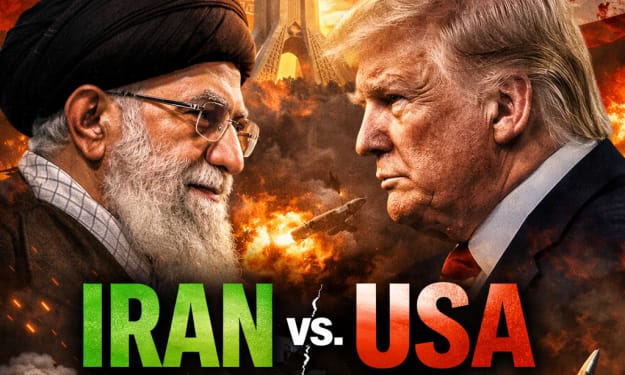
“Iran VS United States, Tensions at the Breaking Point. Trump’s Next Move Could Reshape the Middle East”
1. Background: What’s Happening Now • Nationwide protests in Iran are ongoing due to a severe economic crisis, skyrocketing inflation, and public anger about conditions inside the country. • President Donald Trump has publicly threatened Iran, warning that if Tehran violently suppresses protesters or gets too aggressive, the U.S. could intervene. • Iran’s government has responded by warning of swift and comprehensive retaliation if the U.S. attacks. • Iran’s airspace and infrastructure remain tense, but some diplomatic communications have briefly reopened, signaling both sides are weighing options.
By Hamd Ullah2 days ago in Journal



Comments
There are no comments for this story
Be the first to respond and start the conversation.