
The Underwater World of Cables
A Closer Look at Subsea Cable Infrastructure
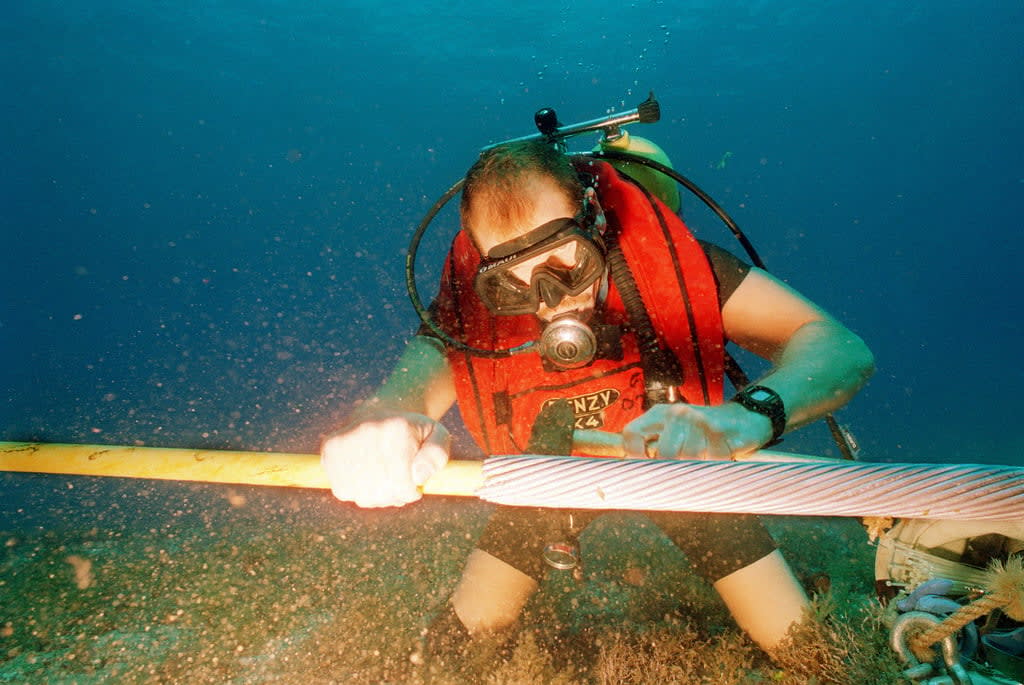
Hello everyone, and welcome back. It is estimated that there are over 850,000 miles of undersea cables spread across the planet. These cables, while varying in size and type, serve primarily for communications or power transmission. Despite their advanced technology, the maintenance and installation of these cables are highly complex processes.
The Aran Islands, located off the west coast of Ireland, rely on undersea cables for much of their power and communication needs due to their small size. In 2016, one of these subsea cables suffered a significant rupture, causing a complete power outage on the archipelago. ESB Global, a maintenance company, was called in to perform repairs on the damaged cable.
The repair process involved sending divers to the ocean depths to fix the cable without removing the 500-megawatt connectors from the water. To achieve this, ESB Global developed a specialized habitat repair unit, which required extensive training in controlled environments such as pools. Even with this preparation, the process remained extremely challenging. The habitat had to be lowered into place in two parts, going over and under the cable. Then, the water was pumped out to allow divers to carry out the repairs in a dry environment using gloves integrated into the habitat's exterior.
Installing these thousands of miles of cables required companies to devise various innovative methods and engineering solutions. One such company, Boskalis Subsea, designed a state-of-the-art cable-laying vessel with unique features. The vessel boasts a flat frame that allows it to work both near the shore and in the open sea without risking the crew or equipment. It features a rotating cable-laying turntable capable of holding 5,000 tons. Using a tensioner, the vessel installs the cable on the seafloor at the same speed as the ship travels along a predetermined route, avoiding potential natural obstacles that could cause cable damage.
To connect the cable to the land, a specialized plow is used, which can be pulled shorewards by a winch, taking the cable with it and burying it as it moves. This process is essential to protect the cable from damage in shallow, sandy waters. Subsea factories have become increasingly popular, with companies like Boskalis playing a crucial role in transferring the power generated by offshore wind farms to the mainland.
In most cases, both ends of the installation process occur simultaneously. While the cable is being laid and buried by the specialized cable-laying vessel, a team on land unwinds miles of cable for connection to the offshore substation. Offshore wind farms represent a significant advancement in recent history, as they harness the unrestricted wind power over oceans and lakes to produce more energy than land-based counterparts. However, the intricate design and placement of subsea cables are essential for capturing and transmitting this energy.
Subsea cables are highly complex and must endure harsh and corrosive conditions, which is why they are well-insulated and more durable than land-based communication or power cables. Typically, they begin with a series of thick wires that are coated with protective materials. This single wire is then incorporated into a larger bundle of wires and cables, which are carefully insulated to maximize their lifespan.
The depth at which underwater cables or structures need repair defines the overall complexity of the process. Most experienced divers can easily reach depths of up to 100 feet. However, when repairs require divers to go deeper, special teams of saturation divers may be required. Saturation diving allows highly skilled teams to work at depths of several hundred feet or more. These divers undergo extensive training and must spend time in a pressurized chamber breathing a helium and oxygen mixture to prepare their bodies for the extreme pressure at their work site.
When it comes to subsea structures, corrosion from harsh weather, marine activity, and microbial growth is a major concern. To address heavily damaged structures, marine contractors employ remote underwater welders to perform emergency repairs and restorations. These divers start by cleaning the structure with a hydraulic diversafe jetter to remove any buildup. They then reinforce the structure using specially designed metal half-shells, secured with heavy bolts and a hydraulic power gun. Subsequently, the top seam is welded to the structure to prevent corrosion from penetrating the gap.
Submerged welding is one of the most complex and lucrative jobs in the contracting industry, requiring advanced skills. Corrosion and the growth of organic materials are challenges faced by both durable underwater structures and ships. Even the most advanced ship propellers and hulls are not immune to these issues. Fortunately, propellers can be cleaned by a team of divers equipped with waterproof grinders. Given the considerable size of many of these larger propellers, the cleaning process can take several hours. It is recommended to repeat this process every three to six months for optimal results.
The team performing underwater propeller cleaning uses grinders equipped with diamond disc pads, significantly expediting the process and delivering the best possible results to their clients. The cleaned propeller and rudder shine, providing near-perfect efficiency, which contrasts with the heavy buildup on the rest of the ship.
Finally, it is essential to recognize that the ocean poses a constant threat to anything man-made, whether it's the extensive network of cables carrying power and data, the mooring systems for ships, or the platforms supporting wind turbines. Corrosion is a relentless force that must be managed to prevent costly damage.
That concludes this video, and I sincerely hope you found it informative. Be sure to subscribe to this channel so you don't miss any of our future content. Thank you, and see you next time.
About the Creator
Keep reading
More stories from Majid khan and writers in Journal and other communities.




Comments
There are no comments for this story
Be the first to respond and start the conversation.