
The Thunder Whisperers: How Elephants Detect Rainstorms From 150 Miles Away
How Earth's Largest Land Mammals Use Infrasound to Track Distant Storms and Navigate for Survival

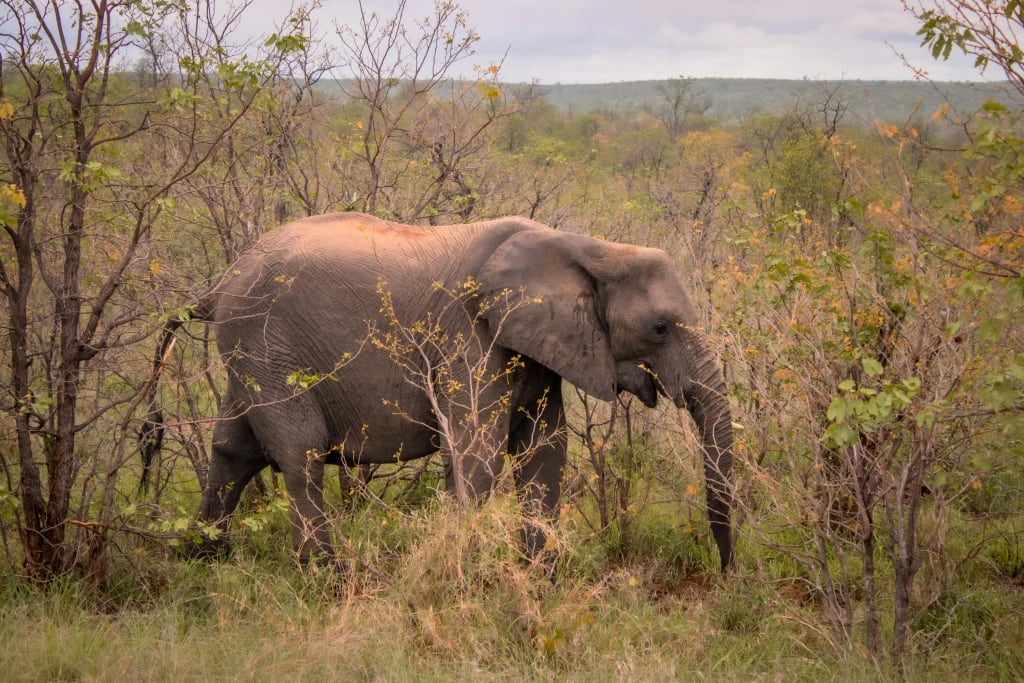
In the sweeping plains and dense forests of Africa and Asia, one of nature's most intelligent and majestic creatures roams with purpose and deep intuition. The elephant—renowned for its size, memory, and emotional intelligence—harbors a unique and almost supernatural ability: it can detect rainstorms from more than 150 miles away. This astonishing capability isn't myth or folklore; it is a well-documented scientific phenomenon grounded in biology, physics, and the natural evolution of survival instincts.
But how do elephants perform this meteorological magic? The answer lies in something called infrasound—a low-frequency sound below the threshold of human hearing.
The Power of Infrasound
Infrasound refers to sound waves with frequencies lower than 20 Hz, the bottom limit of human audibility. While we can’t hear these frequencies, elephants can not only hear them but also produce and interpret them. Elephants communicate with each other across vast distances using rumbling calls that travel through the ground and air. These calls can be picked up by other elephants miles away.
When thunder rumbles or a storm brews on the distant horizon, it generates natural infrasonic waves. Elephants, equipped with a network of sensors in their feet and trunk, can pick up these subtle vibrations through the ground—like natural seismographs. They also use their large ears, not only for temperature regulation but also as sonic receivers that help them detect low-frequency sounds in the air.
This gives elephants a sixth sense, enabling them to be aware of changing weather patterns far beyond what most animals—or even humans with technology—can sense unaided.
Why Rain Matters to Elephants
Water is everything to an elephant. These gentle giants require up to 50 gallons of water per day to drink, bathe, and cool down. In dry seasons, water becomes scarcer, and elephants must travel long distances to find it. The ability to detect rainstorms—often the first indication of new water sources—can mean the difference between life and death.
Elephants in the wild have been observed suddenly changing course and marching in seemingly random directions—only to arrive at a newly formed waterhole or a region experiencing fresh rainfall. Scientists used to think these changes in movement were driven by memory or random chance. However, with the discovery of infrasonic communication and storm detection, the truth has come to light.
In one landmark study, researchers tracked elephant herds with GPS and found that their movements correlated with distant rainfall patterns—not just local weather. This means elephants were responding to rain events they couldn’t possibly see, smell, or feel—only hear, through infrasonic signals.
An Evolutionary Survival Tool
From an evolutionary perspective, this ability is a powerful adaptation. Elephants migrate seasonally in search of food and water, often over hundreds of miles. Being able to detect the direction of rainfall long before it reaches them allows the herd to anticipate environmental changes, move accordingly, and ensure the survival of the group—including vulnerable calves and older members. This ability has also led to fascinating implications in elephant conservation. Understanding how elephants navigate their environment can help wildlife managers and conservationists build better strategies for preserving migratory corridors and avoiding human-elephant conflicts.
Listening With Their Feet
One of the most incredible aspects of elephant anatomy is their ability to “listen” through their feet. The bottom of an elephant’s foot contains a dense network of nerves and fat pads that are highly sensitive to ground vibrations. When infrasound waves travel through the earth—caused by thunder, distant footsteps, or even other elephants—the vibrations are detected by these foot sensors. The vibrations travel up the legs and into the cochlea of the inner ear, where they are interpreted by the brain. Additionally, elephants often freeze and press their trunks against the ground to enhance this ability, much like tuning in to a long-distance signal.
What This Teaches Us About Animal Intelligence
The elephant’s storm-sensing ability is more than just a fascinating fact—it’s a window into the deep intelligence and sensory sophistication of animals. Elephants are known to mourn their dead, form lifelong family bonds, display empathy, and even cooperate to solve problems. Their use of infrasound is another testament to the extraordinary ways in which life has evolved to thrive in Earth’s diverse ecosystems. Humans often rely on technology—radar, satellites, weather apps—to predict what elephants can “hear” on their own. This underscores a larger truth: that many animals possess hidden abilities that rival, and sometimes exceed, our own in natural precision.
In Harmony With Nature
As climate change reshapes weather patterns and alters ecosystems, understanding animal behaviors—like elephant storm sensing—becomes more critical than ever. Elephants, through their ancient evolutionary wisdom, continue to read the signs of the Earth in ways we are only beginning to understand. In a world of scientific breakthroughs and high-tech gadgets, perhaps the greatest meteorologist of all still walks on four legs, trumpeting its way through the savannah, listening to thunder whisper across the land.
About the Creator
Orbit Scope
Unveiling the unseen, revealing the unknown. Welcome to Orbit Scope where truth meets wonder. From the depths of history to the frontiers of science, we uncover facts that surprise, inspire,Challenges the way you see the world.
Reader insights
Outstanding
Excellent work. Looking forward to reading more!
Top insights
Easy to read and follow
Well-structured & engaging content
Compelling and original writing
Creative use of language & vocab
Excellent storytelling
Original narrative & well developed characters
Expert insights and opinions
Arguments were carefully researched and presented
Heartfelt and relatable
The story invoked strong personal emotions
On-point and relevant
Writing reflected the title & theme
Keep reading
More stories from Orbit Scope and writers in Journal and other communities.
The Hidden Language of the Forest: How Trees Communicate Underground
Introduction: A Silent, Subterranean Society Beneath your feet, in every forest, lies a secret network that rivals the complexity of the internet. It’s not made of fiber optics or copper wires, but of roots and fungi. For centuries, trees were seen as solitary organisms competing for sunlight, water, and nutrients. But recent scientific discoveries have shattered this perspective, revealing a world where trees communicate, cooperate, and even nurture one another through underground connections. This phenomenon, often called the “Wood Wide Web,” has changed how we understand forests, ecosystems, and even the concept of intelligence in the plant kingdom.
By Orbit Scope9 months ago in Journal
A Brisbane Renter’s Story: How a Proper Bond Clean Makes All the Difference
Moving out of a rental property in Brisbane is rarely stress-free. Between packing boxes, organising removals, updating addresses, and meeting tight deadlines, cleaning is often the last thing anyone wants to deal with. Yet for many tenants, bond cleaning becomes the deciding factor between getting their full bond back or losing a portion of it.
By Bond Cleaning Brisbaneabout 24 hours ago in Journal


Comments (9)
all time best
nice
good effort
nice
great
Heartfelt and relatable
Excellent storytelling
Nice Work
Best !