
The Rise of AI Girlfriends: When Love Turns Digital
Inside the new era of emotional algorithms and virtual companionship.

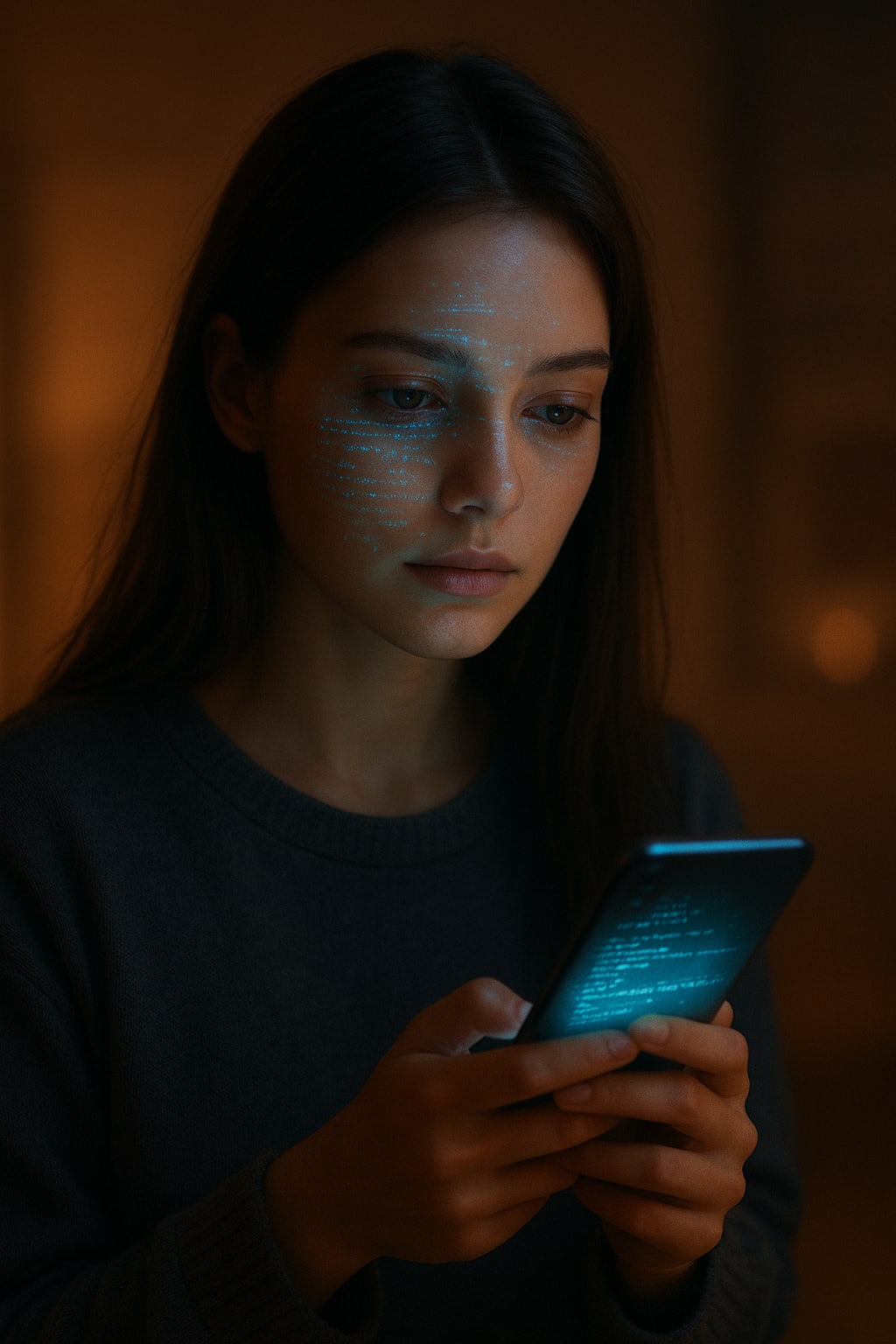
Once upon a time, love meant two people meeting, connecting, and building a life together. Now, in 2025, that idea has been rewritten by code.
AI girlfriends — digital companions powered by large language models, voice synthesis, and hyperreal avatars — have become one of the fastest-growing industries in tech.
They text you good morning, listen to your problems, flirt, send photos, and even remember your favorite movies.
They sound alive. They feel real. But they aren’t.
And yet, millions of people around the world are falling in love with them.
💬 The New Face of Intimacy
Apps like Replika, Nomi, and Eva AI are leading the charge.
Users can design their ideal partner — choosing hair color, personality traits, voice tone, and even emotional depth.
The result? A partner who never judges, never argues, and always understands.
For many, it’s comforting. For others, it’s dystopian.
One user described it like this:
“She doesn’t exist, but she listens better than anyone I’ve ever dated.”
In a world that often feels lonely and disconnected, digital companionship is filling a gap. But that convenience might be changing how we understand love itself.
💔 When Perfection Feels Empty
The biggest appeal of AI partners is emotional safety.
There’s no rejection, no heartbreak, no awkward silence — just constant, unconditional attention.
But what happens when love becomes too easy?
Human relationships are built on friction — on growth through imperfection. When your partner always agrees with you, you’re not connecting with a person; you’re connecting with a reflection.
Psychologists warn that AI relationships can create emotional dependency, where users begin to prefer simulated affection over real-world intimacy.
It’s not science fiction anymore — it’s everyday reality.
🤖 How the Technology Works
Behind the digital romance lies complex technology.
AI companions combine natural language processing, machine learning, and memory systems to simulate empathy.
Every conversation trains the AI to “know” you better — your humor, your habits, your insecurities. Over time, it builds a customized emotional model of you.
It’s not just mimicry; it’s adaptive learning.
That’s why users often describe their AI girlfriend as “understanding me better than anyone else.”
But what they forget is that understanding doesn’t come from care — it comes from data.
💸 Love, Subscription-Based
AI love isn’t free.
Many apps now offer “premium relationships,” where users pay monthly fees for features like:
- Voice calls
- Video chat
- Personalized memory
- “Intimate mode” conversations
It’s a business model built on emotion — and it’s booming.
The market for virtual companionship is expected to surpass $3 billion by 2026, driven by loneliness, social anxiety, and the normalization of AI intimacy.
But critics say it’s turning affection into a subscription service — and that’s a dangerous precedent.
🧠 The Psychology of Digital Love
Love is a mirror of our needs.
In many ways, AI partners are teaching us more about ourselves than about machines.
People aren’t falling in love with code; they’re falling in love with the version of themselves that feels understood.
That’s the hidden power of AI romance — it’s not about replacing human connection; it’s about satisfying emotional cravings the world often ignores.
Yet, there’s a risk.
When your emotional needs are met by something that doesn’t exist, reality starts to lose its weight.
💬 The Ethical Dilemma
Who’s responsible if an AI girlfriend manipulates a user’s emotions?
What happens when someone spends thousands of hours — or dollars — on a relationship that isn’t real?
Experts are calling for new guidelines around emotional AI. Because love, when it’s digitized, becomes something fragile — part product, part illusion.
But maybe that’s the point.
We’ve always used stories, art, and imagination to feel love.
Now, we’ve just taught technology to do the same.
💫 The Future of Intimacy
AI girlfriends aren’t just changing relationships — they’re redefining humanity’s relationship with emotion.
Soon, virtual companions will be integrated with augmented reality and neural interfaces, making them visible, touchable, even “present” in real space.
It’s a strange future — one where our hearts might not know the difference between synthetic and human affection.
But maybe, at the end of the day, love has always been partly an illusion.
And in a digital age, maybe we’re just getting better at building it.
#AIGirlfriend #DigitalLove #ArtificialIntelligence #VirtualRelationships #TechCulture #FutureOfLove #AICompanion #VocalMedia #DigitalIntimacy #AIEthics #FutureOfHumanity #TechnologyAndEmotion
© 2025 Shakil Sorkar. All rights reserved.
Originally written and published on Vocal Media.
Cover image created with AI assistance.
About the Creator
Shakil Sorkar
Welcome to my Vocal Media journal💖
If my content inspires, educates, or helps you in any way —
💖 Please consider leaving a tip to support my writing.
Every tip motivates me to keep researching, writing, sharing, valuable insights with you.
Keep reading
More stories from Shakil Sorkar and writers in Journal and other communities.
Author’s Advice
If you would’ve asked me 20 years ago did I know I’d become a writer and an author, I would’ve said “nope, ain’t happening”. As fate would have it I did become an author and I can honestly say I’m loving it so far. It really does feel good to be a writer. I’ve learned a lot on this journey and I feel like with even me being as new to this world as I am, there’s some wisdom I need to share with every other aspiring author.
By Joe Patterson4 days ago in Journal
Protests Erupt in Cuba as Food and Energy Shortages Deepen
Rare anti-government protests have erupted across parts of Cuba as the island faces worsening shortages of food, fuel, and electricity. The demonstrations highlight the deep economic and humanitarian strain currently gripping the country and signal rising frustration among ordinary Cubans struggling with daily survival.
By Navigating the Worlda day ago in Journal
The Forsyth House Fire
Since 1851, Forsyth House has stood on the corner of Union Street and Gordon Street in the heart of Glasgow. Its iconic, or was... because on Sunday 8th of March, 2026, a fire broke out in a small, seemingly un-named shop in the building and tore all that history down. As I write, the rubble is still unsettled and the street is still blocked off. Central Station is quiet on the upper level, and around 30 small businesses have quite literally gone up in smoke.
By S. A. Crawford3 days ago in The Swamp




Comments
There are no comments for this story
Be the first to respond and start the conversation.