
The Problems, Causes, and Solutions of Water Pollution
Water Pollution: Causes, Effects, and Solutions

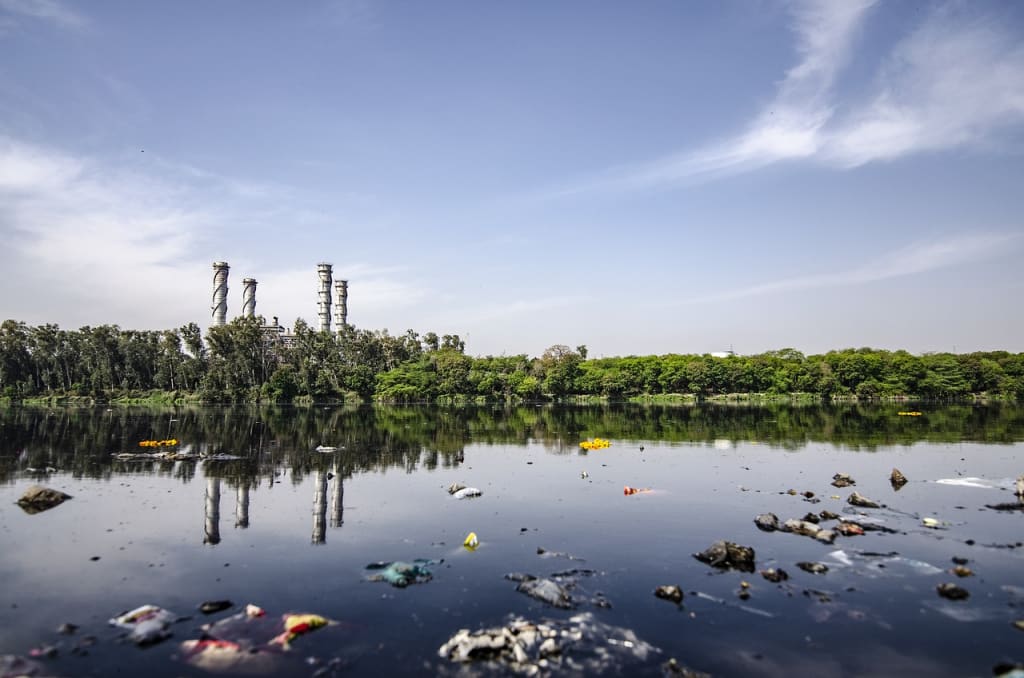
What is contamination of water?
When harmful substances, such as chemicals, waste, or microorganisms, contaminate water bodies like rivers, lakes, oceans, and groundwater, the quality of the water deteriorates and becomes toxic to humans, animals, and ecosystems. This phenomenon is known as water pollution.
Major Causes of Water Pollution
• Industrial Waste: Untreated wastewater and toxic chemicals (heavy metals, solvents) are released into rivers by factories. Lead, arsenic, and mercury from mining are examples.
• Runoff from agriculture: Pesticides, fertilizers, and animal waste wash into water, causing algal blooms and "dead zones."
• Sewage and Wastewater: Diseases like cholera are brought about by organic waste and pathogens introduced by untreated sewage.
• Plastic Waste: Each year, millions of tons of plastic enter the oceans, causing harm to marine life (bag-eating turtles, for example).
• Oil Leaks: Ship leaks or offshore drilling accidents coat water surfaces, suffocating aquatic life.
• Radioactive waste: Nuclear power plants and medical waste can contaminate water for centuries.
The effects of Water Pollution
• Human Well-Being Diseases like diarrhea, cancer, and hepatitis are brought on by contaminated water. Take, for instance, the lead-contaminated water crisis in Flint, Michigan.
• Destruction of Ecosystems Chemical runoff kills coral reefs and decimates fish populations.
• Disruption of the Food Chain Mercury and other toxins build up in fish, poisoning people who eat them.
• Economic Expenses Healthcare and cleanup costs strain economies.
Water Pollution Solutions
• Reduce Industrial Discharges: Promote zero-waste technologies and enforce stricter regulations, such as the Clean Water Act.
• Enhance Treatment of Wastewater: Utilize natural filtration (wetlands) and construct wastewater plants.
• Sustainable Agriculture Buffer zones near water bodies and organic farming.
• Management of Plastic Waste: Ban single-use plastics; promote recycling.
• Oil Spill Prevention: Ships with double hulls and stricter spill penalties.
• Individual Initiatives: Conserve water, avoid dumping chemicals and oils, and support NGOs that work to clean up water.
Key Takeaways
• Health, ecosystems, and economies are all at risk from water pollution.
• Policies from the government, corporate responsibility, and public awareness are required for solutions.
• Every small action counts—proper waste disposal and water conservation help.

Microplastics: The Hidden Danger
What exactly are microplastics?
Microbeads in cosmetics, synthetic clothing, and tiny plastic particles (less than 5 mm) from degraded bottles. They’re found everywhere—from oceans to drinking water.
Sources
• In the laundry, a single wash releases approximately 700,000 microfibers (such as polyester).
• Products for personal care include toothpaste and exfoliants made of plastic microbeads (which are illegal in many countries but remain a problem).
• Breakdown of Plastic Waves and UV rays break up larger debris into microplastics.
Effects
• Marine Life: Fish and plankton ingest them, causing blockages or chemical poisoning.
• Health for Humans: Found in human organs, placenta, and blood—possible connection to inflammation and hormone disruption.
• Ecosystems: In the food chain, toxins like PCBs are absorbed by ecosystems.
Solutions
• Filters: Install filters in your washing machine (Cora Ball, for example).
• Policy: Microbeads and plastics that can only be used once (e.g., U.S. Act for Microbe-Free Waters).
• Research: Investigate biodegradable alternatives, such as packaging made of algae.
Groundwater Contamination: The Hidden Crisis
What is contamination of groundwater?
• when toxins enter aquifers, which provide billions of people with drinking water. Groundwater pollution, on the other hand, is frequently irreversible.
Major Contaminants
• Nitrates: Found in fertilizers and associated with "blue baby syndrome."
• Arsenic: Natural deposits or industrial waste (e.g., Bangladesh’s crisis affecting 20 million people).
• PFAS, or "Forever Chemicals,": are used in non-stick coatings and can cause cancer if they break down.
How It Happens
• Chemicals seep into aquifers through soil in leaking landfills.
• Methane and heavy metals are released into groundwater by fracking.
• Pesticides Rural wells are tainted by the common herbicide atrazine.
Solutions
• Bioremediation and pump-and-treat systems are examples of remediation methods.
• Organic farming near wells and strict landfill liners are ways to prevent this.
• Testing For rural communities, regular well-water checks.
What Did You Know?
• Microplastics make up the majority of the Great Pacific Garbage Patch, which is three times as big as France.
• The most polluted place on Earth is Lake Karachay in Russia, where standing near radioactive waste can kill you in an hour.
About the Creator
Keep reading
More stories from Azharul Islam and writers in Journal and other communities.
Understanding Cancer: Its Causes, Signs, and How to Avoid It
Cancer is a condition in which some cells grow out of control and spread to other parts of the body. In normal circumstances, cells divide and grow in a controlled manner; however, in cancer, this process fails, and the cells continue to multiply when they shouldn't.
By Azharul Islam9 months ago in Journal
Gold Breaks New Record on Greenland Tariff Threats, with Forecast of $7,000 on the Cards
In a dramatic turn for global financial markets, gold prices have surged to unprecedented levels, driven by escalating geopolitical tensions centered around Greenland and fears of widening trade conflict between the United States and Europe. What was once a speculative spike has quickly morphed into a powerful rally, with gold breaking new records and market analysts now talking about the possibility of prices reaching $7,000 per ounce in the future. The simmering crisis highlights how geopolitical risk can rapidly reshape investor sentiment, asset prices, and risk premia worldwide.
By Salaar Jamali4 days ago in Journal
The Blue Ridge Stalker
Tom had left the Ford down the way, its spark plugs finally exhausted and no mechanics for a dozen miles back through the foothills to Strossburg. No matter, he had worn his boots—almost as if he planned for this to happen. The puzzle he sought to solve emanated from the woods clinging to the slopes above; the valley behind held no mysteries.
By Stephen A. Roddewig3 days ago in Fiction


Comments
There are no comments for this story
Be the first to respond and start the conversation.