
The Potential of Biochar in the CDR Market
Where Biochar Production Equipment Fits In
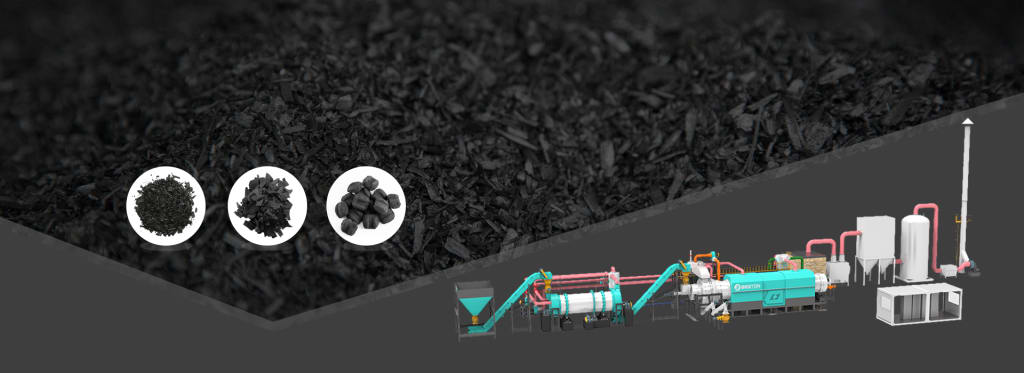
As the world grapples with the urgency of reducing atmospheric carbon dioxide (CO₂), carbon dioxide removal (CDR) technologies have emerged as critical tools in the fight against climate change. Among these, biochar—a carbon-rich material produced from organic waste through pyrolysis—stands out for its dual ability to sequester carbon long-term and enhance soil health. Its potential in the CDR market is growing, and at the heart of scaling this potential lies the role of biochar production equipment.
What Makes Biochar a Promising CDR Solution?
Biochar’s CDR credentials stem from its unique properties. When organic materials like crop residues, wood chips, or manure undergo pyrolysis (heating in the absence of oxygen), most of their carbon is locked into a stable form resistant to decomposition. This means that once applied to soil, biochar can store carbon for centuries, preventing it from re-entering the atmosphere as CO₂.
Beyond carbon sequestration, biochar improves soil fertility by retaining water, nutrients, and supporting beneficial microbial activity—creating a "win-win" for agriculture and climate. This dual benefit makes it attractive to both environmental initiatives and farmers, driving demand in the CDR market as governments and corporations seek verifiable carbon removal credits.
Scaling Biochar: The Need for Accessible Production Equipment
For biochar to fulfill its CDR potential, production must scale from small-scale, localized operations to larger, more efficient systems. This is where biochar production equipment becomes indispensable.
Small-Scale Systems: Portable or modular biochar production equipment allows farmers, communities, or small businesses to convert local organic waste into biochar. These systems, often designed for on-farm use, reduce transportation costs and turn waste into a valuable resource, making biochar accessible in remote or rural areas.
Industrial-Scale Facilities: To generate significant CDR volumes, industrial-grade biochar production equipment is necessary. These large-scale systems can process tons of organic waste daily, optimizing pyrolysis conditions to maximize carbon retention and energy efficiency. They also enable the integration of biochar production with other industries, such as biomass energy plants, creating circular economies.
The Market Opportunity: Where Equipment Meets Demand
The CDR market is projected to grow exponentially, with estimates suggesting it could reach trillions of dollars by 2050. Biochar’s role in this market depends on its ability to deliver consistent, verifiable carbon removals—something that reliable biochar production equipment directly supports.
Equipment manufacturers are responding by innovating designs that:
Ensure consistent biochar quality, critical for carbon credit verification.
Reduce energy use during pyrolysis, lowering the carbon footprint of production itself.
Handle diverse feedstocks, from agricultural waste to forest residues, increasing flexibility.
As governments implement carbon pricing and corporations commit to net-zero goals, demand for certified biochar will rise. This, in turn, will drive investment in biochar production equipment, creating a feedback loop that accelerates biochar’s adoption in the CDR market.
Conclusion: Equipment as a Catalyst for Biochar’s CDR Success
Biochar’s potential in the CDR market is clear, but its impact will be limited without accessible, efficient biochar production equipment. From small farms to industrial facilities, the right equipment enables the transition from biochar as a niche product to a mainstream CDR solution.
As the world races to meet climate targets, investing in biochar production technology isn’t just about making a material—it’s about building a scalable, sustainable way to remove carbon from the atmosphere. In this journey, biochar production equipment isn’t an afterthought; it’s the foundation.
A critical synergy between biochar production equipment and carbon credit markets is also emerging. As CDR protocols become stricter, the ability to track biochar’s carbon content from feedstock to soil application is non-negotiable—and this traceability starts with the equipment. Advanced biochar production equipment now integrates sensors and data logging tools that monitor pyrolysis temperatures, residence times, and carbon conversion rates, generating immutable records for auditors. This not only streamlines the certification process for carbon credits but also builds trust among investors and buyers. For instance, a community in Brazil using mobile biochar production equipment to process sugarcane bagasse can now validate its carbon removals through real-time data, making its biochar eligible for international carbon markets. Such developments are turning biochar production equipment into more than a manufacturing tool; they are becoming the backbone of transparent, credible CDR supply chains. As this trend accelerates, regions with robust biochar production equipment infrastructure will likely lead in capturing the economic value of carbon removal, further incentivizing adoption and scaling.
About the Creator
What Milwaukee Teams Overlook During App Planning Phases?
Most app projects in Milwaukee do not fail because of poor execution. They struggle because early planning feels productive while leaving the hardest questions unanswered. Whiteboards fill up. Features get approved. Timelines look reasonable. Momentum builds. What is missing rarely feels urgent at that stage.
By Samantha Blake5 days ago in Journal


Comments
There are no comments for this story
Be the first to respond and start the conversation.