
The painful experience of failing an interview
Some interview experience
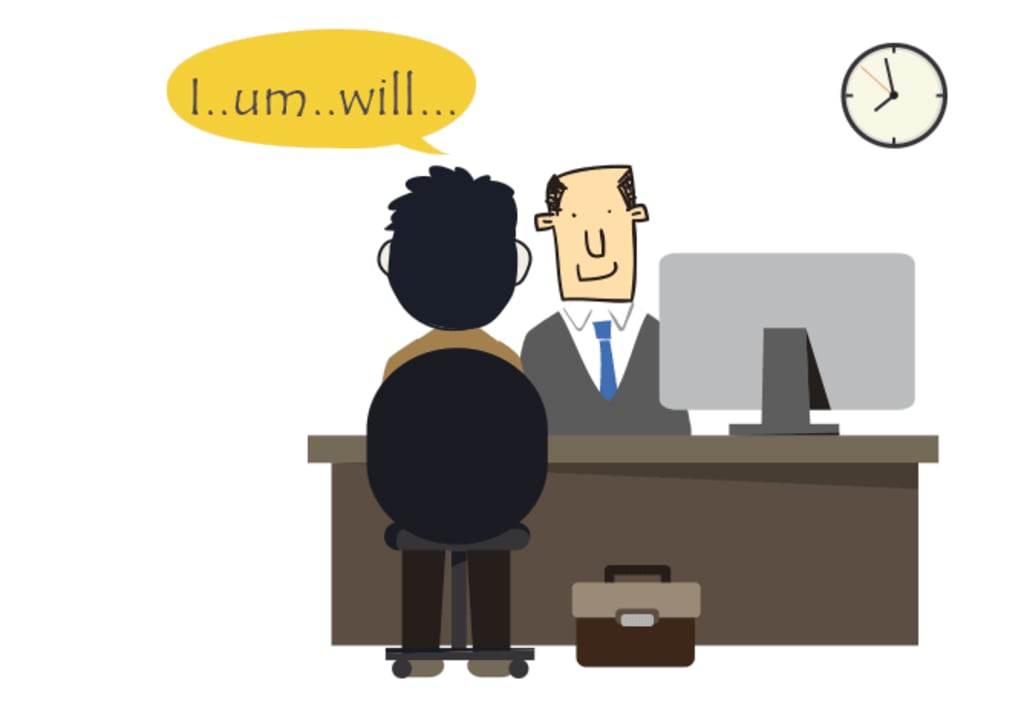
If you are a recent graduate or are ready to change jobs, I hope this will help you. Typical mistakes made in introducing yourself: Rereading your resume; Don't prepare in advance, say what comes to mind, and leave the interviewer confused. Generally control within 1~2 minutes of the best, time is limited, clear 3 points can: 1) simple background introduction 2) why the company chooses you 3) why do you choose the company background introduction name, graduation time, working years. If your college is awesome or your major is relevant to the position, mention it, otherwise don't. Analyze the job introduction, select the most important 1-2 points, and then targeted to say that they have done the 1-2 points, have outstanding performance, focus on why you choose the company can start from the company's industry, development prospects, products, corporate culture and other perspectives, choose one or two, simply say.
2. Why do you apply for this position? Typical mistake: I submit my resume and you invite me for an interview. For no apparent reason, it seemed right at the time. Be sure to say the advantages of the company you apply for, optimistic about the future development, how this position suits yourself. This requires that before the interview through the network, friends and other channels to understand the background of the company and the position related information, according to their own conditions, focus on describing their own work experience and ability, emphasize that they can be qualified for the target position
3. Why did you leave your last job? Typical mistake: Complaining about a bad boss at your last job, a jerk at a coworker, or not getting a raise or promotion for your good performance makes the interviewer worry that you will complain about their company in the future, or that the company has similar problems. Tell the real reason, their performance is bad, lead to stop, although the performance of your honesty, but it will make the interviewer to reduction of evaluation should find for you to apply for company and the difference between the express company, and then answer: as companies is a startup company, business is not mature, the development of risk is big, and apply for the position of company is to have a certain scale enterprises, business maturity; Last company not only often work overtime in the evening, weekend is also hard to avoid, and apply for a company to work overtime less. The position I am taking is less and less valued by my previous company and has no future, but the company I am applying for attaches great importance to this position.
What are your strengths? Typical mistake: think along while, say I also don't know what advantage oneself have; Strong learning ability, responsible, ready to help others, careful, serious, team spirit, which can not give specific facts of the advantages do not say. 1) list 3-5 strengths of yourself; 2) List the desired strengths of the position; 3) Select one or two of the above, and have relevant facts ready to explain in detail during the interview
What are your weaknesses? Typical mistake: say oneself have no shortcoming, can't think of at the moment, this means you don't know yourself clearly; Apply for the sales position, say that they do not like to communicate with people, this conflict with the job requirements of the weakness do not say; Saying you're narrow-minded, jealous, lazy, bad-tempered, or unproductive is honest, but a fatal flaw so don't say it if you want to get an offer. Everyone has weaknesses. What the interviewer needs is to know what you have done to make up for your weaknesses, what you have achieved and how you have avoided them from affecting your work. Your attitude and process are more important than results.
Why do you feel you are qualified for this position? Typical mistake: Because I am very interested in this job, and I believe I can do well, I am very diligent and careful, if you are willing to give me a chance, this is useless nonsense. The interviewer wants to hear that you have proven you can do the job. Explain relevant work experience and achievements based on the job description to convince the interviewer of your competence.
7. What are your salary expectations? Typical mistake: Don't ask for salary, this means you have no confidence in yourself, dare not talk about treatment; Ask for a salary greatly beyond the market price of the target position, but can not prove that they are worth this price through the Internet, friends and other channels to learn about the salary situation of the company in advance, and then evaluate their interview performance, feel confident, more points in the salary range, on the contrary, conservative, first win the offer.
What are your career plans for the future? Typical mistake: Saying that you haven't thought about it, and that you should focus on the task at hand first, shows that you don't know where you're headed in the future. Saying that you want to become a senior executive in two years, which is impossible for ordinary people in ordinary companies, will seem like you are aiming too high. According to your target position development path, understand the corresponding skills requirements, say how you can improve the ability to be promoted to supervisor/manager in a reasonable time. The interviewer is not asking you to give a detailed development plan, which is not possible. However, a person who has a plan for his future development will work hard to do his current job, which is what the interviewer wants to make sure.
9, in the completion of a certain job, you think the way required by the leader is not the best, you have a better way, what will you do? Typical mistake: in order not to damage the face of the leader, I will admit what the leader says is right on the scene, but I will follow my own way in the work, and then tell the leader when I get a good result. No interviewer likes a pushy employee. Say this: IN principle, I will respect and obey the leader's work arrangement, but in private, I will find opportunities to ask the tone, euphemistically express their ideas, to see whether the leader can change his opinion; If the leader does not adopt my suggestions, I will still complete the work in strict accordance with the requirements of the leader. Still have a kind of circumstance, of course, if the way that the leader asks violates the principle, I will put forward to oppose opinion resolutely, if the leader still obstinately opinionated, I will choose to report to superior leader.
You find it difficult to get along with your colleagues and boss at work, what should you do? First of all, I will find the reasons from myself, and carefully analyze whether I did a bad job, dragged the team back, caused trouble to others, so that leaders and colleagues are not satisfied; Check whether they do not do well in the way of life, so that others do not like, cause resentment of others, if so, I will try to correct; If I fail to find reasonable reasons, I will directly communicate with my leaders and colleagues in a frank manner, hoping that they can point out my shortcomings and correct them immediately
11. Tell me about your most successful or proud achievement. Typical mistake: due to not prepare in advance, the results buzz along while, did not say; Throw out anything that pops into your head and distract the interviewer from your point. The first choice is related to the job, according to the STAR principle, from the background of the task, your task, what you did, what results, four aspects of the organization description, convince the interviewer that you are qualified for the position. If you can't find the relevant experience, that's fine. What the interviewer wants to know is how you dealt with difficulties, tried your best and finally overcame them. Prepare an experience in advance, can not be big, but must let people see your excellent psychological quality, the way to deal with problems.
Typical mistake: To say "no", this can easily be interpreted as that you are not very interested in the company and the position, which will affect the interview evaluation. Ask questions about salary, benefits, days off, overtime, etc. These should wait until the company has made a specific offer for you. Suitable for department heads is the interviewer. He will be happy to talk about the day's work, in addition to the proud and meaningful events, but also some trivial things. You can see what interests you and gauge whether you can handle the most boring work. Could you introduce the promotion mechanism of the company to me? Show that you are confident in your ability to do well in your current job and merit promotion; What is the corporate culture of your company that you are most proud of? Companies that do well generally have a culture. By asking this question, you can get a sense of what the company advocates and opposes, and what the work atmosphere is like. At the same time, pay attention to the physical and emotional expressions of the interviewer during the process of expression. If he is excited and talkative, and his body language shows that he agrees with the company culture, then the company culture is well established and you can evaluate how well you fit in. What are the biggest challenges facing the team/company right now? It will both pique the interviewer's interest and give you an idea of the challenges ahead. Especially when the interviewer is a foreign or overseas returnees, a bit more direct is not a bad thing, can increase impression points. What is your expectation for me to join the team in the future? If the interviewer is your department head or boss, this question will show him that you are a candidate who cares enough about him and his team to listen. This is helpful in establishing professional relationships quickly. You can also initially determine whether he is a results-oriented or process-oriented leader. A leader who thinks top-down or a leader who thinks bottom-up. At the same time, you understand his expectations of you, in the future work, you can be targeted efforts. Typical mistake: Asking a question but being indifferent to the answer. Listen carefully to the interviewer's answers and communicate with him.
? Show that you are confident in your ability to do well in your current job and merit promotion; What is the corporate culture of your company that you are most proud of? Companies that do well generally have a culture. By asking this question, you can get a sense of what the company advocates and opposes, and what the work atmosphere is like. At the same time, pay attention to the physical and emotional expressions of the interviewer during the process of expression. If he is excited and talkative, and his body language shows that he agrees with the company culture, then the company culture is well established and you can evaluate how well you fit in. What are the biggest challenges facing the team/company right now? It will both pique the interviewer's interest and give you an idea of the challenges ahead. Especially when the interviewer is a foreign or overseas returnees, a bit more direct is not a bad thing, can increase impression points. What is your expectation for me to join the team in the future? If the interviewer is your department head or boss, this question will show him that you are a candidate who cares enough about him and his team to listen. This is helpful in establishing professional relationships quickly. You can also initially determine whether he is a results-oriented or process-oriented leader. A leader who thinks top-down or a leader who thinks bottom-up. At the same time, you understand his expectations of you, in the future work, you can be targeted efforts. Typical mistake: Asking a question but being indifferent to the answer. Listen carefully to the interviewer's answers and communicate with him.
About the Creator
Keep reading
More stories from Aden Kevin and writers in Journal and other communities.
How do you introduce yourself in an interview?
This article is more to teach you (self-introduction) on the underlying logic and method of change, I hope you can have a new understanding in the process of job hunting. Why do you need to repeat your resume when you already have it on your resume? How do you describe yourself in an interview and how do you describe yourself on a resume? Your introduction should be more colloquial than your resume and designed to lead to subsequent questions. The taboo is to directly retell the self-introduction on the resume. What's the point of introducing yourself in an interview when the interviewer is going to look at your resume when you introduce yourself? From an interviewer's perspective, the purpose of introducing yourself is simple: To get to know you quickly. Because it's faster to listen to what you say than to read a resume. The job seeker, on the other hand, should take advantage of the opportunity to introduce himself, convey more useful information, and make the following communication more favorable to you (you know, are good at or prepared for). So what should be done? Even if you think you have your resume in mind when you write it. Before the interview, also want to carry out a systematic comb again, and, own experience and the target enterprise needs to combine. 1. What have you done and what are your strengths? Review your resume based on your experience, for example, what specifically did you do in that experience? What have you achieved? What projects have you been involved in? What role did you play in the project or team? What are your contributions to the team? Combine these questions to find out what makes you tick, what makes you tick, or what defines you as a person.
By Aden Kevin3 years ago in Journal
7 Business Knowledge Loops That Self-Improve on AI PCs
The business world is changing faster than ever before. Companies that stay ahead are those that use smart technology to learn and grow continuously. AI PCs have opened up a new frontier for businesses to create knowledge loops that get better with every cycle. These systems learn from your data and improve their performance automatically. Think of it like a business brain that never stops getting sharper.
By Gabriella Browne5 days ago in Journal


Comments
There are no comments for this story
Be the first to respond and start the conversation.