
The New Internet Race: How Countries Are Building Their Own Online Worlds
From Africa’s digital independence to Asia’s new platforms, a quiet revolution is transforming the global web.
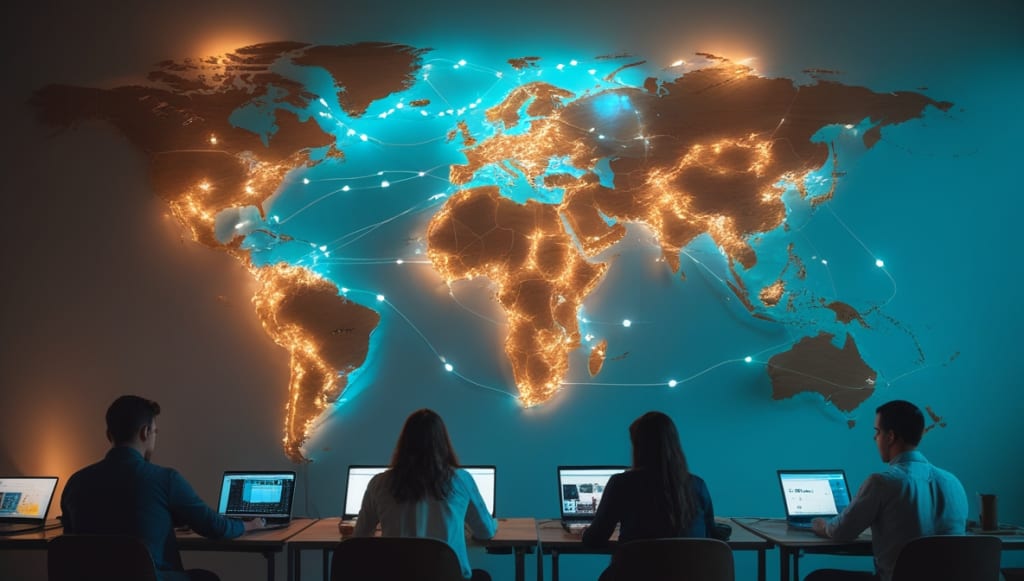
From Africa's digital independence to Asia's developing platforms, a delicate change is reshaping the worldwide web.
For many, the internet appears as one massive linked world where people browse, share, and stream on the same sites. But this view is shrinking. Country by country is creating their own online environments slowly and rather surreptitious. The question has changed over the past ten years from "Who governs the internet?" to "Which internet are we using?"
Intentionally rather than by chance, the world wide web is breaking apart.
Nations are becoming less and less ready to only engage in the digital sphere of others. They want to produce their own. More drastically than we understand, this transformation is reshaping the whole environment.
Beginning of a new digital revolution
For many years, Silicon Valley has served as the foundation of the worldwide web. Google, Meta, Apple, Amazon, and X have shaped how society engages, looks for information, purchases, and handles data.
But a fresh set of events is emerging:
Africa is developing separate digital infrastructure.
India is building its own technical ecosystem rivaling the West.
The online scene in China is quite unique.
National data centers and cloud infrastructure are being started in the Middle East.
Through strict laws, Europe is working toward digital independence.
This is not a little change; it is a global power shift.
Countries are realizing that dependence on digital platforms causes national vulnerabilities as global tensions rise. The narrative is created by those in charge of the internet. And those who have the information welcome the future.
🌍 Africa’s Digital Independence Is Here
Just a few years ago, Africa relied almost entirely on Western tech companies for internet access, cloud services, and mobile ecosystems.
Not anymore.
Nations across the continent are now:
- Building national fiber networks
- Launching local cloud platforms
- Developing state-owned payment systems
- Creating homegrown app ecosystems
- Partnering with satellite providers to create independent connectivity
This shift isn’t about competition. It’s about freedom.
When a country owns its digital infrastructure, it owns:
- Its data
- Its economy
- Its cultural narrative
- Its digital future
Africa’s push for a sovereign internet marks the beginning of a new global movement.
🇮🇳 India’s Internet Model Is Becoming a Blueprint
India’s digital transformation is one of the fastest in history. Thanks to initiatives like:
- Aadhaar (a biometric ID system)
- UPI (the world’s most advanced payment system)
- ONDC (an open network challenging Amazon & Walmart)
India is now proving that innovation does not need Silicon Valley’s approval.
More surprising?
Countries like Brazil, Indonesia, and Kenya are studying India’s model to replicate it.
India has built an internet where the government, private companies, and citizens share a common digital framework.
This isn’t just evolution—it’s inspiration.
🌏 China: The Internet Behind the Great Firewall
Whether people agree with China’s system or not, one thing is certain:
China built its own entire internet.
Instead of Google → Baidu
Instead of WhatsApp → WeChat
Instead of Amazon → Alibaba
Instead of Instagram → Douyin
China’s web ecosystem is:
- Fully local
- Fully controlled
- Fully independent
It set the template for a country-run digital world.
And now, more nations are quietly adopting pieces of China’s strategy—especially those seeking digital self-sufficiency.
🇪🇺 Europe’s Fight for Digital Sovereignty
Europe, instead of building its own platforms, is building its own rules.
Through GDPR, the Digital Services Act, and antitrust enforcement, Europe is reshaping the global tech landscape. Their message is clear:
“If Silicon Valley wants Europe, it must play by Europe’s rules.”
This regulatory power gives Europe something just as valuable as infrastructure:
control.
Europe may not have its own Google, but it does have the power to force Google to change.
🌐 Why Countries Are Building Their Own Internets
Three primary objectives define the heart of this worldwide project:
1. Information Authority
The digital world runs on data as its lifeblood. Citizens of a country are not ready to preserve data kept on servers controlled by businesses outside of their borders.
2. Shelter from international repercussions
A country that depends on the digital infrastructure of another is vulnerable to:
financial penalties
monitoring
financial deceit
electronic sabotage
3. Preserving Cultural Heritage
Algorithms affect individual as well as group identities. In the virtual age, nations try to shield their culture from destruction.
It's not about stopping. Sovereignty underpins it.
Subtle Divisions in the Global Internet
Gradually vanishing is the idea of one, connected internet. Conversely, we are traveling toward a reality characterized by digital divides.
Algorithms produce these roadblocks; they are not actual.
Visualize a period where:
The findings of your search are impacted by your country.
You may only use social media inside of your country.
Your national electronic system connection is linked to your online presence.
Access to data from throughout depends on geographical constraints.
This event goes above theory. Work on it has already started.
🌐 So What Happens to the “Worldwide Web”?
We are nearing a time of:
several Internets
Digital worlds in conflict
geographically limited online groups
Less and less of a unified, unified platform is the internet.
It is expanding onto several channels, each of which is influenced by the ideals and aims of the countries that developed it.
According to some, this change will create disagreements among people.
Others contend it will empower countries forgotten by technology corporations for many years.
Most likely the truth is both points of view.
The Globe is Reconstruction Internet Nation by Country
Our young years were shaped by an interconnected network that is currently seeing uncorrectable alteration.
without any fuss or noise—
It is, nevertheless, via many little choices, regulations, technological developments, and digital changes happening globally simultaneously.
Africa is improving.
Asia is creative.
Regulations are followed in Europe.
China is copying.
India is reappraisal.
The United States is evolving.
The future world is not a single internet.
Every internet represents its creators' culture.
The internet environment of the planet is under consideration.
Every nation is now clamoring for a seat at the table.
#Technology #GlobalInternet #DigitalPower #Society #Innovation
About the Creator
Keep reading
More stories from Shahjahan Kabir Khan and writers in Journal and other communities.
How to Build AI Agents in 2026: Stop Coding Like It's 2024
Remember when we all thought pasting a prompt into ChatGPT was "prompt engineering"? Cute. It's 2026 now, and if your "AI" can't plan a vacation, book the flights, and argue with the airline about a refund, it's just a chatbot. Learning how to build AI agents isn't just a resume booster anymore; it's the only way to survive the "white-collar shockwave" experts warned us about.
By Sherry Walker5 days ago in Journal
Miss Persephone's Manual to a Seemingly Ordinary Life
Miss Persephone was found at the dining table, her blue eyes swollen, her tears arriving and retreating like the tides of the ocean. Earlier that day, her family had visited her in the retirement home where she had lived for eight years. It was her eightieth birthday.
By Imola Tóth4 days ago in Fiction



Comments
There are no comments for this story
Be the first to respond and start the conversation.