
📉 The Rise That Inspired Millions — And the Fall No One Saw Coming
How Netflix Went From Cultural Hero to Cautionary Tale in Just Six Months
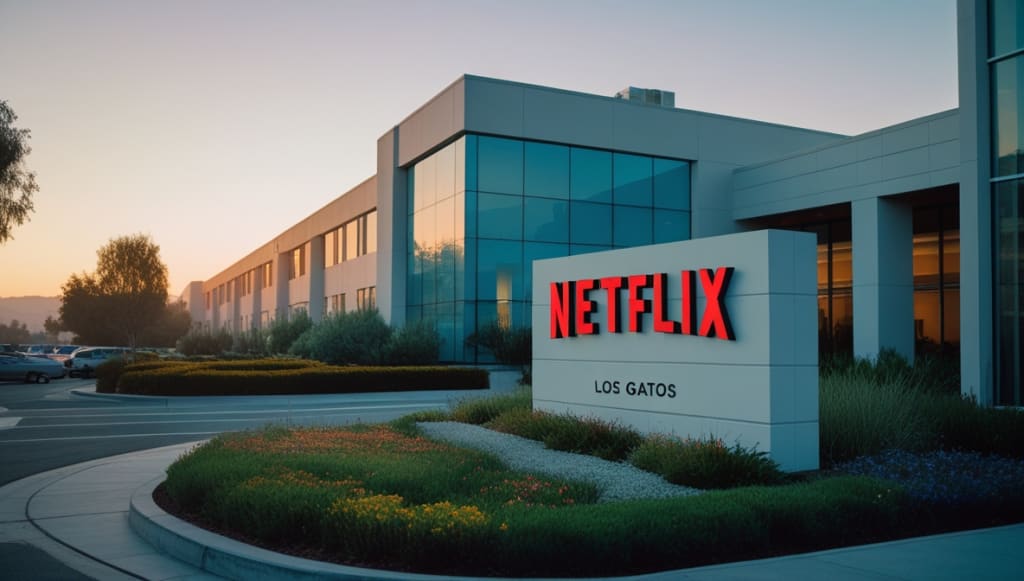
For 25 years, Netflix wasn’t just a company — it was a feeling.
A symbol.
A quiet revolution that changed how the world watched stories.
But in 2022, the unthinkable happened. The world’s most beloved entertainment empire collapsed under the weight of its own success. More than $200 billion evaporated, millions of subscribers walked away, and the giant that once made us dream suddenly looked… lost.
How does a company that rewrote the rulebook on entertainment forget how to hold our attention?
How does a platform that once felt like freedom turn into a symbol of fatigue, chaos, and corporate greed?
To understand this fall, we must return to where everything began—
with a $40 late fee that sparked a global revolution.
🎞️ A Revolution Born Out of Annoyance
In 1997, Reed Hastings left a Blockbuster store irritated.
He had forgotten to return the Apollo 13 VHS tape and now owed $40 in late fees.
On the car ride home, frustration turned into curiosity:
Why wasn’t renting movies as simple as buying things online?
That small question carried the seed of a billion-dollar idea.
Hastings and co-founder Marc Randolph began experimenting with an emerging format — the DVD. It was light, durable, and easy to mail. They mailed one to themselves. When it arrived unbroken, Hastings realized:
“We just found the future.”
Netflix wasn’t born to dominate Hollywood.
It was born to make life a little easier, a little fairer.
No late fees.
No penalties.
No stress.
Just movies delivered to your home — and a promise of respect for your time.
People didn’t just use Netflix.
They felt connected to it.
Every email, every recommendation from their early Cinematch algorithm felt personal, warm, human.
Then came the biggest turning point — one that would change the entire world.
💻 When the Internet Became the New Cinema
In 2007, Netflix rolled out a quiet little feature:
Watch Now — streaming movies directly online.
At first, it was tiny. Only 5,000 titles.
Most people didn’t even notice.
But technology evolved faster than anyone expected.
Broadband grew. Devices multiplied. And Netflix understood something fundamental:
“If the future is online, we will get there first.”
From the red envelopes that arrived at your door, Netflix moved onto desktop browsers, then smart TVs, then game consoles, then every phone in every pocket.
By 2010, streaming revenue surpassed DVD revenue.
A miracle few believed possible.
And Netflix's red "N" began to appear everywhere — Xbox, PlayStation, Apple TV, Roku.
One click, one account, one world.
The cultural shift was massive.
People didn’t just watch shows — they binge-watched.
Episodes blended into each other like chapters of an endless digital book.
Netflix wasn’t just a company anymore.
It was a global language.
🎬 From Distributor to Creator — And a New Kind of Power
In 2013, Netflix made its boldest move yet.
Instead of distributing content, they decided to create it.
House of Cards dropped an entire season at once — something no traditional network dared to attempt.
It wasn’t just a release.
It was a declaration:
“Fans deserve control.”
From that point on, Netflix became unstoppable.
- Present in 190 countries
- Over 150 million global subscribers
- More than 700 original works produced annually
- A valuation soaring past $300 billion
Hollywood changed.
Viewing habits changed.
Culture changed.
Netflix wasn’t just leading.
They were entertainment.
Wall Street called them the “immortal unicorn.”
Reed Hastings was hailed as the “Steve Jobs of storytelling.”
But underneath the success, cracks quietly formed.
And no one noticed.
📉 The First Warning Sign — A Company Losing Its Soul
As Netflix expanded, it slowly replaced human judgment with data.
Algorithms began deciding what to create.
Numbers replaced emotion.
Quantity overtook quality.
The company once beloved for its human touch began to feel… machine-made.
Behind closed doors, a dangerous belief formed:
If it works, scale it. If it sells, repeat it. If it trends, copy it.
This shift wasn’t loud.
It wasn’t dramatic.
It was subtle — the kind of erosion you only notice once it’s too late.
And then came 2011.
🔥 The Decision That Angered Millions
Netflix, at the height of its glory, suddenly announced it would split its DVD service into a new company called Qwikster.
Two accounts.
Two bills.
Two separate platforms.
For customers who trusted Netflix for simplicity, it felt like a betrayal.
The backlash was instant and overwhelming.
Internet forums exploded.
The media mocked them.
Subscribers left in anger.
It was the first time the world saw Netflix not as a hero…
but as a corporation making decisions in the dark.
The brand recovered — for a while.
But the seed of distrust had been planted.
And when the market shifted in 2022, those cracks became fractures.
💔 When a Legend Forgets Why It Exists
At its peak, Netflix believed it couldn’t fail.
That subscribers would accept anything.
That content quantity mattered more than quality.
That algorithm understood humanity better than humans did.
But people don’t want endless options.
They want meaningful ones.
People don’t want content dumps.
They want stories worth remembering.
People don’t want to be studied by algorithms.
They want to be understood by creators.
After years of rapid expansion, content overload, rising subscription fees, password crackdowns, and fierce competition, Netflix’s audience stopped feeling like part of a movement.
They felt like part of a monetization strategy.
And that’s when the collapse happened.
Not all at once.
But painfully, publicly, relentlessly.
What started with a $40 late fee ended in a $200 billion wipeout.
Not because Netflix lacked innovation.
But because it forgot something simple:
Revolutions are built on connection — not convenience.
🌍 The Lesson Hidden in the Fall
Netflix changed the world.
It shaped a generation's viewing habits.
It inspired competitors, creators, and consumers.
But the moment it stopped listening —
the moment it replaced soul with scale —
the empire began to crumble.
This isn’t the story of a failed business.
It’s the story of a cultural revolution losing its way.
And maybe, just maybe, it’s also a reminder:
Success isn’t about reaching the top.
It’s about remembering why you tried to rise in the first place.
#Netflix #BusinessFall #EntertainmentIndustry #DigitalRevolution #BrandCollapse #StreamingWar #TechCulture #BusinessLessons #InnovationStory #RiseAndFall
About the Creator
Keep reading
More stories from Shahjahan Kabir Khan and writers in Journal and other communities.
The Next Tablet War: How 2025 Became the Year Apple, Samsung, and Tesla Finally Collided
Introduction: A Battle We Didn’t See Coming Every few years, technology companies forecast a revolution. 2025, meanwhile, strikes differently. It is rather something surprisingly familiar: a rise in human creativity and innovation rather than a breakthrough in artificial intelligence or a new smartphone.
By Shahjahan Kabir Khan2 months ago in Journal
The goals I did not achieve
Every writing goal I made for the year is a wash. It has been this way for a while, but I think it's important to be open about my failures and the reality of how life can get in the way. This is especially true considering the several times I have posted on Vocal about my writing goals, how I was changing my approach, and where I was hoping to be for the upcoming year. I will probably do that again in a couple months, but for now, it is time to acknowledge where I am today.
By Kay Husnick22 days ago in Journal
Russia Claims Ownership of Oil Assets It’s Developing in Venezuela
How Moscow’s energy ties in Caracas are shaping geopolitics amid U.S. pressure Russia has recently made a forceful declaration that the oil assets it is developing in Venezuela are legally and unquestionably its own, intensifying a geopolitical tug-of-war over one of the world’s most oil-rich nations. This claim comes amid heightened tensions between the United States and Russia, sparked by U.S. actions in Venezuela and disagreements over who controls the country’s massive energy resources. �
By Fiaz Ahmed Brohi3 days ago in Journal



Comments
There are no comments for this story
Be the first to respond and start the conversation.