
The Last Authentic Moment: Can Humanity Survive in a World Where Everything Looks Real?
As AI perfects imitation, the value of truth is collapsing. What happens when the real world must compete with the synthetic one?
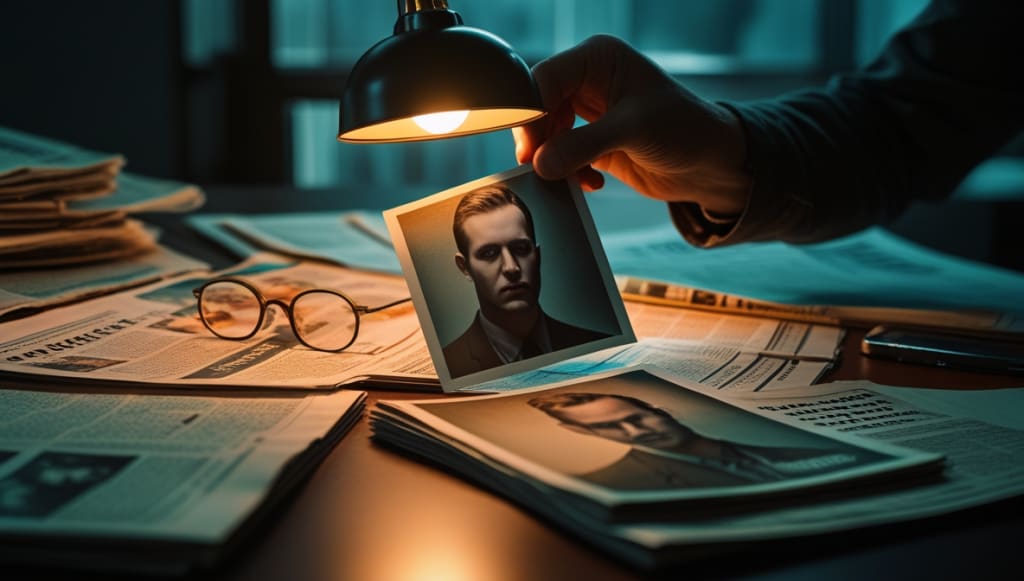
The Era Where “Seeing Is Believing” Finally Died
Once, not too far back, a single image was seen as fact. Proving evidence was found in a video. An audio recording might settle a fight. Reality had credibility, presence, and substance.
These days, everything is quickly disappearing.
In an age when a digital face can cause tears at command, a computer-generated voice can own up to a falsehood it never uttered, and an artificial sunset may seem more magnificent than anything made by nature. AI is creating whole realities—ones intended to be more smooth, attractive, dramatic, and convincing than the chaotic world we actually live in—not just producing images.
And surrounded by pixels and algorithms, we seem to be losing our power to distinguish what is real.
Reality feels insufficient when everything seems flawless
You might have seen art made by artificial intelligence that looks more lifelike than actual people. A "celebrity conversation" produced only by a model or Or a video so flawless it is difficult to say if it was created or filmed.
Until a faint question arises inside us, we scroll in awe: What importance does the original possess if artificial intelligence has the ability to replicate anything?
Once, we lived an experience with sincerity. It's something we need to now look at.
We are going in an odd mental field:
- Actual occurrences appear extremely ordinary.
- Real images seem far too flawed.
- Real people sense they are very flawed.
- Genuine stories appear extremely sluggish.
The actual world is beginning to look like a subpar replica of its virtual counterpart. And that shift has effects.
The New Arms Race: Attention vs. Authenticity
Platforms reward whatever is most clickable.
AI rewards whatever is most possible.
Combine those two forces, and you get a world optimized not for truth—but for engagement.
A real sunset is beautiful.
An AI sunset is perfectly beautiful, with colors nature would never dare to paint.
A real memory fades.
An AI memory can be sharpened, smoothed, romanticized.
A real moment is fleeting.
An AI version can be looped forever.
Authenticity can’t compete with the algorithmic imagination.
We’re not just losing reality.
We’re losing our ability to prefer it.
The Growing Crisis of Trust
When everything can be faked, nothing can be trusted.
This is the silent collapse happening beneath the surface of society:
- News clips can be fabricated
- Evidence can be generated
- Public figures can be impersonated
- History can be rewritten in HD
How do courts, journalists, or governments operate in a world where even raw footage isn’t reliable?
But the deeper crisis is personal.
How do individuals maintain relationships when a video call, a message, or even a voice from a loved one could be AI-generated?
The question isn’t “Will people misuse AI?”
They already have.
The real question is:
Can society survive once doubt becomes our default state?
The Human Need for What’s Real
Under any conditions, people have a great need for what is true.
We crave for:
- unfiltered dialogues
- Inaccurate interactions
- - Chaotic emotions
- genuine relationships
- A reality that staggers us instead just tending to us
Our environment, meanwhile, is working against these yearnings.
From buying to love to fun, every element of modern life is slowly fusing with artificial reality. It is simpler to handle, safer, faster, and more polished.
And it presents a threat for exactly this reason.
Reality is supposed to catch us off guard, bewilder us, teach us, and push us. Artificial reality only mirrors our wishes to us.
It gives what we wish, not what we actually need.
The Death of the Unedited Experience
Consider the most current occasion you went through something undetected.
No image.
No tale.
No corrections.
No viewers.
Such occurrences are getting less and less often.
Imagine now a world where AI improves even those basic events—your camera "adjusting" the brightness, your phone "changing" your appearance, your applications "condensing" your emotions.
The last real moment could soon be a faint memory.
We are assigning not just creativity but also our point of view.
The menace lies not in artificial intelligence tricking us.
The danger is that artificial intelligence might define the foundation for our knowledge of reality.
Why Truth Still Matters—More Than Ever
Amid all this uncertainty, one truth remains stable:
Authenticity has a value that synthetic perfection cannot replace.
A real laugh is worth more than a perfect AI smile.
A flawed photograph holds more story than a flawless rendering.
A genuine conversation means more than a crafted simulation.
A shared human moment carries weight no algorithm can replicate.
The challenge for this generation is not to reject AI.
It’s to remember what it means to be human within AI’s world.
We must relearn how to:
- Trust our senses
- Value imperfection
- Seek context
- Question everything
- Protect the fragile experience of being real
rtificial reality can imitate many things.
But it cannot replicate the soul—unless we forget we have one.
Choosing What Deserves to Be Real
The future isn’t asking us to live without AI.
It’s asking us to decide which parts of life must remain untouched by it.
Love should be real.
Pain should be real.
Joy should be real.
Friendship should be real.
Memories should be real.
Truth should be real.
If we don’t protect these things, we risk losing ourselves inside the worlds we create.
Because once reality becomes optional…
so does being human.
About the Creator
Keep reading
More stories from Shahjahan Kabir Khan and writers in Journal and other communities.
When the World’s Tech Stopped Breathing: How One Economic Shock Exposed the Fragile Heart of Modern Power
The Day the Tech World Held Its Breath Imagine waking up one morning to find that the entire world’s supply of advanced computer chips — the ones inside your phone, your car, your hospital equipment, your AI tools, even the satellites above your head — had suddenly stalled.
By Shahjahan Kabir Khan2 months ago in Journal
Miss Persephone's Manual to a Seemingly Ordinary Life
Miss Persephone was found at the dining table, her blue eyes swollen, her tears arriving and retreating like the tides of the ocean. Earlier that day, her family had visited her in the retirement home where she had lived for eight years. It was her eightieth birthday.
By Imola Tótha day ago in Fiction


Comments
There are no comments for this story
Be the first to respond and start the conversation.