
The Fascinating Reasons Why Professors, Scientists & Researchers are Converting to Islam
The Beauty of Islam

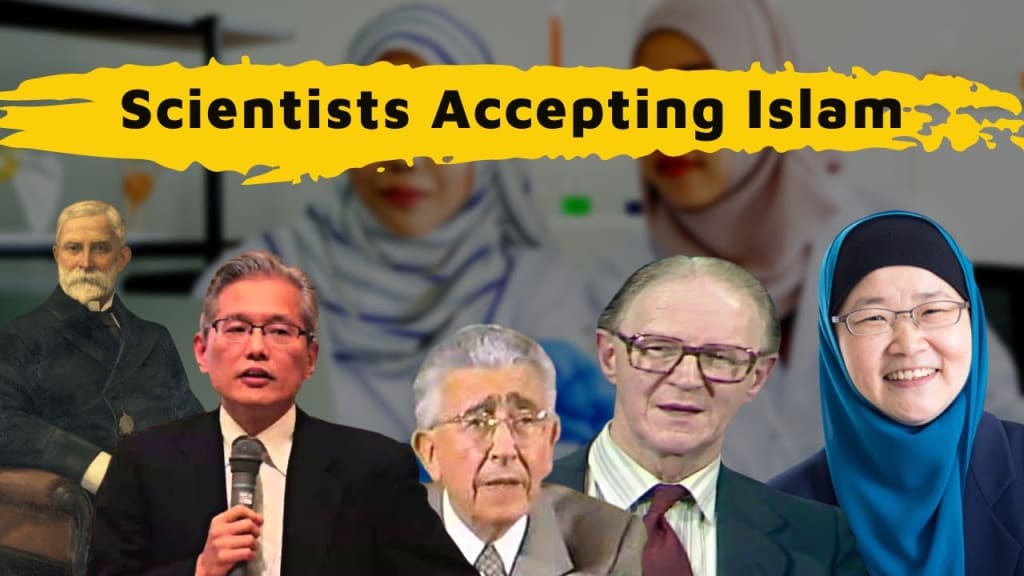
Islam is one of the fastest-growing religions globally, and it is fascinating to see the number of medical professors, scientists, and researchers who are converting to Islam. The religion of Islam is based on faith and spirituality, but its teachings also resonate with the scientific community. In this article, we will discuss some of the reasons why medical professors, scientists, and researchers are converting to Islam.
1. Quranic Verses that Align with Science
The Quran is the holy book of Islam and is considered the ultimate source of guidance for Muslims. It is interesting to note that several verses in the Quran align with scientific discoveries made in recent times. For example, the Quran describes the stages of embryonic development in a way that perfectly matches modern scientific understanding. Similarly, the Quran also describes the Big Bang theory in a way that is consistent with scientific explanations. These scientific alignments have piqued the interest of medical professors, scientists, and researchers, who are impressed with the Quran's accuracy.
2. Islam and Ethics in Research
Islam is a religion that emphasizes ethics and morality in all aspects of life, including research. Muslims are encouraged to be honest and ethical in their dealings, and this is particularly important in the field of research, where accuracy and honesty are critical. Muslim researchers have a unique advantage in this regard, as their faith provides them with a strong ethical framework for their work.
3. Islamic Culture and Community
Islam is more than just a religion; it is also a culture and a way of life. Muslim communities are tight-knit and supportive, which is appealing to many medical professors, scientists, and researchers who value community and connection. These communities provide a sense of belonging and can be particularly helpful for those who are new to a city or country.
4. Rationality and Logic
Islam is a religion that emphasizes rationality and logic. Muslims are encouraged to use their intellect and reasoning to understand the world around them. This emphasis on rationality and logic has attracted many medical professors, scientists, and researchers who appreciate the importance of critical thinking in their work.
5. Islam and Personal Growth
Islam is a religion that emphasizes personal growth and self-improvement. Muslims are encouraged to strive for excellence in all aspects of their lives, including their careers. This focus on personal growth has attracted many medical professors, scientists, and researchers who are looking for ways to develop themselves both professionally and personally.
In addition to the various reasons discussed above, there is another fascinating aspect of Islam that has been attracting medical professors, scientists, and researchers - the Quranic verses that align with scientific discoveries. The Quran is a book that was revealed over 1400 years ago to the Prophet Muhammad (peace be upon him), and yet it contains numerous scientific insights that are only being discovered and verified by modern science today.
One example of this is the description of embryonic development in the Quran, which was mentioned centuries before the discovery of the microscope. The Quran describes the development of the human embryo in a way that perfectly matches modern scientific understanding, with stages such as "alaqah" (a clinging substance) and "mudghah" (a lump of flesh). This remarkable accuracy has left many medical professors, scientists, and researchers amazed and intrigued by the Quran.
Another example of this is the description of the Big Bang theory in the Quran. The Quran describes the universe as being created from a single point, which then expanded and formed the stars and galaxies. This description is strikingly similar to the scientific explanation of the Big Bang theory, which states that the universe began as a single point and then expanded rapidly.
These scientific alignments have sparked the curiosity of medical professors, scientists, and researchers who are fascinated by the wisdom and accuracy of the Quran. They are intrigued by the idea that a book revealed over a thousand years ago could contain such profound scientific insights that are only being discovered and verified by modern science today.
In conclusion, the reasons why medical professors, scientists, and researchers are converting to Islam are diverse and complex. The alignment between Quranic verses and scientific discoveries is just one of the many aspects of Islam that has attracted the scientific community. As more and more people discover the beauty and wisdom of Islam, it is likely that the trend of conversion will continue to grow. Ultimately, the decision to convert to Islam is a deeply personal one, and each individual's reasons for doing so are unique and meaningful to them.
About the Creator
Muhammad Sarib Ali
Sarib is an experienced Content Writer with 5 years of experience in the CNet industry. He is a creative and analytical thinker with a passion for creating high-quality content and crafting compelling stories.
Keep reading
More stories from Muhammad Sarib Ali and writers in Journal and other communities.
The Moon Landing Hoax
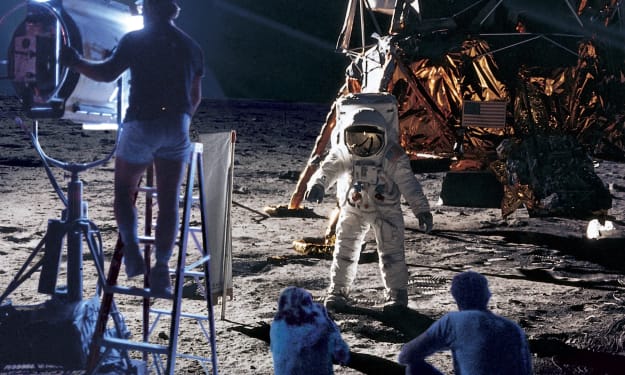
Introduction: On July 20, 1969, NASA's Apollo 11 mission landed on the moon, making history by becoming the first humans to step foot on the lunar surface. It was an achievement that was celebrated worldwide, with many people hailing it as a defining moment in human history. However, there are still people who refuse to believe that the moon landing was real, claiming that it was all an elaborate hoax staged by NASA to deceive the world. In this article, we will explore the arguments made by moon landing deniers and examine the evidence that supports NASA's claims.
By Muhammad Sarib Ali3 years ago in Journal
How Mobile App Development Atlanta Firms Handle UX Challenges?
UX problems rarely announce themselves early. They show up after launch, when users hesitate, abandon flows, or quietly stop engaging. By then, the cost of fixing them is higher and the patience of stakeholders is thinner. Atlanta app firms that consistently deliver successful products have learned this the hard way, and their approach to UX reflects that experience.
By Nick William3 days ago in Journal
Wild Card Weekend Recap: What Happens Now?
I think I figured out why I love Wild Card Weekend so much. It's because it's the first playoff anything of the calendar year. The NFL season starts in the fall, and once upon a time, the champion was crowned either on or slightly before New Year's. The evolution of the NFL schedule has resulted in the playoffs starting just into the New Year, and currently, the final week of the season falls on the first weekend of the New Year, with Wild Card Weekend coming a week after that. So yes, chronologically, the NFL's Wild Card Weekend serves as the first playoff anything of the calendar year.
By Clyde E. Dawkins6 days ago in Unbalanced



Comments
There are no comments for this story
Be the first to respond and start the conversation.