
The Evolving World Order:
Exploring Global Power Dynamics


Introduction
I have a big question. Which is, who runs the world? It used to be an easy question to answer. If you're over 45 like me, you grew up in a world that was dominated by two giants. The United States called the shots on one side of the Wall, the Soviets set the rules on the other. And that was a bipolar world. It's very simple. If you're under 45, you grew up when the Soviet Union had already collapsed, and that left the United States as the sole superpower, dominating global institutions and also exerting raw power. And that was a unipolar world. And then about 15 years ago, things got a little more complicated.
The Shift in Global Power
The United States increasingly didn't want to be the world's policeman or the architect of global trade or even the cheerleader for global values. Other countries were becoming more powerful, and they could increasingly ignore many of the rules they didn't like, sometimes even setting new rules themselves. What happened? Three things.
1. Russia's Decline and Discontent
Number one, Russia was not integrated into Western institutions. A former great power now in very serious decline and they are angry about it. We can argue about whose fault that is, but we are where we are.
2. China's Rise and Identity
Number two, China was integrated into US-led institutions on the presumption that as they got wealthier and more powerful, they would become Americans. Turns out, they're still Chinese. And the United States is not particularly comfortable with that.
3. Globalization and Its Discontents
Number three, tens of millions of citizens in the United States and other wealthy democracies felt left behind by globalization. This has been ignored for decades. But as a consequence, they felt that their governments and their leaders were more illegitimate. Now if you look at all the headlines in the world today, driving all of this geopolitical tension and conflict, over 90 percent of them are because of these three reasons. And that's why today we live in a leaderless world. But as we know, that's not going to be with us for long.
The Future of the World Order
So what comes next? What kind of a world order might we expect over the next ten years? Some of what I might say I think will surprise you. Because we're not going to have a bipolar or a unipolar or even a multipolar world. If we don't have one or two superpowers, we don't have a single global order. No, instead, we will have three different orders, a little overlapping, and the third will have immense importance for how we live, what we think, what we want, and what we're prepared to do to get it. But first things first.
1. The Global Security Order
Today, we have a global security order. And as you see from the map, the United States and its allies are the most powerful players on it. The US is the only country in the world that can send its soldiers and its sailors and its military equipment to every corner of that world. No one else is close. China is growing in its military capabilities in Asia, though nowhere else. Lots of American allies in Asia are concerned about that. And as a consequence, they're becoming more dependent on the United States for a security umbrella. With the Russian invasion of Ukraine, US allies in Europe are becoming more concerned and dependent on the United States and a US-led NATO. The Russian military, of course, has been a greater global concern, much less so today, especially as they've lost over 200,000 troops and all of that equipment and with sanctions making it extremely hard for them to rebuild. Now, Russia and China and others have nuclear weapons, but thank God it is still suicide to use them. And as a consequence, our security order is a unipolar order and it is likely to remain so for the next decade.
2. The Global Economic Order
At the same time that there's a security order, there's also a global economic order. And here, power is shared. The United States is still a very robust global economy. But the US can't use its dominant position militarily to tell other countries what to do economically. The United States and China are enormously economically interdependent and so they can't control each other. Other countries in the world, a lot of them want access to US military muscle, but they also want access to the Chinese market, soon, by 2030, likely to be the largest in the world. And you can't very well have a cold war if the US and the Chinese are the only two that are prepared to fight it. The European Union has the largest common market and they set the rules. And if you want to do profitable business there, you listen to those rules. India is playing a greater role economically on the global stage. Japan still matters, too. And over the next ten years, there will be a rise and fall of the relative capacities of these economies. But the global economic order is and will remain a multipolar order.
3. The Digital Order
Between these two orders are tensions because the United States will use its power in national security to try to bring more of the world's economies towards it. The Chinese are trying to use their dominant commercial position to align more of the world diplomatically. And Japan and Europe and India and everyone else will do their damnedest to ensure that neither of these two orders dominate the other. And they will mostly succeed. Now, so far I have spoken with you about the two world orders we already see, but there's a third that is coming soon that's even more important. And that is the digital order. And the digital order is not run by governments but by technology companies.
The Rise of Technology Companies
We all know how much military support NATO countries have provided Ukraine during the war. But it's technology companies that provided the tools allowing Ukraine to defend itself from Russian cyber attack. It's technology companies that gave the Ukrainian leaders the ability to speak with their generals and their soldiers on the front lines. If it wasn't for those technology companies, Ukraine would have been fully offline within weeks of the war. Technology companies determine whether political leaders are able to communicate with the masses without intermediaries. They shape our identities and influence our thoughts. They hold tremendous power in the modern world.
The Choices We Face
As technology companies continue to expand their influence, we must ask ourselves important questions. Are they going to act accountably as they release new and powerful artificial intelligence? What are they going to do with the unprecedented amount of data they are collecting on us and our environment? Will they persist with advertising models that drive revenues but also fuel hate and misinformation, tearing apart our society?
Conclusion
In a rapidly changing world, the balance of power is shifting. The traditional notions of a unipolar or multipolar world are giving way to a more complex reality. The global security order, the global economic order, and the digital order are shaping the future of our world. It is up to us to ensure that these orders coexist harmoniously and that technology companies wield their power responsibly.
In the coming years, we will witness the rise of new players and the reconfiguration of global dynamics. It is a time of uncertainty, but also one of opportunity. By understanding these orders and the choices we face, we can navigate the challenges ahead and work towards a more inclusive and sustainable future.
About the Creator
Tajamul Hassan
An accomplished professional in the field of Management Sciences, Nutrition, and Health and Fitness. Over a decade of extensive experience in development as well in Health Sector. Dedicated to improving people's lives.
Keep reading
More stories from Tajamul Hassan and writers in Journal and other communities.
Gender Bias in Healthcare
Introduction Gender bias is a pervasive issue that permeates various aspects of our society, from the workplace to sports, education, and even how we raise our children. While it is commonly acknowledged in these areas, there is another domain where gender bias often goes unnoticed—the healthcare system. In this article, we will shed light on the existence of gender bias in healthcare and explore its profound implications. The evidence presented will underscore the urgent need for change and a more inclusive approach to patient care.
By Tajamul Hassan3 years ago in Journal
ChinaAirbus Aircraft: A Deal That Signals Shifting Global Aviation Power
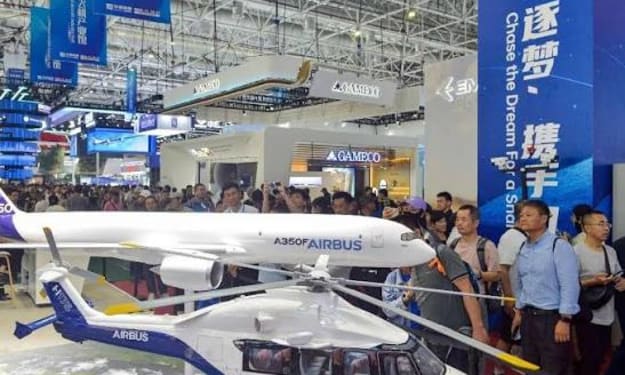
The global aviation industry may be on the verge of one of its most consequential aircraft deals in recent years. During a high-profile diplomatic visit to Beijing, German leader Friedrich Merz revealed that China is considering purchasing up to 120 aircraft from Airbus. The announcement underscores not only the strengthening economic ties between Europe and Asia but also signals a deeper shift in the global balance of aviation influence. The potential agreement, still under negotiation, highlights how aviation has become a strategic tool in international relations. It also reflects China’s growing need to modernize its expanding airline fleet while reinforcing Europe’s position in the competitive aircraft manufacturing sector. A Strategic Deal Beyond Aviation Aircraft orders of this magnitude are rarely just commercial transactions. Instead, they often carry broader diplomatic and economic implications. The proposed Airbus purchase illustrates the deepening economic cooperation between Germany and China, two of the world’s largest export-driven economies. For Germany, Airbus represents not only a major industrial success but also a symbol of European technological excellence. Supporting Airbus helps protect thousands of highly skilled jobs across Europe, including engineering, manufacturing, and supply chain roles. Merz’s announcement during his Beijing visit demonstrates Germany’s commitment to strengthening economic ties with China despite global geopolitical tensions. For China, the deal aligns with its long-term strategy to expand and modernize its aviation sector. As air travel demand continues to rise with the growth of the middle class, Chinese airlines require newer, more efficient aircraft to handle both domestic and international routes. Airbus Gains Ground in a Competitive Market The possible order of up to 120 aircraft represents a major victory for Airbus in its ongoing competition with its American rival, Boeing. For decades, Airbus and Boeing have dominated the global commercial aircraft market, with airlines around the world relying on their fleets. However, recent years have seen Airbus gain increasing market share, especially in Asia. The company’s single-aisle aircraft models, known for their fuel efficiency and reliability, have become particularly attractive to airlines seeking to reduce operating costs and meet environmental standards. China’s decision to potentially favor Airbus reflects both commercial and political considerations. Diversifying suppliers reduces dependence on any single country and strengthens China’s bargaining position in global trade relationships. This development also highlights Europe’s growing influence in sectors traditionally dominated by American manufacturers. Airbus, supported by governments across the European Union, has emerged as a strong competitor capable of securing massive international contracts. China’s Rapidly Expanding Aviation Market China’s aviation sector is one of the fastest-growing in the world. Before the pandemic, China was already on track to become the largest air travel market globally, surpassing the United States in passenger volume. This growth is driven by several factors: Rising incomes and increased affordability of air travel Expansion of domestic tourism Development of regional airports Growth in international business travel Chinese airlines are expanding routes across Asia, Europe, and Africa, requiring modern aircraft that offer efficiency, comfort, and lower emissions. President Xi Jinping has emphasized technological modernization and economic resilience as key national priorities. Aviation plays a central role in achieving these goals by connecting China more effectively to global markets. Europe Strengthens Its Economic Position The potential Airbus deal also carries major implications for Europe’s economic future. Aircraft manufacturing is one of the continent’s most valuable industrial sectors, generating billions in revenue and supporting hundreds of thousands of jobs. Germany plays a particularly important role in Airbus production, with major manufacturing facilities and research centers contributing to aircraft design and assembly. Airlines such as Lufthansa rely heavily on Airbus aircraft, reinforcing the company’s importance within the European aviation ecosystem. Airbus also maintains a strong presence in China itself, including assembly facilities in Tianjin. These facilities allow Airbus to build aircraft closer to customers while strengthening its relationship with Chinese partners. This localized production approach helps Airbus compete effectively while supporting China’s goal of developing its own aviation expertise. Political and Economic Balance in a Changing World The timing of the potential agreement is particularly significant. Global trade relationships are undergoing major changes, influenced by geopolitical tensions, supply chain disruptions, and shifting alliances. By deepening cooperation with Airbus, China signals its willingness to maintain strong economic ties with Europe even as global competition intensifies. Meanwhile, Germany’s support for Airbus reinforces Europe’s desire to remain an independent and influential economic force. This balance allows both sides to benefit economically while reducing reliance on any single partner. Environmental and Technological Implications Modern aircraft are significantly more fuel-efficient than older models, reducing emissions and operating costs. China’s investment in newer Airbus aircraft aligns with global efforts to make aviation more sustainable. Airbus has been investing heavily in next-generation aircraft technology, including lighter materials, advanced engines, and improved aerodynamics. These innovations help airlines reduce fuel consumption and meet increasingly strict environmental regulations. For China, adopting these aircraft supports its broader environmental goals while improving airline profitability. What This Means for the Future of Aviation The potential Airbus deal represents more than just a large aircraft order—it reflects a broader transformation in global aviation and economic power. Several key trends are emerging: Europe is strengthening its role as a major aviation supplier China is expanding its global aviation influence Aircraft manufacturing competition is intensifying Aviation is becoming increasingly linked to geopolitical strategy If finalized, the agreement could reshape industry dynamics and reinforce Airbus’s leadership in one of the world’s most important growth markets. Conclusion: A Deal with Global Impact China’s potential purchase of up to 120 Airbus aircraft marks a pivotal moment in international aviation and economic cooperation. The deal highlights the growing partnership between China and Europe while strengthening Airbus’s position as a global industry leader. Beyond its immediate commercial impact, the agreement signals broader shifts in geopolitical influence, industrial strategy, and technological development. As global air travel continues to expand, partnerships like this will play a critical role in shaping the future of aviation—and redefining the balance of economic power in the 21st century.
By Jameel Jamali5 days ago in Journal
A Historic Declaration
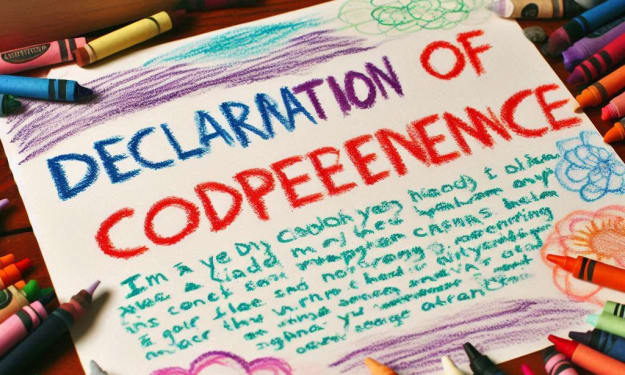
We the People of the Husbands of the United States of America, in Order to form a more perfect Union, and I mean you...with me...establish Justice, insure domestic Tranquility, provide for the common defence, promote the general Welfare, and secure the Blessings of Liberty to ourselves, after Puberty, do ordain and establish this Declaration of Co-Dependence.
By Gerard DiLeo5 days ago in Humans


Comments
There are no comments for this story
Be the first to respond and start the conversation.