
The Essential Elements of Effective Branding You Need to Know
Building a Brand That Resonates: The Basics of Target Audience Engagement

The Essential Elements of Effective Branding You Need to Know
A brand is an organization's collective identity and reputation that has been developed over time, whereas a product is a tangible good or service that is sold. Let's use an example to better grasp it. We are all undoubtedly familiar with the well-known smartphone brand Apple. Apple's distinctive brand identity helps it stand out from its rivals. It has established a reputation as a tech business that prioritizes user experience, elegant design, and innovation. Its products include the MacBook, Apple AirPods, iPhone, and more. All of these are tangible goods that customers can buy and use. Thus, a product is an actual thing that can be bought or sold, and a brand is something that develops over time.
Customer Based Equity Model
We demonstrate how consumer attitudes toward a brand directly contribute to its success using customer-based brand equity, or CBBE. What is it, and how does it support the development of your brand?
Brand identity , Brand Meaning, Brand Resonance
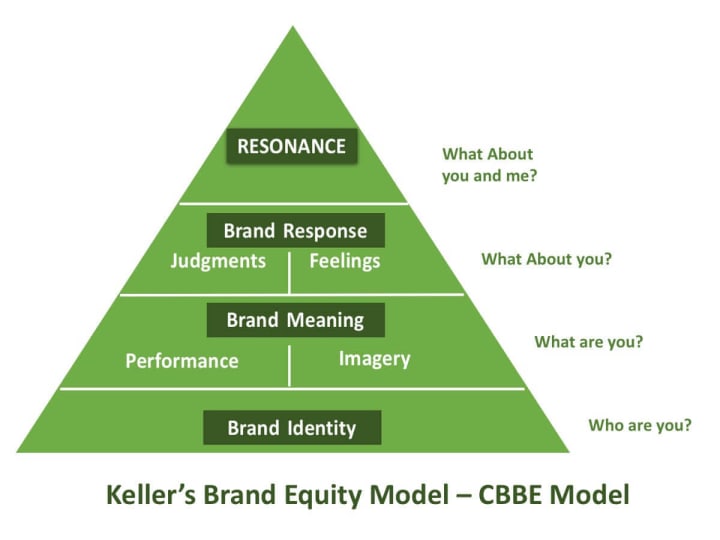
The Keller brand equity model, created by marketing professor Kevin Lane Keller, is a popular and effective way to measure brand equity, which can be challenging to quantify due to its complexity. It breaks down the concept into measurable stages for easier understanding and analysis. The Keller model is a pyramid-shaped guide for businesses to establish a strong brand identity and work towards achieving brand resonance, where customers become advocates for the brand. The customer-based brand equity pyramid is a framework that outlines the steps to building a strong brand with customers. Each stage in the pyramid must be established before moving on to the next, and every interaction with the brand should create positive feelings and beliefs in the customer.
Reaching the resonance level allows a brand to identify and take advantage of their customers' loyalty and attitudes, whether they are positive or negative. Negative feedback can help a brand understand how their customers perceive their product, enabling them to turn negative experiences into positive ones.
By breaking down CBBE into Keller's four levels, marketers are able to anticipate the desires and needs of their customers, even before they make a purchase or are aware of their own wants. The iPad exemplifies strong brand identity and was designed to be visually appealing, user-friendly, and meet customer needs. Despite some initial issues, they were promptly fixed and customers were satisfied. In a short amount of time, iPad users praised its benefits and became loyal customers, leading to its widespread use in various settings. It is a prime example of a product that we didn't realize we needed until we experienced it, and now it has become essential in our daily lives.
Resonance Level
Reaching the resonance level allows a brand to identify and take advantage of their customers' loyalty and attitudes, whether they are positive or negative. Negative feedback can help a brand understand how their customers perceive their product, enabling them to turn negative experiences into positive ones.
By breaking down CBBE into Keller's four levels, marketers are able to anticipate the desires and needs of their customers, even before they make a purchase or are aware of their own wants. The iPad exemplifies strong brand identity and was designed to be visually appealing, user-friendly, and meet customer needs. Despite some initial issues, they were promptly fixed and customers were satisfied.
In a short amount of time, iPad users praised its benefits and became loyal customers, leading to its widespread use in various settings. It is a prime example of a product that we didn't realize we needed until we experienced it, and now it has become essential in our daily lives.
Aaker theory of brand resonance
Aaker's brand equity model suggests that successful brands drive recognition in the emotional part of the brain, leading to quick purchasing decisions. Unlike Keller's model, which focuses on emotions, Aaker emphasizes the importance of recognition for brand success. Aaker believes that brand equity consists of brand awareness, associations, and loyalty, which collectively contribute to the value of a brand's offerings. The Aaker Model assists in developing a brand strategy that differentiates a brand from competitors and propels its success.
Aaker outlines five factors that contribute to controlling brand equity. Higher scores in these areas indicate a product is closer to achieving brand equity.
1)Brand awareness is how well-known a brand is to the public and is the first step in building brand equity.
2)Brand loyalty is the level of loyalty customers have to a brand, which is difficult for competitors to replicate.
3)Perceived quality refers to the expectation of good quality products from a brand. Brand associations are the feelings and perceptions people have when they see a brand. Patents, intellectual property, and trading partners give brands a competitive advantage.
4)These components can be measured using the right tools to improve brand equity.
5)Consistent branding across all customer touchpoints is important in achieving brand recognition and loyalty. Data collected throughout the marketing process can help increase customer loyalty and differentiate the brand from competitors.
Branding elements
Brand name - A brand name is a combination of words that describe your business, what it stands for, and how it sets itself apart from the competition. Though it might seem simple, naming a brand can have significant implications. For instance, you might want to hydrate yourself with a cold drink, but you can't just tell the vendor, "I want a cold drink," because you need to give them the brand name—such as Coco Cola or Thumbs Up—in order to get the drink.
The logo of your business is crucial for your branding because it is one of the most identifiable elements of your brand. Your audience will identify you if they see your branding on various platforms such as emails, website, and physical products. Some logos, like HubSpot's Sprocket, are image-based while others, like FedEx, use words and a brand name as their recognizable logo.
Graphics and images play a crucial role in defining your brand, as they encompass various elements that make your business stand out. For instance, your logo can be used as a graphic in marketing emails. Consistency is key when editing and sharing images across different platforms and materials. It is important to use the same editing style, such as filters and cropping techniques, to maintain a cohesive look.
The color scheme of your business is important as it influences all other visual branding elements such as logo, marketing materials, graphics, and images. Consumers can easily recognize a brand by its specific color scheme, which triggers instant brand recognition in their minds. For instance, Slack is known for using the color scheme shown below as its main brand colors.
Typography in business refers to the consistent use of fonts across all materials to maintain a cohesive brand identity and make it easier for customers to recognize your company. Having a set font for your business helps create a unified and professional appearance for all content.
Spotify uses a sans-serif font consistently across their platform and marketing materials.
Tone and voice refer to how your business presents itself in communication with customers through marketing materials, reflecting your brand's personality. It can range from being humorous and casual to more formal and professional. Choose a tone and voice that aligns with your business and target audience, and use it consistently in all communication.
Having a slogan, jingle, or catchphrase is not necessary for every business, but if used, they can play a significant role in shaping your brand identity. These distinct elements can be incorporated into marketing campaigns and advertisements. Familiar slogans, jingles, and catchphrases can stick in consumers' minds and help brands stay memorable to them. Here is a list of some well-known examples.
Overall, the various elements of your brand combine to create its uniqueness. To establish a distinctive identity for your brand, think about your offerings, understand your target audience, and start creating a design that reflects these aspects.
Integrated marketing activities
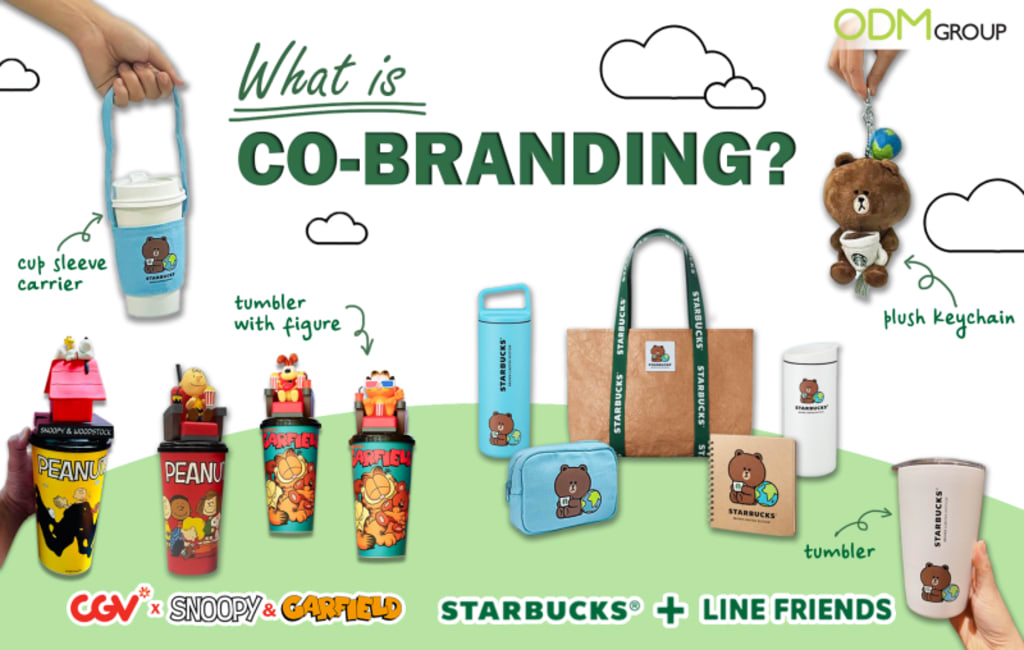
Cobranding
Co-branding is a beneficial strategy for businesses looking to grow their customer base, profits, market share, loyalty, brand image, perceived value, and save costs. Various types of businesses, including retailers, restaurants, car manufacturers, and electronics companies, utilize co-branding to leverage the strengths of each brand. In essence, co-branding aims to expand market share, generate more revenue, and take advantage of heightened customer recognition.
Co-branding occurs when two or more parties collaborate to create a specialized product. This can happen through a conscious decision to work together or as a result of a merger or acquisition. Co-branding involves sharing not only names and brands, but also technologies and expertise to capitalize on the strengths of each partner.
My work on branding that you can check out
1)https://readwrite.com/become-an-authority-in-omnichannel-marketing/
2)https://reflections.live/articles/2085/shifting-paradigms-embracing-customer-centricity-in-branding-an-article-by-hridya-sharma-11981-lna988ro.html
3)https://reflections.live/articles/2085/unleashing-the-potential-of-power-packed-branding-with-by-hridya-sharma-13131-lqb198vl.html
About the Creator
Keep reading
More stories from Hridya Sharma and writers in Journal and other communities.
Comfort Zone Catastrophe: The Impact on Mental Health and Personal Growth
Comfort Zone Catastrophe: The Impact on Mental Health and Personal Growth Choosing comfort over discomfort can lead to unhealthy habits and ultimately contribute to feelings of depression. I am grateful that I have embraced stepping out of my comfort zone and challenging myself. It is common for people to stick to routines and avoid challenges, but I have learned the importance of pushing myself to grow. It is human nature to gravitate towards what is easy, whether it be sticking to familiar habits, maintaining a stagnant job or business, indulging in unhealthy eating habits, or spending excessive time on social media. Criticizing others is also a simple and common behaviour. This is all about remaining within your familiar and safe space.
By Hridya Sharma2 years ago in Journal




Comments (2)
Awesome piece
Interesting one