
The El Paso Police Department’s Leadership Crisis
A Top-Down Failure of Accountability

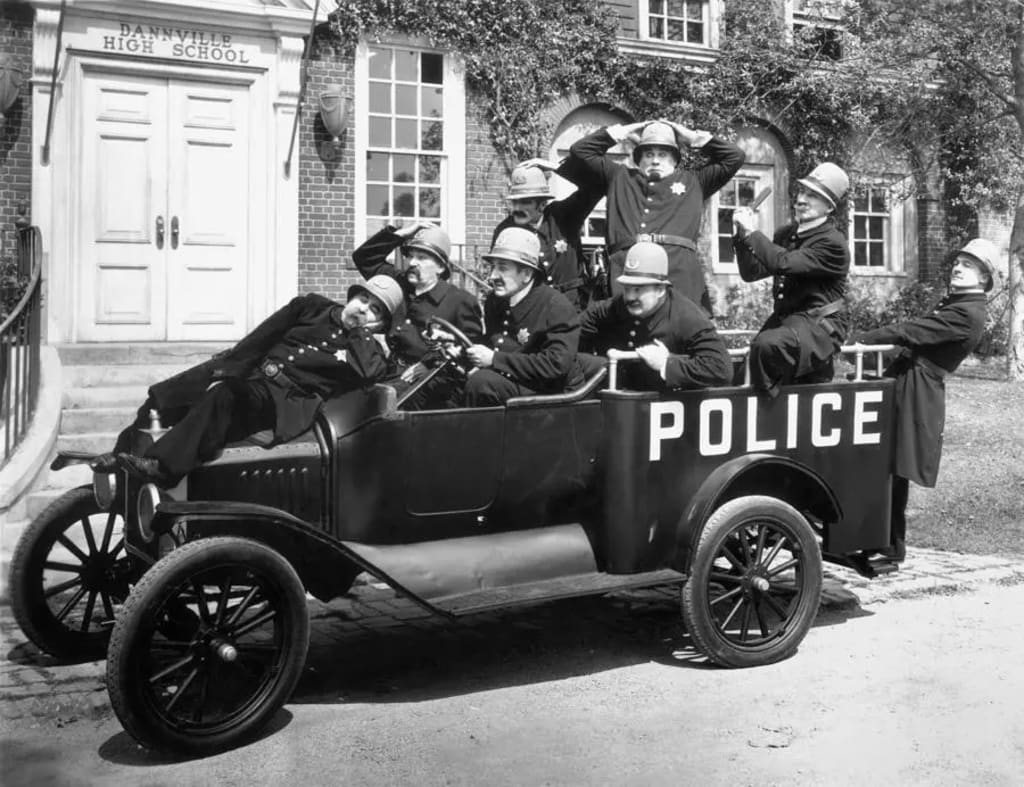
The El Paso Police Department experiences structural decay because its leadership system produces workplace-related stress that leads to depression along with anxiety and eventually workforce violence. The organizational hierarchy that comprises Chiefs and Assistant Chiefs and Lieutenants creates a deity-like atmosphere which controls officers through symbolic authority. The department maintains a hierarchical structure that demonstrates complete dysfunction starting from the Chief's Office through Internal Affairs because the promised service to the community and justice and truth have become empty rituals. The EPPD leadership crisis demonstrates that systemic collapse occurs when top officials fail which creates negative consequences for personnel and the public.
A Corporate Parallel: Leadership That Serves vs. Leadership That Sabotages
CEOs in corporate America maintain active contact with their brand image and both their staff members and customer base. Satya Nadella led Microsoft through transformation by building an innovative accountable environment and Indra Nooyi established PepsiCo's dual focus on employee welfare together with financial growth during her tenure as leader. Leaders who prioritize both mission and people enable their organizations to thrive within the capitalist framework. Research conducted by Harvard Business Review in 2021 demonstrated that organizations with engaged leadership teams which take responsibility for their actions achieved 23% higher employee contentment alongside 18% better productivity [1]. The key to success involves choosing leaders who are both experienced and mission-driven to put organizational needs above personal enrichment.
The EPPD operates under a feudal leadership system which grants Lieutenants and above absolute power without restrictions. The departmental hierarchy consisting of Chief and Assistant Chiefs and Commanders and Lieutenants and patrol officers generates multiple stressors which pass from top to bottom. Lieutenants maintain absolute protection from accountability through an unspoken rule that allows them to operate without consequences. The organization functions under a police dictatorship which pretends to be a law enforcement system. The sworn commitment to protect the community remains buried beneath an organization that favors elite personnel protection over public service.
The City Manager’s Disconnection: A Symbol of Neglect
The governance system of El Paso reaches its highest point through City Manager Dionne Mack who demonstrates a complete absence of involvement. City Manager Dionne Mack told the public that she stays out of Police Department discussions and structure since that is the role of the Chief of Police (Pacillas) and then admitted he cannot understand every detail of his work because she is too busy [2]. These statements demonstrate a concerning lack of responsibility from the leadership. The role of city manager requires active supervision of essential organizations like the EPPD but Mack displays better management skills for library operations than for overseeing a population of 700,000 residents. The lack of public input during her appointment gives the impression that she invaded a position which should belong to someone who understands community needs.
The approach to leadership selection under diversity equity inclusion metrics instead of merit-based qualifications demonstrates how Mack disconnects from her responsibilities. The goal of DEI programs is to fight systemic discrimination but such approaches can create problems in crucial fields including law enforcement because operational experience and professional competence remain essential requirements. Research from the Manhattan Institute in 2023 demonstrated how public sector recruitment decisions based on DEI instead of qualifications create dangers to institutional trust and performance [3]. Through her ineffective leadership El Paso sets a dangerous example which allows the EPPD's problems to spread without intervention.
The Lieutenant Loophole: A Culture of Untouchability
The leadership crisis within the EPPD becomes most visible when it reaches the Lieutenant rank since accountability disappears at this level. According to department insiders the department maintains a silent policy which grants Lieutenants protection from disciplinary action. The Internal Affairs unit serves as a gatekeeper for the Chief's Office by dismissing complaints against Lieutenants unless they challenge the establishment. According to Lt. Robert Zavala from Internal Affairs the department discourages lower-ranking officers from filing complaints against Lieutenants because the department wants to prevent any form of retaliation against them while supporting the Lieutenant position [4]. The department breaks its transparency promise by implementing this policy which serves no purpose except to harm their stated principles.
The consequences are dire. All officers and sergeants who disclose Lieutenant misconduct will experience severe penalties including total career destruction and permanent damage to their professional reputation. A Sergeant expressed his decision to become Lieutenant in order to get away with anything because he would have no repercussions. Anybody would believe an Officer instead of a Sergeant. A Sergeant? Good luck with that” [5]. The EPPD operates under a system which rewards ambition more than integrity thus making power the dominant force that governs the organization.
The public also does not receive satisfactory treatment. Any citizen who attempts to file complaints against Lieutenant Christopher Jones of the Northeast Regional Command Center will encounter complete radio silence. Internal Affairs has refused to respond to multiple attempts of communication including phone calls and messages and even legal representation [6]. The EPPD uses silence as a barrier to undermine community faith thus demonstrating its priority for protecting its members instead of serving the public.
A Department in Crisis: Misconduct and Moral Decay
The EPPD faces a crisis due to poor leadership which causes many instances of police misconduct to occur. The EPPD maintains records of officer misconduct that includes DWIs and family violence and assaults by both officers and Lieutenants yet few face disciplinary action [7]. The Internal Affairs detectives confirm they handle more internal complaints than external ones because they express the problem exists within the Department [8]. The department's own corruption causes its collapse which manifests as a transparent breakdown.
The behavior displayed by the department stands as one of the most remarkable examples of hypocrisy in history. The law protects Lieutenants from any form of discipline while minor infractions by officers result in their punishment. The department suspends or ostracizes officers who report abuse or excessive force yet Lieutenants avoid any form of penalty. The dual standards of conduct at work generate officer resentment which together with anxiety and depression produces toxic workplace conditions. According to research from the National Institute of Justice in 2022 poor leadership combined with police agency perceived unfairness causes officer stress and burnout to rise by 35% [9]. The EPPD operates with a demoralized force that lacks the capability to serve the community properly.
A Path Forward: Leadership That Heals
A complete reconstruction of the EPPD requires immediate attention to its leadership structure. A skilled carpenter who fights against conventional methods to achieve excellence should be the model for the department to adopt accountability at every level. Internal Affairs must use their resources to evaluate critical complaints before they handle baseless complaints and provide Lieutenants with the same level of investigation as patrol officers receive. Chief Peter Pacillas needs to demonstrate genuine leadership through integrity or resign from his position. The City Manager Dionne Mack should take actual action to address EPPD problems instead of merely performing symbolic duties.
The community needs a police force which bases its operations on trust, loyalty and transparency instead of maintaining an impenetrable wall of unaccountable Lieutenants and unengaged leaders. According to an officer the department requires leaders who demonstrate surgical skills for removing the spreading corruption from the organization [10]. The EPPD exists as a failed version of its intended purpose because no meaningful change occurs and thus it fails to protect the citizens it was sworn to serve.
References:
1. Harvard Business Review, “The Impact of Leadership on Employee Engagement,” 2021.
2. Dionne Mack, quoted in El Paso Times, “City Manager Addresses Police Department Oversight,” 2024.
3. Manhattan Institute, “DEI Hiring in Public Sector: Risks and Rewards,” 2023.
4. Lt. Robert Zavala, Internal Affairs, personal communication, 2025.
5. Anonymous EPPD Sergeant, personal communication, 2025.
6. Author’s attempts to contact Internal Affairs regarding Lt. Christopher Jones, 2025.
7. El Paso Times, “EPPD Officer Misconduct Reports,” 2023-2024.
8. Anonymous Internal Affairs Detective, personal communication, 2025.
9. National Institute of Justice, “Law Enforcement Stress and Burnout,” 2022.
10. Anonymous EPPD Officer, personal communication, 2025.
About the Creator
Steven Zimmerman
Reporter and photojounalist. I cover the Catholic Church, police departments, and human interest.
Keep reading
More stories from Steven Zimmerman and writers in Journal and other communities.
The Church Veiled
On Monday of the fourth week of Lent, I volunteered as a docent at the Basilica of San Albino in Mesilla, New Mexico. The church employs docents to keep the doors open throughout the day and to answer any questions visitors may have. Near the end of my shift, a couple entered the church and asked why the statues within the church were draped in purple cloth while the Stations of the Cross were not.
By Steven Zimmerman10 months ago in Journal
How Light Changed My Energy Without Giving Me a Boost
For most of my adult life, I thought energy worked in only one direction. You either had it or you did not. When it was gone, you pushed harder. You drank coffee. You powered through. And when that stopped working, you blamed exhaustion.
By illumipure7 days ago in Journal


Comments
There are no comments for this story
Be the first to respond and start the conversation.