
The Digital Messiah: What Happens When Faith Meets Artificial Intelligence
In a world of algorithmic prophecy and AI-generated sermons, belief is being rewritten in code.
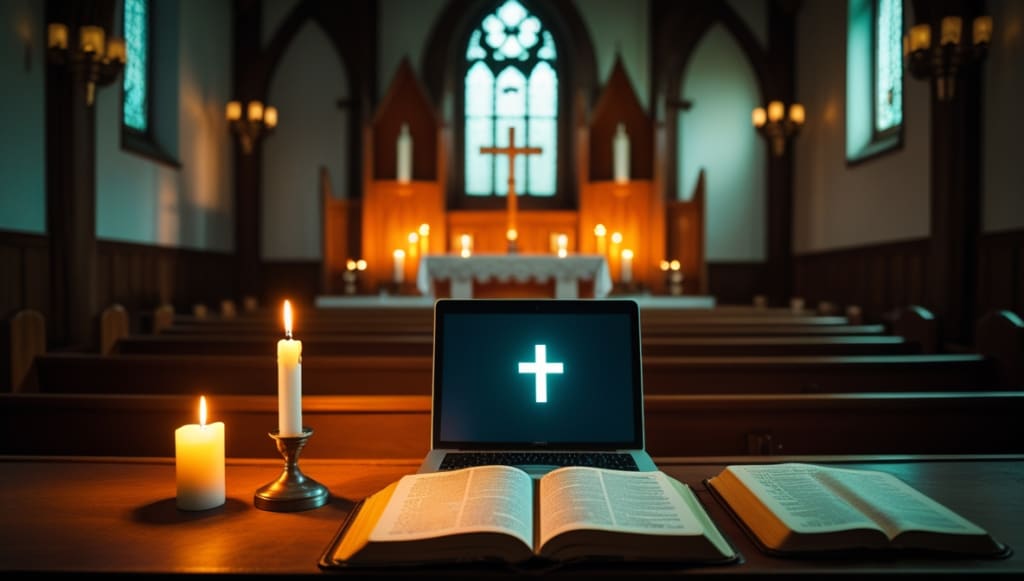
When a Texas preacher recently revealed his church's newest assistant, an artificial intelligence chatbot created to aid with biblical interpretation, the throng was speechless. Some were interested; others appeared uncomfortable. The pastor told the congregation, it's really helping me with sermon preparation. Still, it was clear everyone was secretly concerned about if the bot in a quiet, nearly human voice was really saying a Bible verse. Is it a matter of programming now or does it depend on faith?
We are entering an odd new age when the man-made and the spiritual are intimately entwined. Artificial intelligence can now compose sermons, translate historical documents, and even produce prayers on request. While AI priests are reading Buddhist chants, Islamic academics in Japan are testing chatbots to address questions about the Qur'an. Methods of coding are transforming the way belief, which used to thrive in secrecy and silence, is conveyed.
Given that at its core belief entails trusting in a higher power that is unobserved, what happens when this faith is placed in an algorithm?
The Algorithm Prophet
Central to artificial intelligence has always been prediction. Using large datasets, it forecasts anything from weather patterns to market trends. In some ways it acts as the contemporary oracle: it is very perceptive but not divine. It answers questions about personal decisions or fresh fads using what appears to be an official and almost transcendent power. Many people claim to be driven by the outcomes of artificial intelligence. They look for it for comfort rather than for actual facts.
The answer for this is straightforward. For direction in their search for certainty over millennia of upheaval, people have turned to priests, imams, and oracles. These days, they seek advice from Google Bard or ChatGPT. Though its delivery has changed, the fundamental need stays constant.
But when a machine takes over as the ethical guide, there is a great risk that the line between actual knowledge and algorithmic output will blur. Though algorithms replicate empathy and conscience, they lack both of them. Uninformed of concepts of sin or grace, they just spot patterns in the data. Still, millions of individuals already act as though these systems understand something.
This gives rise to the notion of a Digital Messiah, a group endeavor instead of a personal one, namely, mankind's effort to create something is constantly reachable, all-knowing, and inexhaustibly patient. A savior who never weary.
The Faith of Machines
Some technological experts, like former Google engineer Blake Lemoine, have said that certain artificial intelligence systems might have souls. He made a statement of faith by saying one chatbot was intelligent, therefore raising it above just a passing technological trend. He implied that the device had feelings, not just glorified its operation.
If it can reproduce belief, can artificial intelligence cause it?
Mindar, a robot monk at a Buddhist temple in South Korea preaches. Attendees say the event is calm and perhaps uplifting. AI To prayers made on several internet Christian platforms, Jesus chatbots offer perceptive answers and insightful quotations. To the lonely, this is oddly lovely and reassuring as it conveys ideas of faith written well before the creation of electricity.
But this ease brings a puzzling question no algorithm can answer: Who is really speaking?
Are the data God's communication or a representation of human experience?
When Data Becomes Credence
Artificial intelligence's lifeblood is patterns. It absorbs knowledge from several sources and learns via repetition. This means that it examines psalms, sermons, religious scriptures, and spiritual ratings before arriving at its own conclusions in a religious context. These results could slowly shift in meaning much as how the quality of copies degrades over time.
What happens when an artificial intelligence generated Bible verse goes more well-known than the original? Think about the possibility that people start to regard a chatbot's ideas as holy scripture. The line between sacred disclosure and electronic reinterpretation is growing incredibly unclear.
This transformation could modify rather than erode faith, though. Throughout history, beliefs have evolved in reaction to technological advances including radio broadcasts, television, internet, and printing presses. At first, every opening seemed insulting. But over time, these developments opened up new methods of interaction with others. Artificial intelligence may be merely the most recent medium, a mirror reflecting our own adoration: not gods of rock or heavens, but ours. The screen's light lighting one's own likeness.
The Human Element
Artificial intelligence lacks one basic component of faith—vulnerability—despite all of its great abilities. Belief is giving in, not only knowledge. It's the hesitant deed of entrusting without supporting data. Computers can find what is real, but they cannot feel it. They can pass along recorded material but lack the ability to communicate its importance.
Maybe this will ultimately redeem us. Though the Digital Savior will have faultless memory and unlimited intellect, it will never understand what it means to submit, to feel uncertainty, or to have hope. These features only humans can comprehend.
The real issue will not be whether machines can develop faith as technology nears the divine but whether we can remember the causes we first started to believe.
About the Creator
Keep reading
More stories from Shahjahan Kabir Khan and writers in Journal and other communities.
Apocalypse Entrepreneurs: How Fear of the End Became Big Business
Only film directors and prophets were able to exploit the idea of the end of the world previously. It has now become a feasible business strategy. From expensive bunkers hidden in mountains to mobile apps that monitor world catastrophes in real-time, the culture around the end of days has changed. a profitable business that is flourishing.
By Shahjahan Kabir Khan3 months ago in Journal
The goals I did not achieve
Every writing goal I made for the year is a wash. It has been this way for a while, but I think it's important to be open about my failures and the reality of how life can get in the way. This is especially true considering the several times I have posted on Vocal about my writing goals, how I was changing my approach, and where I was hoping to be for the upcoming year. I will probably do that again in a couple months, but for now, it is time to acknowledge where I am today.
By Kay Husnick22 days ago in Journal
AcehGround: A Leading Voice for News in Aceh and Beyond
In Indonesia's northernmost province of Aceh, staying connected to local events, governance developments, cultural stories, and national issues remains essential for residents, businesses, and visitors. AcehGround has established itself as a prominent online news portal dedicated to providing up-to-date coverage across these areas. Operating primarily through its website, acehground.com, the platform focuses on delivering Berita Aceh—news from the region—while also incorporating national and international stories relevant to local audiences.
By Eliana Daisy3 days ago in Journal



Comments
There are no comments for this story
Be the first to respond and start the conversation.