
Apocalypse Entrepreneurs: How Fear of the End Became Big Business
From survival bunkers to doomsday apps, selling fear has never been so profitable.
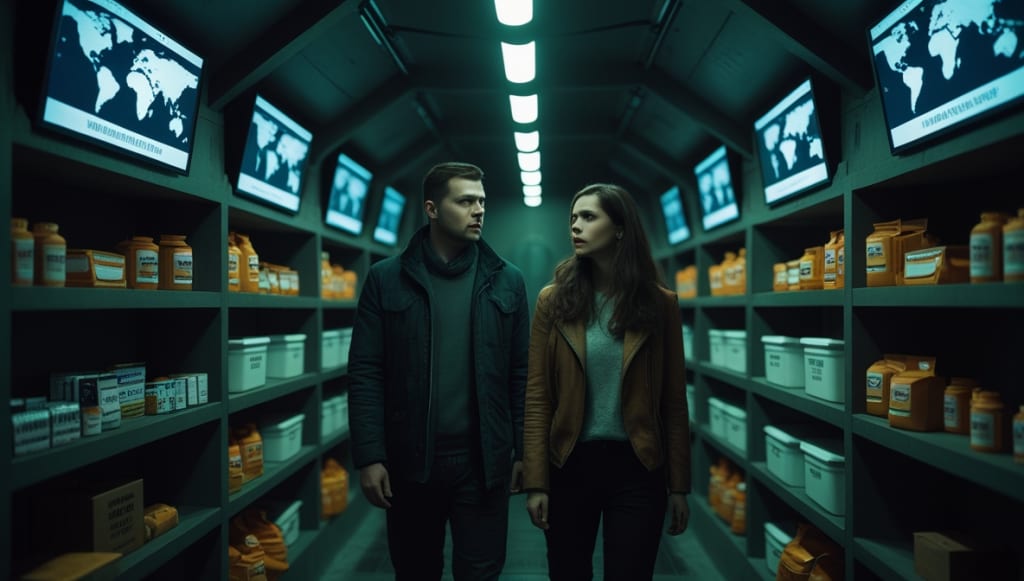
Only film directors and prophets were able to exploit the idea of the end of the world previously. It has now become a feasible business strategy. From expensive bunkers hidden in mountains to mobile apps that monitor world catastrophes in real-time, the culture around the end of days has changed. a profitable business that is flourishing.
Though every generation has pondered its own death, the concept appears to be especially salient in 2025. Fear about armed conflicts, artificial intelligence advancements, epidemics, and climate change has become a global business. Furthermore, financial opportunities exist wherever concern is found.
The Doom Trade
Planning was once seen as a specialized pastime. In case of severe storms or a power failure, it contained non-perishable food and torches. The multibillion-dollar industry is presently powered by doubt.
Companies like Oppidum in Europe and Vivos in the United States are currently selling luxury survival shelters including art studios, wine cellars, and fitness centers. These are extravagant sanctuaries for the affluent elite, not antiquated covert shelters.
With features like interior gardens recreating natural light and blast-resistant walls, the cost of a single living space may reach into millions. Marketing materials shun the term apocalypse and focus instead on concepts like heritage, safety, and the continuity of culture.
The caution is evident: even if the world's end might be close, you still might live a life of extravagance.
Employing Fear as a Marketing Approach
The end- times economy depends on a basic idea: fear sells. The increased sophistication of the marketing plans employed is what distinguishes modern development.
From streaming services, the steady stream of apocalyptic-themed content—including epidemics and alien invasions—feeds interest as well as anxiety. Social media algorithms exacerbate every disaster, accident, and sign of disruption at the same time.
The result? Anxiety that is ongoing and low-level motivates clients to look for goods that help them to feel in charge.
Real-time notifications on a range of events including seismic activity and missile launches are provided to users by two programs: Nuclear War Simulator and Disaster Tracker Pro. At present, a peace of mind membership is $4.99 monthly. Even insurance companies are getting involved by offering climate disaster policies that span everything from residences to crypto assets.
In essence, we have turned survival into a subscription service.
Tech Meets the End of the World
The IT sector has also found chances to capitalize on anxiety. New businesses are advertising blockchain-supported havens— exclusive enclaves for the rich that can work independently if society collapses.
Wealthy people silently sponsor resilience programs in Silicon Valley: hidden retreats in New Zealand, underground agriculture, and even efforts aimed at colonizing space. Not as a spiritual experience but as a practical matter, they are preparing for the apocalypse.
Technological elites often see themselves as its, as philosopher Douglas Rushkoff noted in his book Survival of the Richest. Their angle inclines more toward "escaping the world" than "saving the world."
The Middle- Class Apocalypse
However, not just the rich are meant to benefit from apocalyptic entrepreneurship. It has spread to the populace at large.
Social media stars on TikTok are promoting "bug-out bags"—survival kits including self-defense tools, freeze-dried food, and gear. From radiation sensors to water filters, Amazon has many "doomsday preparedness" items.
Even garment businesses have joined the trend by providing "tactical chic" garments: waterproof coats with secret pockets and survival accessories.
Some of this is actual preparedness—after all, recent years have shown us how frail "normal" can be—but it also reveals a more fundamental reality: a general disillusionment with the future.
People are not just preparing for the end; they are also emotionally dealing with it. Companies are creating lovely designs containing that emotional adaptation.
The Morality of Selling Fear
Behind all the promotion is an unsettling reality: fear turns profitable only when people remain terrified.
Companies providing "safety" have little reason to address those concerns as more disasters strike. Actually, a state of panic helps their sales. Every fresh disaster might seem like justification of a horrible forecast, blurring the line between sincere care and emotional manipulation.
Sociologists call this the "fear economy," a continuous cycle whereby the media magnifies anxiety, customers search for comfort, and businesses benefit from a hallucination of control.
Seen this way, the entrepreneurship around catastrophic themes is less concerned about survival and more concerned about story. It implies that though we cannot stop the end, we may buy tools to help us to negotiate it.
Hope: The Last Frontier
Still, within this scary setting, there is a surprising change: a small form of resistance. Rejecting the "purchase your safety" strategy, some communities are choosing for group resiliency by getting involved in local agriculture, setting up community shelters, and organizing renewable energy co-ops.
They are choosing to strengthen rather than run from reality.
Maybe actual survival is found not in solitude but in cooperation.
Amid calamities, apocalyptic businesses offer reassurance. But actual hope, the kind that supports civilizations, has always come from relationships between people—from those who resist to accept the end as a commercial good.
Perhaps the biggest irony is that while the idea of the apocalypse has been commercialized, the most potent barrier of mankind has never been for sale.
About the Creator
Keep reading
More stories from Shahjahan Kabir Khan and writers in Journal and other communities.
The War for Water: Why the Next Global Conflict Won’t Be About Oil
For over a century, oil has greatly changed the global power dynamics. It has started wars, constructed empires, and defined riches. As global temperatures increase and water resources run out, though, a more muted but still urgent conflict is rising for blue assets instead of black gold.
By Shahjahan Kabir Khan4 months ago in Journal
The goals I did not achieve
Every writing goal I made for the year is a wash. It has been this way for a while, but I think it's important to be open about my failures and the reality of how life can get in the way. This is especially true considering the several times I have posted on Vocal about my writing goals, how I was changing my approach, and where I was hoping to be for the upcoming year. I will probably do that again in a couple months, but for now, it is time to acknowledge where I am today.
By Kay Husnick24 days ago in Journal
Why SEO Became the Quiet Salesperson Every Car Dealership Needs
I still remember the day our showroom was spotless, the cars were polished, and the sales team was ready—but hardly anyone walked in. It didn’t make sense at first. We had competitive pricing, trusted brands, and years of experience. Yet the phone barely rang. That moment forced me to confront a truth many car dealers avoid: buyers no longer start their journey on the lot. They start online.
By Anthony Rodgers4 days ago in Journal


Comments
There are no comments for this story
Be the first to respond and start the conversation.