
📱 The Day America Looked Away: How Apple Lost Its Magic—and How It Can Rise Again
Why a nation that once worshipped the iPhone is quietly walking away in 2025
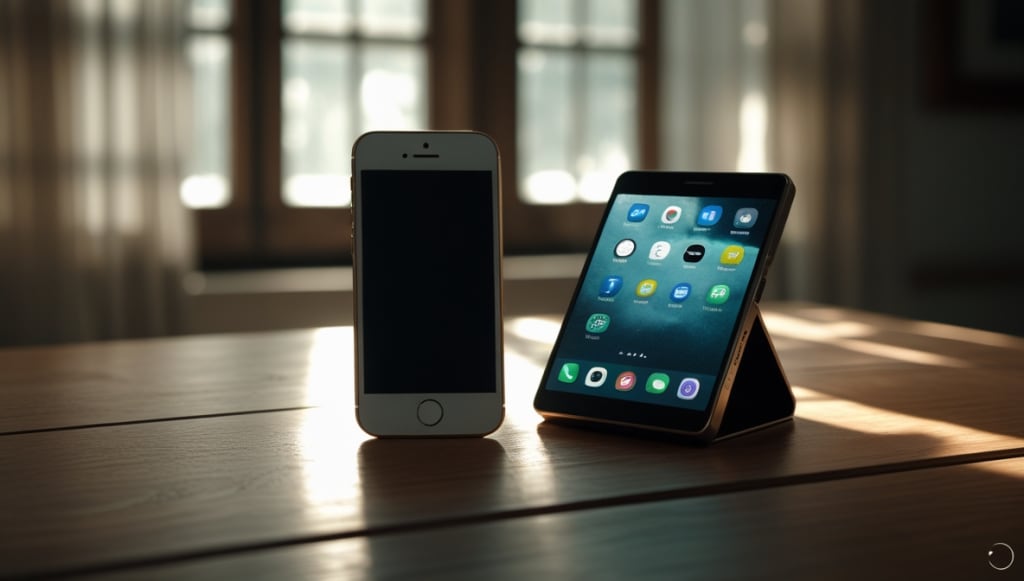
For almost two decades, the iPhone wasn’t just a phone—it was a cultural event. A badge of identity. A signal that you belonged to the future. When that first iPhone launched in 2007, it cracked open the sky. The world shifted. Suddenly, the device in your hand wasn’t a gadget—it was a revolution.
But today, in 2025, something unprecedented is happening. And it’s happening inside the United States, Apple’s home turf.
iPhone sales are declining.
Switching from iPhone to Android is rising faster than at any point in history.
User satisfaction is at a record low.
On the surface, everything still gleams: the glass, the aluminum, the billboards, the carefully lit ads. But beneath all of that shine lies a truth Apple never wanted anyone to see.
Apple isn’t just slowing down. Apple is losing itself.
The Company That Once Stopped the World
To understand today’s crisis, we have to remember something people often forget: Apple was once on the edge of extinction.
In the late 90s, Apple had about 90 days left to live. Then came the iMac—colorful, bold, artistic. A piece of technology that looked like it escaped a museum of modern art. It didn’t just save Apple. It resurrected it.
Then came the iPod.
Then the iPhone.
Then the iPad.
Each device wasn’t just a product release—it was a message. A declaration that technology could be emotional. Beautiful. Humans.
When Steve Jobs stepped onto a stage, millions leaned forward, breath held, waiting for that magic phrase:
“One more thing…”
People didn’t clap because they were impressed.
They clapped because they were moved.
No tech company has ever replicated that feeling.
And maybe no tech company ever will.
The Day the Compass Broke
2011 changed everything.
When Steve Jobs passed away, buildings across the country lit up the Apple logo—not for a CEO, but for a creator who turned circuits into culture. His absence didn’t immediately break Apple. But it removed the company’s most important sensor: the one that could feel what people wanted before they knew it.
Tim Cook transformed Apple into a financial superpower—one that soared past $3 trillion. But Cook is a maestro of supply chains, not symphonies. Under him, Apple slowly shifted from bold innovation to careful optimization.
The cracks began as whispers:
Design teams shrinking.
Finance teams gaining power.
Jony Ive leaving.
A Boeing CFO joined the board.
Engineers described the shift perfectly:
“We replaced the conductor with the accountant.”
The transformation wasn’t loud.
It wasn’t dramatic.
But it changed Apple’s DNA.
And quietly, America began to notice.
The Era of Tiny Upgrades and Giant Prices
For nearly a decade, new iPhones felt like... old iPhones wearing new clothes.
A bit thinner.
A bit faster.
A camera that’s 15–20% better.
A new color to justify the hype.
This wasn’t innovation.
This was repetition.
And at the same time, prices soared—30–40% higher in just five years—while creativity flatlined.
Americans started asking questions Apple didn’t want to hear:
- “Why am I paying more, but getting less?”
- “Why do my accessories feel like a hidden tax?”
- “Why does the most expensive phone feel the least exciting?”
Apple’s ecosystem, once magical, became restrictive.
The App Store’s 30% fee felt like an invisible toll booth.
Developers left.
Users felt locked in, not welcomed.
A luxury apartment is only beautiful until the doors stop opening.
And Then Came the AI Era—Without Apple
While Google and Samsung sprinted into the AI revolution, Apple… walked.
Slowly.
Painfully.
In the age of AI-first smartphones—where Pixel phones summarize articles instantly and Galaxy devices translate conversations in real time—Siri remained stuck in 2011.
One American user summed up the national sentiment:
“I haven’t used Siri in 10 years. What’s the point?”
WWDC 2024 was supposed to be Apple’s big comeback. “Apple Intelligence” was the new crown jewel.
But insiders revealed the ugly truth:
- Many demos were staged
- Most features weren’t ready
- Promised releases slipped from 2024 → 2025 → 2026
- Siri’s true AI upgrade isn’t expected until 2027
Apple was selling movie tickets with no finished script.
And Americans felt betrayed.
That’s the worst emotion a brand can trigger.
What America Is Turning Toward Instead
If the fall of Apple feels dramatic, the rise of its rivals feels electric.
Samsung brings the wow factor.
Open a Galaxy Fold in a coffee shop and everyone turns their head. It’s the 2007 iPhone effect all over again—just wearing a different logo.
Google brings intelligence.
Real-time translation, article summarization, AI photo edits, message suggestions—all working day one, not “coming next year.”
These phones don’t just look new.
They feel new.
And that’s what Americans crave again.
The symbol of status is shifting from iPhone owner to AI-native.
It’s not about the logo anymore.
It’s about the future.
Is Apple Too Late? Or Is This Their Chance to Rise Again?
Apple is still incredibly powerful.
The ecosystem remains unmatched.
The brand remains titanium-strong.
America isn’t leaving Apple because it hates Apple.
America is leaving because Apple stopped being the Apple they once loved.
So what would bring people back?
- A Siri that truly thinks
- A foldable or transformative iPhone
- A new product category that feels like the iPhone moment
- A return to design-first, imagination-first philosophy
- A leadership culture that values creators over accountants
Apple doesn’t need to return to 2007.
It needs to return to courage.
The courage to risk.
To my surprise,
To lead again.
Because deep down, Americans don’t want to abandon the iPhone.
They’re just waiting for Apple to give them a reason to believe again.
About the Creator
Keep reading
More stories from Shahjahan Kabir Khan and writers in Journal and other communities.
The Attention Economy: Why Our Brains Are Losing the Battle Against Notifications
The current world has a curious paradox: Although we have a lot of tools designed to improve our focus—productivity software, scheduling applications, alert systems, artificial intelligence prompts—we are still more distracted than ever in documented history.
By Shahjahan Kabir Khanabout a month ago in Journal
The goals I did not achieve
Every writing goal I made for the year is a wash. It has been this way for a while, but I think it's important to be open about my failures and the reality of how life can get in the way. This is especially true considering the several times I have posted on Vocal about my writing goals, how I was changing my approach, and where I was hoping to be for the upcoming year. I will probably do that again in a couple months, but for now, it is time to acknowledge where I am today.
By Kay Husnick23 days ago in Journal
Finding Your Tribe: How to Spot Kindred Spirits and Create Meaningful Connections
In a world increasingly dominated by fleeting digital interactions, the longing for genuine connection and belonging resonates deeply. We yearn to find those individuals who "get" us, who share our values, passions, and perspectives – our kindred spirits. Identifying these individuals and forging meaningful connections with them can enrich our lives immeasurably, fostering a sense of purpose, belonging, and shared joy. But how do we navigate the crowded social landscape and successfully spot these kindred spirits amidst the noise? And, more importantly, how do we cultivate those initial sparks into lasting, fulfilling relationships?
By Wilson Igbasi2 days ago in Journal


Comments
There are no comments for this story
Be the first to respond and start the conversation.