
The Attention Economy: Why Our Brains Are Losing the Battle Against Notifications
Scientists warn that constant digital interruptions may be reshaping how our minds focus, think, and remember.
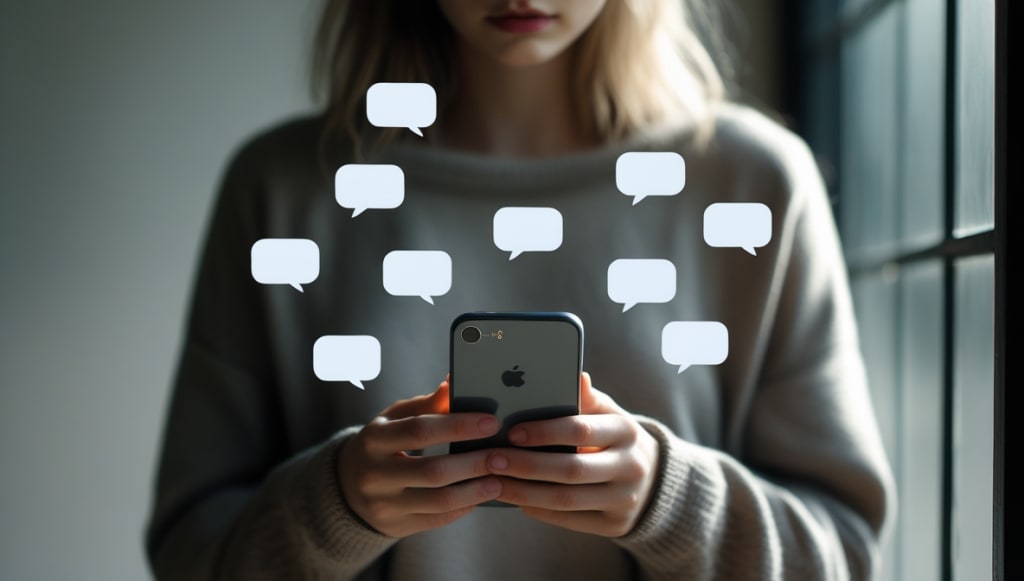
The current world has a curious paradox:
Although we have a lot of tools designed to improve our focus—productivity software, scheduling applications, alert systems, artificial intelligence prompts—we are still more distracted than ever in documented history.
And this is not unintentional.
It has a purpose in mind.
Applications now employ us as well. Behavioral scientists' accuracy matches the manner algorithms vying for our attention. Alarms serve as invitations to re-engage rather than only indications. Every ding, vibration, and message is meant to draw us back into the cycle of online engagement.
The Brain Was Not Built for This
Biologically, the human brain has developed to focus for several hours instead of constantly wandering off course. Early people needed ongoing attention to track prey, investigate surroundings, and overcome survival obstacles. Dopamine rewarded the brain's sense of fulfillment from finishing a project.
Today, dopamine enhances brief contacts:
- One answer to a message
- thumbs-up
- a movie
- Scroll downward
- An alert
Often too many to count, we center on many brief examples. Rarely are we ever entirely there; rather, we are in a condition of partial awareness, continually half ready for the upcoming alert.
Notifications Aren’t Random — They’re Strategy
People often describe notifications as “distractions,” but that word is misleading. Distraction is accidental. Notifications are intentional.
Apps behave like:
- street vendors shouting for attention
- casino machines flashing lights
- advertisers interrupting conversations
- taps on the shoulder from invisible hands
Every notification is a micro-claim on our focus.
And these claims add up.
Studies show that after a single interruption, it can take 20–30 minutes to regain deep concentration. Yet we allow dozens per day.
The math is brutal:
We are losing hours — even days — of cognitive clarity.
The Mind in Fragment Mode
Here’s the subtle cost:
We begin reading a message while half-thinking about email…
We check email while still emotionally processing a TikTok…
We glance at TikTok while expecting a notification…
We are increasingly living in a state of anticipatory distraction.
Not distracted because something interrupted us —
Distracted because something might.
We carry a constant low-level readiness to react.
This changes:
- how deeply we think
- how long we focus
- what we remember
- what we prioritize
Our minds become like browsers with 50 tabs open, switching rapidly, never closing.
Memory — The Vanishing Casualty
Scientists are particularly concerned about one quiet consequence:
Our memory.
When our attention is fractured, we encode less information into long-term storage. We experience moments, but we don’t retain them. We read texts but don’t absorb them. We hear words but don’t internalize them.
It’s not that we’re becoming forgetful in the traditional sense.
It’s that our brains never stored the information to begin with.
Micro-Jolts of Stress
Even when notifications are neutral or meaningless, each alert sparks a neurological response. The brain experiences a tiny spike in cortisol — the stress chemical — as attention forcibly shifts.
Multiply that by:
- 70 notifications a day
- thousands per month
- tens of thousands per year
The modern human brain is living in a perpetual on-edge state — not high stress, but constant micro-stress.
The result?
Mental fatigue without understanding why.
The New Social Norm: Constant Availability
A strange cultural pressure now exists:
If you don’t respond fast, you’re seen as ignoring someone.
If you don’t stay reachable, you’re seen as unavailable.
If you don’t engage, you’re seen as uninterested.
We have blurred the line between:
being accessible and being interruptible.
People now expect instant answers — not because they matter urgently, but because technology makes instant replies possible.
The Silent Rebellion: Turning Things Off
Quietly, a counter-movement is forming.
Some people have:
- disabled notifications
- removed social apps from their home screens
- set phones to silent
- scheduled no-screen hours
- returned to analog tools
- rediscovered reading
- embraced boredom intentionally
These individuals describe something surprising:
Not more productivity…
…but more peace.
They feel their thoughts returning to longer arcs.
Their thinking becomes deeper, calmer, less reactive.
They feel like themselves again.
Redefining Attention as a Resource
For years, data was called the “new oil.”
Now, attention is the new gold.
Because:
Where attention goes, life goes.
If our attention is constantly hijacked,
then in a real sense…
our lives are being shaped by whoever interrupts us most.
Notifications seem trivial, but they influence:
- what we think about
- what we care about
- what we remember
- what we feel
- who we become
A Question We All Must Ask
Here’s a simple reflection — one that might feel uncomfortable:
When was the last time you were alone with your thoughts,
with no device nearby,
no vibration pending,
no digital presence lingering?
When was the last time your mind wandered freely, uninterrupted?
Do you even remember what that feels like?
The Choice Going Forward
This is not a call to abandon technology.
It’s not anti-phone, anti-app, or anti-innovation.
It is about reclaiming agency.
We can decide:
- which notifications matter
- which platforms deserve our time
- which interruptions earn attention
- which apps respect our minds
- which signals are worth responding to
Focus is not something we’ve lost accidentally —
it’s something we’ve surrendered gradually.
And now, we have the chance to take it back.
Final Thought
The attention economy thrives on reaction, not reflection.
But humans were made for depth, imagination, and thought — not perpetual interruption.
Technology should amplify our minds — not fragment them.
Our attention is the most valuable currency we possess.
And the future will belong to those who learn to protect it.
#AttentionEconomy #TechAndSociety #DigitalLife #Psychology #HumanBehavior ]#Mindfulness #Focus
About the Creator
Keep reading
More stories from Shahjahan Kabir Khan and writers in Journal and other communities.
Apple’s Boldest Comeback Yet — Inside the Transparent MacBook “VISION” That’s Redefining the Future of Laptops
Apple’s Most Daring Move in Years Every several years, Apple makes a move that changes the discourse and upsets the industry. Apple has picked a different playing field this time; competitors swarm the market with folding smartphones, dual-screen models, AI-powered laptops, and innovative gadgets.
By Shahjahan Kabir Khanabout a month ago in Journal
How to Grow a Psychology Business After Purchase
Introduction Purchasing a psychology business is only the first step toward long-term success. Sustainable growth requires strategic planning, operational refinement, and thoughtful leadership. New owners must balance continuity with improvement, ensuring that quality of care remains high while expanding services and revenue. A structured growth strategy helps stabilize the practice post-acquisition and creates a foundation for scalability, profitability, and clinical excellence.
By Abdul Mueed4 days ago in Journal




Comments
There are no comments for this story
Be the first to respond and start the conversation.