
The D-Chowk Grand Operation: A Deep Dive into the PTI Protests
A Closer Look at the PTI Protests and the Government's Response in Islamabad

Introduction
On November 26, 2024, Islamabad became the epicenter of a significant political upheaval as supporters of the Pakistan Tehreek-e-Insaf (PTI) party clashed with security forces in a bid to demand the release of their jailed leader, former Prime Minister Imran Khan. This protest, dubbed the "grand operation," unfolded in D-Chowk, a central square known for its political significance. The events that transpired during this operation not only highlighted the tensions between the government and the PTI but also raised serious concerns regarding human rights and the use of force by authorities.
Background of the Protests
Imran Khan's Imprisonment: Imran Khan has been incarcerated for over a year, facing multiple charges that his supporters claim are politically motivated. His imprisonment has galvanized his followers, who view the current government as illegitimate following what they describe as rigged elections.
PTI's Demands: The protesters are not only calling for Khan's release but also demanding the resignation of Prime Minister Shehbaz Sharif's government. They seek to restore the constitution and free all political prisoners, emphasizing their desire for genuine democracy in Pakistan.
The Build-Up to D-Chowk
Mobilization of Supporters: In the days leading up to the protest, PTI supporters from across the country began converging on Islamabad. The main convoy, led by Khan's wife, Bushra Bibi, faced numerous obstacles, including police barricades and arrests, as they made their way to the capital.
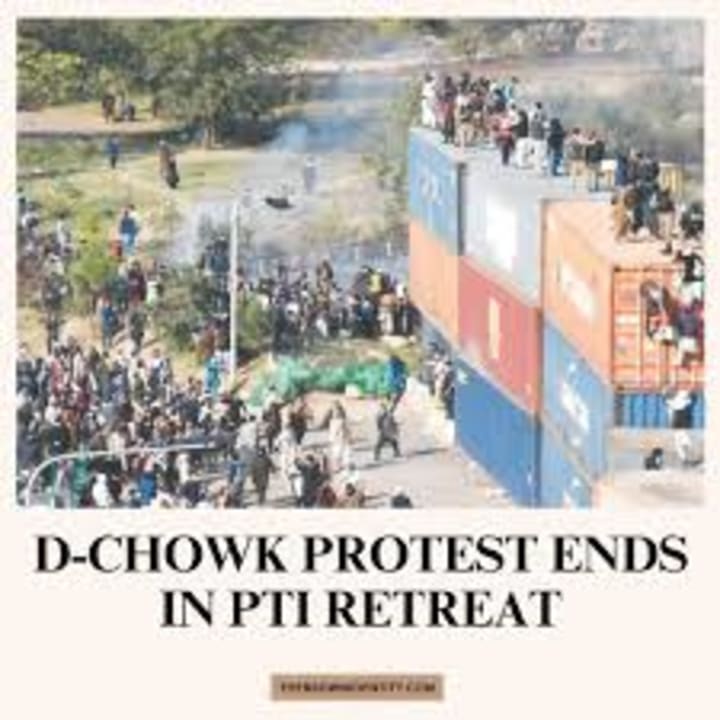
Government Response: Anticipating the protests, the government imposed severe restrictions, including a lockdown in Islamabad, the suspension of mobile and internet services, and the deployment of thousands of police and paramilitary forces. Authorities used shipping containers and barbed wire to block access to D-Chowk, the intended protest site.
Clashes Erupt at D-Chowk
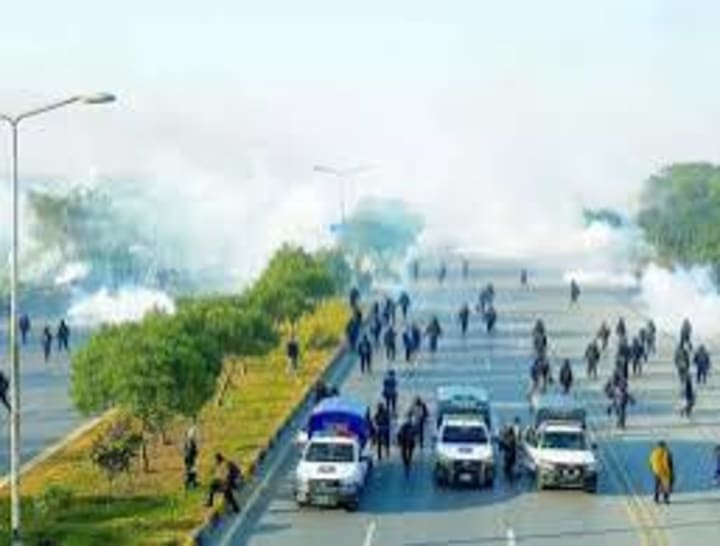
Violent Confrontations: As protesters attempted to breach security barriers, clashes erupted. Security forces responded with tear gas, rubber bullets, and live ammunition, leading to chaos in the streets. Reports indicate that at least six people, including paramilitary soldiers, were killed, and many others were injured during the confrontations.
Human Rights Violations: Amnesty International condemned the government's actions, highlighting the excessive use of force and the violation of protesters' rights to peaceful assembly. The organization called for the immediate revocation of "shoot-on-sight" orders issued to security forces.
International Reactions
Global Outcry: The violent suppression of the protests drew international attention, with various human rights organizations and political leaders worldwide condemning the actions of the Pakistani government. U.S. lawmakers expressed solidarity with the protesters, urging the Pakistani authorities to respect human rights and allow peaceful demonstrations.
Media Coverage: Journalists on the ground reported harrowing accounts of the violence, with some expressing fears for their safety while covering the events. The situation in D-Chowk was described as a "virtual siege," with the capital under heavy security lockdown.
Khan's Message from Prison
Call to Action: From his prison cell, Imran Khan issued a statement urging his supporters to remain peaceful and united in their struggle for democracy. He commended the bravery of the protesters and emphasized the importance of their fight against what he termed a "mafia" that has taken control of the country.
Support from Overseas: Khan also acknowledged the support from overseas Pakistanis, who have been mobilizing protests in various countries, amplifying the call for justice and democracy in Pakistan.
Conclusion
The D-Chowk grand operation marked a pivotal moment in Pakistan's ongoing political crisis. The violent clashes between PTI supporters and security forces underscored the deep divisions within the country and raised critical questions about the state of democracy and human rights in Pakistan. As the situation continues to unfold, the resilience of the PTI and the determination of its supporters will play a crucial role in shaping the future of the nation. The international community's response will also be vital in holding the Pakistani government accountable for its actions and ensuring that the rights of its citizens are upheld.
About the Creator
Danish Asif
Start writing... I strive to deliver high-quality writing that not only informs but also inspires action and discussion. Let me help you communicate your message effectively and creatively.
Keep reading
More stories from Danish Asif and writers in Journal and other communities.
Tensions Rise in Pakistan as Imran Khan's Supporters Converge on Parliament
On November 26, 2024, Islamabad, the capital of Pakistan, became a battleground of political unrest as thousands of supporters of former Prime Minister Imran Khan gathered near the parliament. This event marked a significant escalation in the ongoing political crisis that has gripped the nation since Khan's ousting from power in April 2022. The situation intensified when the government invoked Article 245 of the Constitution, calling in the army to maintain law and order amidst violent clashes between protesters and security forces. This article delves into the background of the protests, the motivations behind them, the government’s response, and the broader implications for Pakistan's political landscape.
By Danish Asifabout a year ago in Journal
The Quiet Revolution in Your Software: How Everyday AI Copilots Became My Secret Weapon for Growth.
The Day Everything Changed: How AI Copilots Pulled My Business (And My Sanity) Back from the Brink Let’s be real. You’re probably here because you’re tired. Tired of the endless to-do list, the creative block that hits at 3 PM, the feeling that you’re running a marathon on a hamster wheel. I know, because that was me. My name’s Jamie, and for three years, I’ve run a niche digital marketing site that was, by all accounts, “successful.” Good traffic, decent revenue. It was also a monster that consumed my nights, my weekends, and my love for the work.
By John Arthor3 days ago in Journal




Comments
There are no comments for this story
Be the first to respond and start the conversation.