
The Black Sea's Boiling Point
Could a War with Russia Spell Turkey's Eradication? Examining the Unthinkable
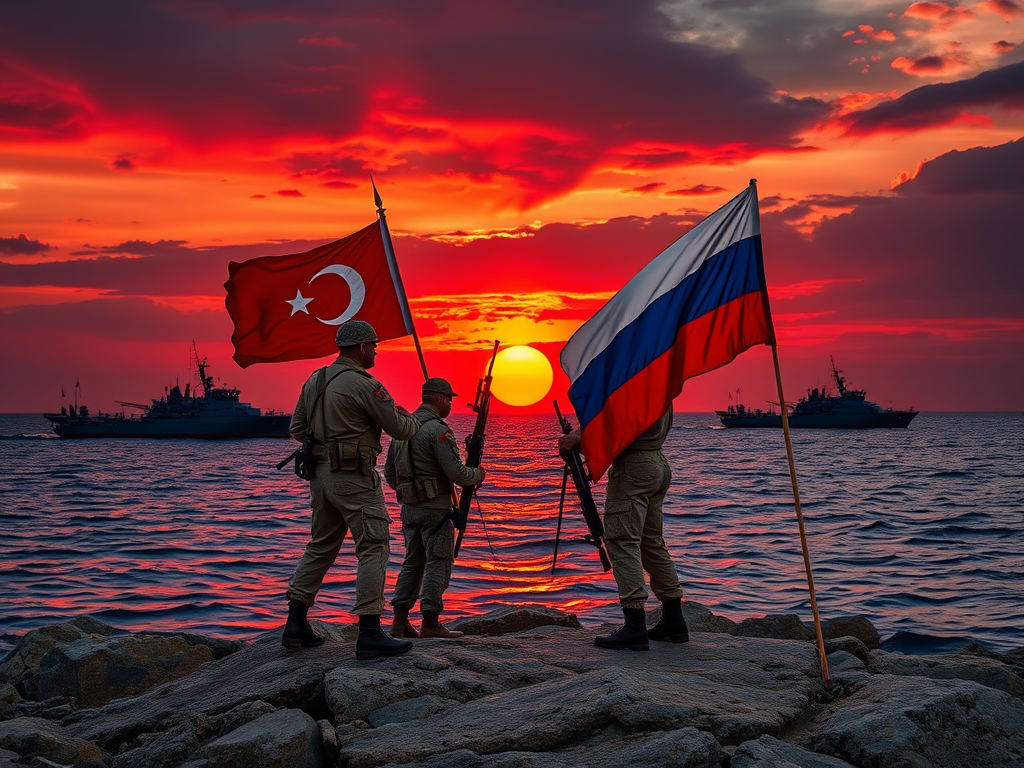
The Black Sea's Boiling Point: Could a War with Russia Spell Turkey's Eradication? Examining the Unthinkable
Introduction:
The Black Sea, a body of water crucial for trade and geopolitics, has become a tinderbox of escalating tensions between Turkey and Russia. While outright conflict remains, for now, a worst-case scenario, it's essential to soberly consider the potential consequences – including the unthinkable. Could a full-scale war between these two powerful nations, particularly within the volatile context of the Black Sea, realistically lead to Turkey's elimination from the world map? The answer is complex, but the risks involved demand careful examination.
Understanding the Geopolitical Landscape:
To analyze the potential for such a catastrophic outcome, we need to understand the key factors at play:
NATO Membership: Turkey is a member of NATO, a military alliance whose core principle is collective defense. An attack on Turkey would, in theory, trigger a response from all NATO members, potentially escalating a regional conflict into a global one.
Military Capabilities: Both Turkey and Russia possess significant military capabilities, including advanced weaponry, naval forces, and air power. A direct conflict would be devastating for both sides.
Strategic Importance: Turkey controls the Bosphorus and Dardanelles Straits, which are vital for Russia's access to the Mediterranean Sea. Any disruption to this access would have severe economic and strategic consequences for Russia.
Regional Conflicts: Turkey and Russia have found themselves on opposing sides in several regional conflicts, including Syria, Libya, and, indirectly, Ukraine. This has created a climate of mistrust and heightened the risk of escalation.
Domestic Political Considerations: Domestic political pressures in both countries can influence their foreign policy decisions. Nationalist sentiments and the desire to project strength can sometimes lead to reckless actions.
Why "Eradication" Is Unlikely in the Literal Sense:
It's crucial to state upfront that the complete physical eradication of Turkey as a nation is highly improbable. Several factors mitigate against this scenario:
NATO Intervention: A direct and unprovoked attack on Turkey that threatened its very existence would almost certainly trigger a response from NATO, potentially involving military intervention.
Global Condemnation: Such an act of aggression would be met with widespread condemnation from the international community, leading to severe economic sanctions and diplomatic isolation for Russia.
Nuclear Deterrent: While neither Turkey nor Russia is likely to use nuclear weapons in this scenario, the existence of nuclear arsenals acts as a deterrent against large-scale aggression that could threaten the existence of either nation.
However, "Elimination" Can Take Other Forms:
While physical obliteration is unlikely, a war between Turkey and Russia could lead to the "elimination" of Turkey in other significant ways:
Territorial Losses: Russia could attempt to seize control of key strategic territories within Turkey, particularly areas along the Black Sea coast or near the Bosphorus and Dardanelles Straits. While unlikely to encompass the entirety of Turkey, significant territorial losses would cripple the nation.
Economic Collapse: A protracted war would devastate Turkey's economy, leading to widespread unemployment, poverty, and social unrest. This could weaken the country to the point where it is unable to function effectively as a sovereign nation.
Political Instability and Fragmentation: A war could exacerbate existing political divisions within Turkey, leading to internal conflict and potentially the fragmentation of the country into smaller, weaker entities.
Loss of Sovereignty and Influence: A war could leave Turkey heavily dependent on external powers for its security and economic survival, effectively diminishing its sovereignty and influence in the region.
Demographic Catastrophe: Even without direct occupation or complete obliteration, prolonged conflict could lead to massive migration out of the country, particularly of skilled and educated citizens, resulting in a demographic collapse.
Scenarios to Consider:
To understand how such outcomes could unfold, consider these potential scenarios:
A Limited War Escalates: A localized conflict in the Black Sea, perhaps involving a naval incident or a clash over disputed territories, could escalate out of control due to miscalculations or misinterpretations.
Internal Conflict in Turkey: A major political crisis or civil unrest within Turkey could create an opportunity for Russia to intervene, either directly or indirectly, to destabilize the country and advance its own interests.
NATO Weakness or Division: If NATO is unable to respond effectively to a Russian attack on Turkey due to internal divisions or a lack of political will, Turkey would be left vulnerable.
Conclusion:
While the literal elimination of Turkey from the world map is highly improbable, a war with Russia could have devastating consequences for the country, potentially leading to significant territorial losses, economic collapse, political instability, and a diminished role in the region. The risks involved are too great to ignore.
It is imperative that both Turkey and Russia exercise restraint, engage in dialogue, and prioritize diplomatic solutions to their disputes. The international community must also play a proactive role in de-escalating tensions, promoting regional stability, and preventing a catastrophic conflict in the Black Sea. The future of Turkey, and indeed the stability of the entire region, depends on it.
About the Creator
Wheels of Energy: Understanding the Seven Main Chakras and Their Role in Well-Being.
The chakra system forms a foundational concept in many Eastern spiritual traditions, particularly yoga, Ayurveda, and Tantra. The Sanskrit word "chakra" translates to "wheel" or "disk," referring to spinning vortexes of energy within the subtle body. These centers are believed to regulate the flow of prana (life force energy) throughout the body, influencing physical health, emotional balance, mental clarity, and spiritual growth.
By Wilson Igbasi3 days ago in Journal
Worth the Wait: Puerto Viejo, Costa Rica
Beach bumming in a small Caribbean beach town sounded like a perfect way to end our 6-month trip through Mexico and Central America. Or so we thought. The foul, fishy stench of rotten seaweed hit our nostrils as we stepped from the cramped bus and looked out at a rather depressing, empty, and underwhelming black sand beach. It was pouring with rain, and we had to quickly fish out our ponchos. We thought, this couldn’t be it, could it?
By Sh*t Happens - Lost Girl Travel4 days ago in Wander




Comments (1)
Wow, such a sad war. Good report