
The Aesthetic Influence of Transparency in Structural Design
Exploring the Structural, Sensory, and Aesthetic Roles of Transparency in Modern Ride and Attraction Design
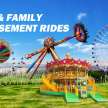

Transparent materials have long captivated designers and engineers due to their ability to combine structural integrity with visual subtlety. In the context of architectural installations, amusement structures, and exhibition design, the deliberate use of transparency introduces a complex interplay between visibility, reflection, and spatial fluidity. This article examines the nuanced visual impact of transparent materials and their implementation in engineered attractions such as the swing ride and Ferris wheel.
Transparency as a Design Mechanism
Transparency is not merely a visual trait—it is an active component in how space is perceived and navigated. In built environments, transparent surfaces such as glass, acrylic, and polycarbonate serve to both reveal and conceal, enabling light transmission while maintaining the illusion of open space. The visual lightness these materials offer is particularly valuable in large-scale kinetic structures where mass and motion coexist.
Consider the structural envelope of a swing ride. When manufactured using transparent components, such as canopy segments or barrier panels, the ride presents a visually de-materialized appearance. This creates a floating sensation for riders and observers alike. Unlike opaque constructions that enclose and define boundaries, transparent materials dissolve visual confines, heightening the sense of elevation and exposure during operation.
Visual Continuity and Spatial Perception
The use of transparency fosters a continuous visual field, blurring distinctions between interior and exterior zones. This is essential in urban amusement installations where integration into the surrounding environment is a key concern. For example, a Ferris wheel positioned in a dense metropolitan area can benefit from transparent cabins or support cladding. This minimizes visual obstruction, preserves skyline integrity, and enhances daylight permeability.
From a design engineering standpoint, transparency also supports perceptual modulation. The human eye is drawn to contrast and complexity. When layered with reflections and translucencies, transparent surfaces create a dynamic aesthetic, altering with the angle of view and ambient lighting. The optical variability offers a sense of depth that opaque surfaces cannot replicate, enriching the sensory engagement of the audience.
Material Selection and Technical Considerations
Material choice is paramount in achieving effective transparency. Glass, while visually pristine, imposes constraints due to its weight and fragility. In kinetic applications like swing ride or observation wheel cabins, polycarbonate and acrylic alternatives offer significant advantages. These thermoplastics deliver high impact resistance, UV stability, and ease of thermoforming, making them suitable for both aesthetic and functional roles.
To mitigate glare and unwanted reflection, designers often incorporate anti-reflective coatings or surface texturing. This enhances clarity while maintaining safety and performance. Laminated transparent materials can also be embedded with functional films—offering solar control, coloration, or gradient opacity—adding another layer of design modulation.
Psychological Impacts and User Experience
Transparent structures exert a powerful influence on psychological perception. Heightened visibility correlates with increased sensory stimulation, especially in elevated or suspended environments. Riders of a swing ride encased in a transparent barrier experience a heightened awareness of movement and altitude. This sensation amplifies thrill while reducing visual confinement, which can mitigate claustrophobia and enhance comfort.
For Ferris wheel passengers, transparent cabins transform the observation experience into a panoramic encounter. The absence of visual impediments allows for immersive viewing, promoting a sense of flight rather than enclosure. This approach not only increases user satisfaction but also extends dwell time—an important metric in high-traffic entertainment settings.
Integration in Themed Design Contexts
In thematic environments, transparency allows for narrative layering. A swing ride placed in a futuristic park setting can utilize transparent materials with embedded LEDs or holographic film, introducing lighting effects that enhance storytelling. The interplay of translucency and digital augmentation offers designers new avenues to synchronize aesthetic vision with ride mechanics.
Ferris wheel manufacture has also seen an uptick in the customization of transparent components. Manufacturers now offer modular cabin shells in variable tints and textures, enabling operators to differentiate attractions through visual signature while maintaining structural conformity. This has become particularly relevant in markets seeking bespoke solutions for tourism and branding.
Structural Transparency and Urban Integration
As cities increasingly adopt vertical entertainment infrastructure, transparent materials facilitate unobtrusive integration. Unlike bulky steel enclosures, see-through surfaces reduce the perceived volume of structures. This helps large mechanical installations harmonize with architectural surroundings without overwhelming them.
Furthermore, transparency supports regulatory compliance in public spaces. It improves sightlines for surveillance and emergency response, aiding in crowd management and safety protocols. Swing ride enclosures made from transparent panels provide both visibility and containment, balancing user enjoyment with operational oversight.
Sustainability and Lifecycle Dynamics
Transparent materials also intersect with sustainability imperatives. Advances in material science have produced recyclable thermoplastics and low-emissivity glazing options. These support reduced environmental impact over the product lifecycle. In Ferris wheel manufacture, transparent components now often include solar-responsive coatings or photovoltaic integrations, enhancing energy efficiency while maintaining visual purity.
Lifecycle maintenance is another consideration. Transparent materials must resist weathering, scratching, and discoloration. UV-resistant coatings and abrasion-resistant layers have become standard in high-performance installations, ensuring long-term clarity and aesthetic stability.
Conclusion
The design of transparent materials in kinetic and architectural installations is not simply an exercise in aesthetics. It is a calculated strategy that influences perception, enhances functionality, and elevates the experiential quality of space. Whether integrated into a swing ride or incorporated into the latest Ferris wheel, transparency reshapes the interaction between users and their environment.
It is through the disciplined application of transparent materials—guided by structural logic, sensory psychology, and material innovation—that designers achieve a new paradigm of visibility: one where form and void coalesce, and visual impact becomes integral to engineering intent.
About the Creator
Beston Amusement Rides
As a leading amusement facility manufacturer, we provide safe and interesting amusement equipment to customers around the world, including roller coasters, Ferris wheels, pirate ships and so on.
Website:https://bestonamusementrides.com/
Keep reading
More stories from Beston Amusement Rides and writers in Journal and other communities.
The Retro Mechanism Revival: Tin Clockwork Toy Theme Amusement Ride Design
In an era dominated by digital entertainment and high-speed simulations, a curious design trend has emerged at the heart of modern amusement parks: the resurrection of tin clockwork toy aesthetics. Drawing inspiration from early 20th-century mechanical playthings, these retro-themed amusement rides evoke a sense of crafted nostalgia, while leveraging contemporary engineering. The juxtaposition of handcrafted visual styles with advanced mechanics has created an engaging spectacle—an anachronistic charm in a world obsessed with sleek minimalism.
By Beston Amusement Rides8 months ago in Journal
Copper 2025: The $Trillion Energy Pivot
The future hums quietly. It runs through electric vehicle batteries, renewable power grids, and the wires inside your walls. And at the center of it all? Copper. As countries race toward decarbonization, the Copper Market is becoming the backbone of energy transformation. Demand is no longer industrial-it’s existential.
By efingutthomas7 days ago in Journal


Comments
There are no comments for this story
Be the first to respond and start the conversation.