
The 2025 India–Pakistan Standoff: Implications for Global Stability and China's Strategic Calculus
Shooting of tourists in Kashmir could reignite conflict across a key geopolitical faultline

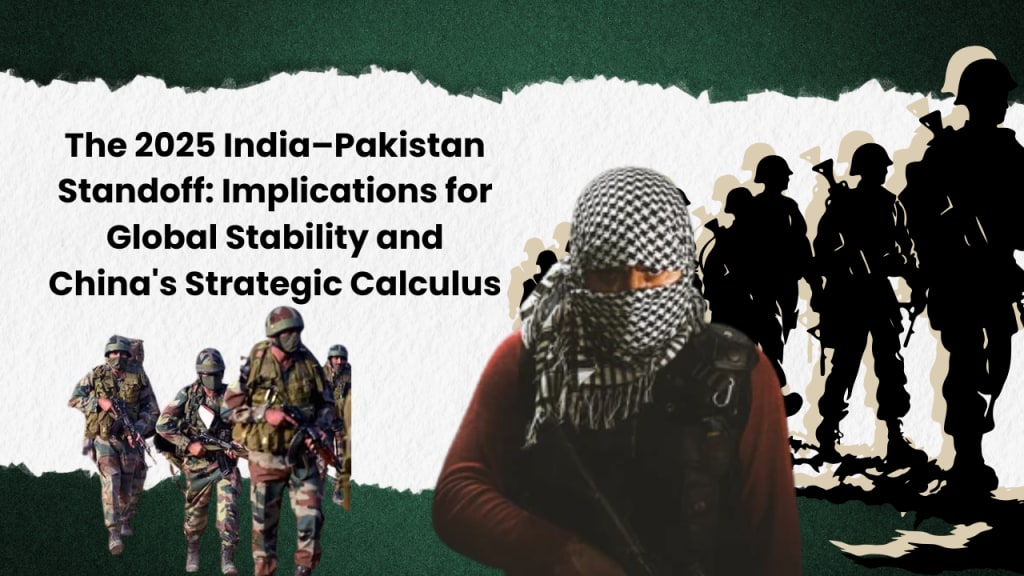
In April 2025, a terrorist attack in Pahalgam, Kashmir, shook the region and brought India and Pakistan to the brink of an all-out conflict. The attack, which resulted in the deaths of 26 individuals—including 25 tourists from India and a local pony operator—was claimed by militants linked to Pakistan. This violent incident triggered severe diplomatic tensions between the two nuclear-armed neighbors and raised alarms about the potential for further escalation, with both nations now on high alert. The effects of this conflict are not limited to the subcontinent. The ripple effects of rising tensions between India and Pakistan could have far-reaching consequences for the global economy, and China, as a key regional power, finds itself in a delicate balancing act as it navigates its relationship with both nations.
Escalation of India–Pakistan Relations
The attack in Kashmir served as the catalyst for an unprecedented diplomatic and military escalation. India, in response to the attack, suspended the Indus Waters Treaty, a vital agreement that regulates the sharing of river waters between the two countries. India also expelled Pakistani diplomats and closed the key Attari–Wagah border checkpoint, a vital land trade route. Pakistan swiftly retaliated by suspending all trade ties with India and closing its airspace to Indian aircraft, effectively disrupting crucial trade and transport links.
The escalation did not stop at diplomacy; military tensions also flared. Both nations have engaged in multiple exchanges of fire along the Line of Control (LoC), a de facto border between the Indian and Pakistani-controlled areas of Kashmir. This military activity has been alarming, as both countries have nuclear capabilities. In response, Pakistan has warned of potential Indian military action, and India has authorized its military leaders to take operational decisions, giving them significant leeway in how to respond to the growing threat.
As of now, neither side has engaged in full-scale warfare, but the threat of escalation remains high. The growing hostility between the two nations risks triggering a much larger conflict with devastating consequences not only for South Asia but for the entire global geopolitical landscape.
Economic Ramifications
The economic consequences of the India–Pakistan standoff are already being felt, both regionally and globally. The disruption of trade, tourism, and travel between the two nations has caused significant financial strain.
Trade Disruptions: One of the most immediate economic impacts has been the suspension of bilateral trade. India and Pakistan had been cautiously rebuilding their trade relations, with trade volumes of around $1.2 billion in recent years. However, the closure of key transport routes and the suspension of trade agreements have put a major strain on these exchanges. Many industries, particularly those dependent on cross-border trade, are facing delays and financial losses. Goods like pharmaceuticals, textiles, and agricultural products, which were once traded between the two nations, are now stuck at borders, impacting supply chains and increasing costs.
Air Travel Disruptions: The closure of Pakistan's airspace has had a significant effect on air travel. Air India and other Indian airlines are now forced to reroute their flights, which increases fuel costs and delays. These disruptions not only affect airlines but also the broader aviation industry, with ripple effects on tourism, business travel, and cargo transportation.
Currency Volatility: Geopolitical tensions have caused fluctuations in the value of the Indian rupee. As investors react to the rising risk in the region, the Indian currency has weakened against the U.S. dollar. This volatility adds a layer of uncertainty to the Indian economy, particularly at a time when the global economy is already grappling with inflation and slow growth. A weakening rupee could also make imported goods more expensive, exacerbating the cost of living for ordinary citizens.
Tourism Decline: The tourism industry in Kashmir and the broader region is also facing a downturn. Many international tourists, as well as Indian tourists, have canceled planned visits to Kashmir, fearful of the escalating violence. Local businesses that rely on tourism, including hoteliers and local guides, are suffering losses. The region's iconic natural beauty, once a major draw for visitors, is now overshadowed by the fear of violence and instability.
These disruptions to trade and commerce come at a time when the global economy is already struggling with multiple crises, including inflation, the aftermath of the pandemic, and supply chain disruptions. The growing tensions between India and Pakistan risk further destabilizing global economic recovery and undermining the resilience of supply chains worldwide.
China's Strategic Position
China’s position in the ongoing India–Pakistan standoff is complicated, given its strategic and economic interests in both countries. As a key player in the region, China has carefully avoided taking sides but has nonetheless made its views known.
On one hand, China is a long-standing ally of Pakistan. Beijing has supported Pakistan through economic investments, notably the China–Pakistan Economic Corridor (CPEC), a $62 billion infrastructure project designed to connect Gwadar Port in Pakistan with China’s Xinjiang province. This corridor is strategically important for China, as it provides an alternative route for trade and energy supplies, bypassing the Strait of Malacca, a key chokepoint for global maritime trade. The success of CPEC is critical to China’s broader economic and geopolitical strategy, and it has invested heavily in Pakistan’s infrastructure, energy sector, and military ties.
On the other hand, China also has significant economic and trade interests in India. In recent years, China has become India’s largest trading partner, and both nations have increasingly engaged in economic cooperation. However, their relationship remains strained due to border disputes, especially in the Himalayan region, where both sides have faced off in multiple skirmishes.
China’s diplomatic response to the India–Pakistan tensions has been one of caution. Beijing has called for both sides to exercise restraint and avoid further escalation, emphasizing the importance of dialogue. However, China is walking a fine line, balancing its traditional alliance with Pakistan against its growing economic partnership with India. This balancing act is further complicated by China’s concerns over maintaining stability in the region. A full-scale conflict between India and Pakistan would have severe consequences for China, not only in terms of its investments in both countries but also due to the broader instability it would bring to the region.
Global Implications
The escalation of tensions between India and Pakistan has wide-reaching implications that extend far beyond South Asia. The conflict could destabilize the entire South Asian region, a part of the world that is already facing political instability, economic hardship, and social unrest. If the standoff leads to a war, the consequences for global stability could be catastrophic.
Geopolitical Shifts: The growing tensions could prompt countries in the region to re-evaluate their alliances and partnerships. As the situation evolves, other global powers, including the United States, Russia, and the European Union, will likely become more involved in diplomatic efforts to de-escalate the crisis.
Global Supply Chains and Energy Prices: Any prolonged conflict could disrupt trade routes, including those in the Indian Ocean, where a significant portion of global oil shipments pass. A rise in energy prices, combined with supply chain disruptions, could have ripple effects on the global economy, exacerbating the cost of living and increasing inflation worldwide.
Diplomatic Challenges: As China, the U.S., and other major powers attempt to influence the situation, the global diplomatic landscape could become more complex. With both India and Pakistan holding nuclear weapons, the stakes are higher than ever, and the potential for diplomatic missteps is significant.
Conclusion
The escalating tensions between India and Pakistan are a stark reminder of the volatility that exists in the South Asian region. The conflict threatens to destabilize the region economically, politically, and militarily. While a full-scale war is not inevitable, the risk remains high if diplomatic efforts fail. China’s strategic position in the conflict adds another layer of complexity, as it tries to balance its economic interests with its alliance with Pakistan. The global community must act swiftly to prevent further escalation and work toward a peaceful resolution to avoid a catastrophe that could affect millions of lives and have far-reaching consequences for the global economy. Dialogue, restraint, and international mediation are critical in navigating this tense geopolitical landscape.
About the Creator
Hariprasad
Passionate writer exploring the intersection of technology, geopolitics, and nature. Sharing insights on AI, global dynamics, and the beauty of our planet to inspire curiosity and meaningful conversations.
Keep reading
More stories from Hariprasad and writers in Journal and other communities.
The Night You Changed Everything
That night. That very night—the moment everything in your life shifted. You may not have realized it then, but the world as you knew it would never look the same again. The decision you made, so sudden and yet so inevitable, altered the course of your journey. You acted on impulse, driven by something deep inside you that you couldn't quite name or understand. You didn't think it through; if you had, you might have hesitated. But, then again, maybe that's what life does-it forces you to make choices before you're ready, pulling you in directions you never expected.
By Hariprasad12 months ago in Journal
The goals I did not achieve
Every writing goal I made for the year is a wash. It has been this way for a while, but I think it's important to be open about my failures and the reality of how life can get in the way. This is especially true considering the several times I have posted on Vocal about my writing goals, how I was changing my approach, and where I was hoping to be for the upcoming year. I will probably do that again in a couple months, but for now, it is time to acknowledge where I am today.
By Kay Husnick23 days ago in Journal
Russia Claims Ownership of Oil Assets It’s Developing in Venezuela
How Moscow’s energy ties in Caracas are shaping geopolitics amid U.S. pressure Russia has recently made a forceful declaration that the oil assets it is developing in Venezuela are legally and unquestionably its own, intensifying a geopolitical tug-of-war over one of the world’s most oil-rich nations. This claim comes amid heightened tensions between the United States and Russia, sparked by U.S. actions in Venezuela and disagreements over who controls the country’s massive energy resources. �
By Fiaz Ahmed Brohi5 days ago in Journal



Comments
There are no comments for this story
Be the first to respond and start the conversation.